Vending
Redistricting ripple effects: How political map changes could impact vending
Redistricting efforts underway across the country could create new regulatory and operational challenges for vending and convenience services operators.

May 8, 2026 by Richard Slawsky — Editor, Connect Media
 ChatGPT
 Grok
Grok Perplexity
 Claude
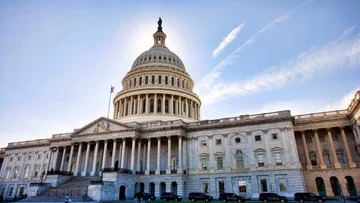
Redistricting efforts underway across the country could create new regulatory and operational challenges for vending and convenience services operators, caution officials from the National Automatic Merchandising Association.
While the redrawing of district lines may not have an immediate impact on business operators, in the long term they may significantly alter the regulatory and permitting landscape that businesses must navigate.
"Redistricting is not just a political story," said Michael Hogg, NAMA's director of state and local government affairs.
"For businesses, it can shape who is making decisions, how much compromise is possible, and how predictable the policy environment will be," he said. "For operators trying to plan and grow, more uncertainty and more variation across states can quickly become a real business challenge."
Impact beyond political parties
At least a dozen states are actively engaged in, considering or facing litigation over mid-decade congressional redistricting efforts. Although some of those redistricting efforts will be halted by the courts, some are likely to survive legal challenges.
Unfortunately, politicians elected in the wake of redistricting may be more entrenched in their positions and less willing to work with those from opposing parties. The result might be a patchwork of regulations that vary significantly by state.
"Partisan-drawn districts tend to produce officials who answer to a narrow base, and that makes compromise harder to reach," said Leanna Spektor, co-founder and general manager of online footwear retailer Brand House Direct, in an email interview.
"Research on redistricting outcomes consistently shows that less competitive districts produce more rigid voting records," Spektor said. "For retail and vending operators, rigid officials mean unpredictable policy, and unpredictable policy makes it nearly impossible to plan with confidence."
Shifts in political representation could lead to changes in permitting, zoning and compliance policies that affect vending and unattended retail operators. Those shifts could eventually lead to new permitting requirements, zoning reviews and compliance checks. Those who previously secured approvals may face new compliance reviews or updated approval processes.
Other issues that could be affected include cash mandates, tax rates, refund policies and more. Five states and several cities, for example, have regulations requiring retailers, including vending operators, to accept cash. Other states allow for cashless operations. Changes in those regulations might require an operator to invest in costly upgrades to existing machines.
"The operational side of shifting district lines will cause more upheaval than the political," said Logan Peranavan, CEO of U.K.-based service provider TapestoDigital in an email interview. Peranavan frequently works with businesses that expand across multiple regions.
"Vendors and retailers trying to place a machine or open a new point-of-sale location usually experience significant time delays because they previously received approval to place these locations, but now have to go through an approval process again," Peranavan said. "There can also be inconsistent vending/retail regulations/permits/placement policies in nearby cities/counties/states, which can affect costs, approval times, and placement restrictions."
Challenges and opportunities
For business operators, the challenge is less about any single rule and more about adapting to a constantly changing environment that requires ongoing monitoring and compliance adjustments.
Despite these challenges, the evolving landscape also presents opportunities. Operators that adopt flexible, locally responsive business models, including scalable compliance processes, adaptable technology platforms and diversified placement strategies, may be better positioned to navigate shifting jurisdictions.
Still, policymaking is typically a slow process, giving operators time to get ahead of the game. NAMA officials are already planning their strategy to protect their industry.
NAMA is continuing to advocate on Capitol Hill on issues affecting the convenience services industry, including cash mandates, coin composition changes and credit card legislation, Hogg said. Operators are encouraged to participate in the organization's upcoming Fly-In & Advocacy Summit. The two-day event brings vending, micro market and unattended retail industry leaders to Washington, D.C., to meet directly with lawmakers and discuss policy priorities.
Ultimately, redistricting underscores a broader trend: the increasing localization of business regulation. For vending and convenience services operators, success will depend not only on securing high-traffic locations and optimizing product mix, but also on managing the regulatory complexity that comes with operating across multiple, ever-changing jurisdictions.
"The practical step for operators is to pay attention early, not wait until an issue is already moving in their state," Hogg said.
"Policies in one state often show up in another, and once a proposal reaches your state, the window to educate lawmakers may already be narrow. The businesses in the strongest position are the ones watching trend-setting states, staying connected to broader industry advocacy, and building relationships before the issue is sitting on their doorstep. NAMA has many resources to help operators see what is coming and make their voice count."
About Richard Slawsky
In addition to writing, Slawsky serves as an adjunct professor of Communication at the University of Louisville and other local colleges. He holds both a Bachelor’s and a Master’s degree in Communication from the University of Louisville and is a member of Mensa and the National Communication Association.
Related Media
Subscribe
Get the latest news and resources from Vending Times.
Recent Posts