Vending
NAMA CEO Christine Cochran talks AI, placement strategies, industry consolidation
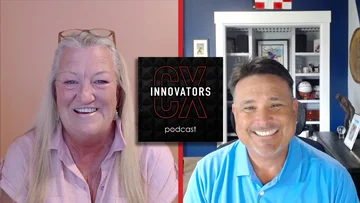
Connect Media CEO Daniel Ceniceros spoke with NAMA CEO Christine Cochran at the recent NAMA show about competition from QSRs, the role of AI, evolving placement strategies and industry consolidation.

May 1, 2026 by Richard Slawsky — Editor, Connect Media
 ChatGPT
 Grok
Grok Perplexity
 Claude
As the convenience services industry navigates rapid change, Christine Cochran has stepped into a pivotal leadership role as CEO of the National Automatic Merchandising Association.
Cochran assumed the position in late 2025, succeeding longtime CEO Carla Balakgie, and brings a background in association leadership, food policy and consumer packaged goods. She previously served as CEO of SNAC International and held senior roles with the Grain Foods Foundation and the Commodity Markets Council, building a reputation for strategic planning and advocacy in food-related industries.
Her arrival comes at a time when vending, micro markets and automated retail are expanding beyond traditional models into more technology-driven, consumer-focused solutions. NAMA has increasingly positioned itself at the center of that evolution through policy work, education and industry events. The businesses NAMA represents contribute more than $41 billion to the U.S. economy and employ 171,000 workers.
Under Cochran's leadership, NAMA continues to emphasize growth, innovation and member engagement as operators adapt to shifting consumer expectations and new technologies.
Those themes were on full display at the 2026 NAMA Show, held April 22–24, 2026, in Los Angeles, where more than 5,000 operators, suppliers and industry professionals gathered to showcase and view new equipment, payment technologies and emerging retail formats. The event featured education sessions, product demonstrations and recognition of top operators and suppliers, highlighting both the scale and momentum of the industry.
With innovation accelerating across vending, micro markets and unattended retail, the show highlighted an industry balancing rapid technological change with its core focus on convenience and service, a balance Cochran is now helping to guide.
Connect Media CEO Daniel Ceniceros spoke with Cochran at the show about competition from QSRs, the role of AI, evolving placement strategies and industry consolidation. Connect Media is the parent company of Vending Times.
Q. Automated retail is becoming more competitive. How can the industry continue to capture market share alongside QSR players?
Cochran: One of the strengths of the convenience services industry is its depth of experience and understanding of the consumer. At NAMA, we bring together that expertise, institutional knowledge and forward-looking vision. Rather than viewing QSR strictly as competition, there's an opportunity to collaborate. We understand branding and service delivery at a high level, and those capabilities can translate into partnerships that expand access and improve the consumer experience.
Q. AI is a major topic across industries. How is it shaping automated retail and the customer experience?
Cochran:AI is accelerating quickly in our space, just as it is in others. What we're seeing today — and this is evolving rapidly — is that AI is giving operators and suppliers a level of insight and capability we haven't had before. It's particularly impactful in data analysis, allowing businesses to make smarter decisions and operate more efficiently. Ultimately, that translates into better service, whether through improved product availability, personalization or operational performance.
Q. Location has always been critical. Where are you seeing the most success for kiosks and self-service retail?
Cochran: Over the past 15 years, micro markets have significantly expanded where and how we can deliver convenience services. Traditional vending has evolved, but micro markets take flexibility to another level. We're seeing strong deployments across a range of environments — residential buildings, healthcare facilities and educational campuses, among others. The key advantage is adaptability. Whether the footprint is small or large, operators can tailor solutions to fit the space and meet the needs of both the client and the end user.
Q. As the industry grows, consolidation often follows. What are you seeing on that front?
Cochran: Consolidation is certainly happening, and it brings benefits. Larger organizations can build deeper expertise and broaden their service capabilities. At the same time, we're seeing a steady influx of new entrants driven by emerging technologies and new business models. The result is a healthy balance — established players scaling up while new operators bring innovation into the market. Overall, it reflects a dynamic and growing industry.
About Richard Slawsky
In addition to writing, Slawsky serves as an adjunct professor of Communication at the University of Louisville and other local colleges. He holds both a Bachelor’s and a Master’s degree in Communication from the University of Louisville and is a member of Mensa and the National Communication Association.
Related Media
Subscribe
Get the latest news and resources from Vending Times.
Recent Posts