Foodservice
Morrison Healthcare, Blendid bring robotic smoothie kiosk to patient nutrition
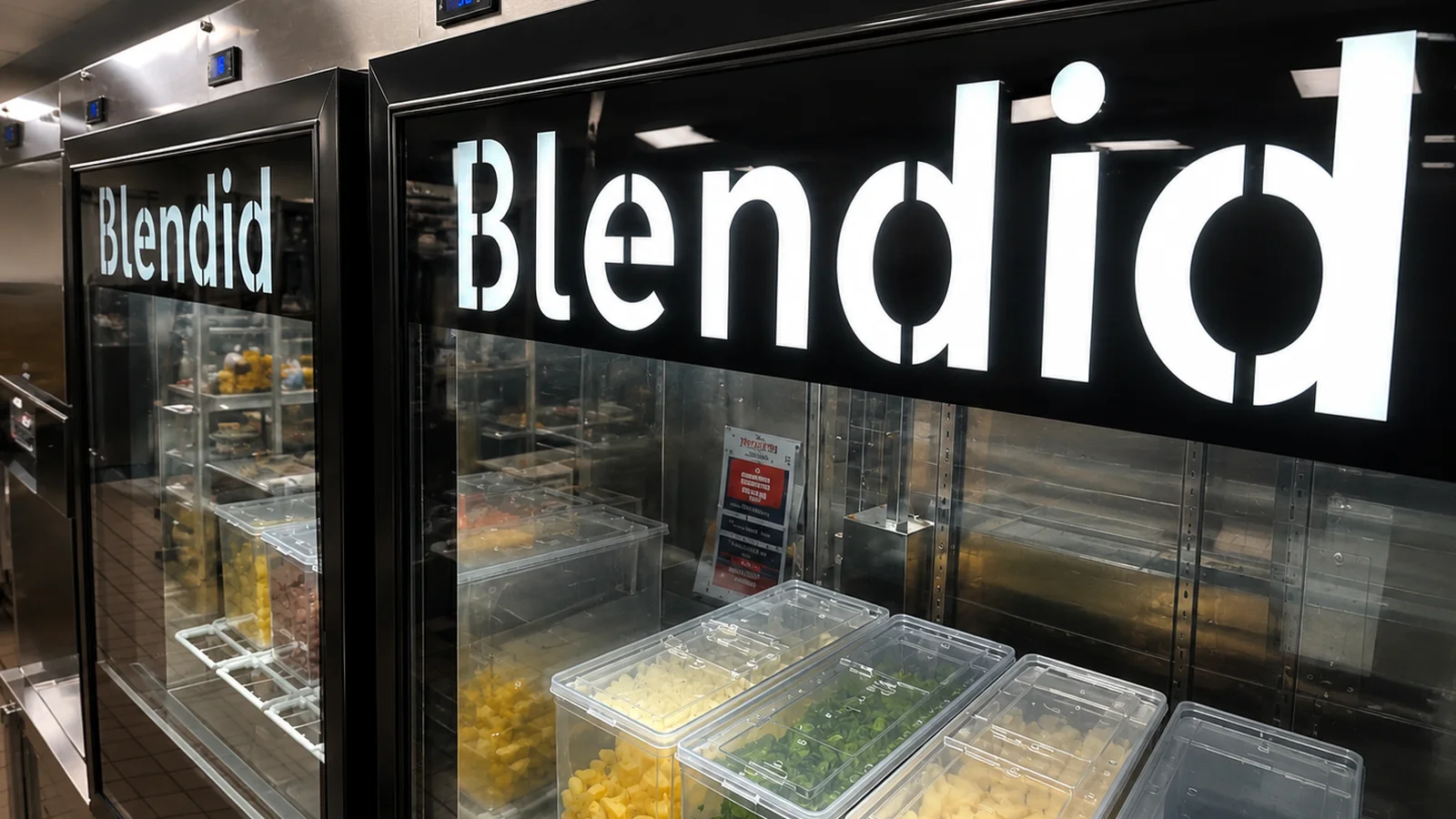
Morrison Healthcare and food robotics company Blendid have deployed a robotic smoothie kiosk at Mayo Clinic's Methodist Campus in Rochester, Minnesota, bringing automated beverage preparation into a hospital production kitchen.
July 24, 2026 by Richard Slawsky — Editor, Connect Media
 ChatGPT
 Grok
Grok Perplexity
 Claude
Morrison Healthcare and food robotics company Blendid have deployed a robotic smoothie kiosk at Mayo Clinic's Methodist Campus in Rochester, Minnesota, bringing automated beverage preparation into a hospital production kitchen.
The companies said the system — the first commercial automated smoothie kiosk developed specifically for healthcare — can prepare customized, nutrient-dense smoothies for patients while also serving hospital employees and visitors.
The partnership combines Morrison Healthcare's clinical, culinary and hospital food-service experience with Blendid's robotic food-preparation platform. Mayo Clinic served as the first deployment site, while the companies worked to integrate the machine into an existing hospital production kitchen.
The project builds on Blendid's experience operating robotic smoothie kiosks in settings such as shopping centers and universities. Adapting the technology for a hospital, however, required addressing more complex dietary, operational, sanitation and infection-control requirements.
"When we started the company, we envisioned a world where food could be prepared to one's taste and nutrition needs, anytime, anywhere," Blendid CEO and co-Founder Vipin Jain said in an email interview. "[The] Morrison Healthcare partnership helped us realize that vision using our technology platform to its fullest."
Expanding liquid-nutrition options
Liquid nutrition can be particularly important for patients who have difficulty consuming conventional meals. Smoothies and shakes can provide protein, carbohydrates and healthy fats in a manageable form for people experiencing swallowing difficulties, poor appetite, fatigue, weight loss or treatment-related irritation.
Dysphagia, or difficulty swallowing, affects an estimated 36.5% of adults in hospital settings, according to a systematic review and meta-analysis published in the journal Dysphagia. In one study of patients age 65 and older at a post-acute rehabilitation hospital, about 27% received texture-modified diets. The study, published in the Journal of the American Medical Directors Association, included patients recovering from strokes, musculoskeletal conditions or hospital-associated deconditioning.
Oncology and radiation oncology patients represent another population that may benefit from hospitals' ability to produce personalized liquid nutrition.
Dr. Courtney Stefanski, a physician board-certified in physical medicine and rehabilitation as well as lifestyle medicine at Rush University Medical Center in Chicago, said she treats patients with dysphagia and malnutrition following strokes, extensive surgeries or prolonged hospital stays. Stefanski, who was not involved in the deployment, said smoothies could provide an alternative for certain patients recovering from serious illnesses or procedures.
"In contrast to what is typically offered, a smoothie would provide a less-processed, nutrient-dense and thus healthier alternative to patients who are recovering," Stefanski said in an email interview.
Smoothies can be prepared at different thickness levels to help patients with swallowing difficulties drink more safely and reduce the risk of choking or aspiration, she said. Ingredients can also be adjusted for patients with diabetes, allergies or food intolerances, while the amounts of carbohydrates, fiber and protein can be tailored to individual needs.
The potential benefits extend to hospital employees, who may have limited time to eat during their shifts.
"A fresh smoothie with a wide range of nutrients is an efficient and effective way for our patients and hospital workers to get the nutrition that they really need," Stefanski said.
Recipes combine culinary and clinical input
Morrison Healthcare's chefs worked with registered dietitians to develop the smoothie recipes. The team sought to balance taste with nutritional value, ingredient quality and the ability to reproduce each beverage consistently.
"Every recipe was chef-developed in partnership with our registered dietitians, focusing first on flavor while ensuring nutritional balance, ingredient integrity and operational consistency across every smoothie served," Morrison Healthcare Chef Michael Raub said in an email interview.
Rather than requiring Morrison Healthcare to adopt an entirely new ingredient system, Blendid modified its equipment to work with ingredients already used at Mayo Clinic. The companies also adapted the kiosk's software to accommodate recipes that had been tested and approved for patient use.
"We adapted the technology to handle ingredients that Morrison already used at Mayo using their existing supply chain and perfected the recipes that they had already lab-tested and qualified for patient use," Jain said. "We also adapted the kitchen software to handle the workflow that Morrison staff desired in Mayo's kitchen."
The result, called Blendid Pro, is intended for a hospital production kitchen rather than a conventional customer-facing retail location. The platform can manage solid, liquid and semiliquid ingredients, along with grains and powders.
Orders are entered through a tablet and transmitted to the kiosk. Integrated scales verify ingredients throughout preparation, measuring quantities to one-tenth of a gram. Three robotic arms can work on as many as six orders simultaneously, producing a finished beverage in three minutes or less.
Precision is especially important when a smoothie is part of a patient's nutrition plan. Culinary and clinical teams can use a chef dashboard and order-tracking tools to manage recipes, dietary restrictions, food allergies and recommendations from health care professionals. The system can also blend drinks to a designated thickness for patients receiving texture-modified diets.
Automation still requires culinary oversight
Although the smoothie-making process is automated, the system does not operate independently of the hospital's culinary team. Employees prepare fresh ingredients, replenish the machine, monitor ingredient quality and ensure the equipment is cleaned and functioning properly.
"Our culinary teams are responsible for preparing fresh ingredients, maintaining quality standards, replenishing products, and ensuring the equipment is sanitized and operating properly so every smoothie reflects our culinary expectations," Raub said.
Blendid provides technical support during operating hours to help maintain equipment reliability and minimize interruptions. The company says the NSF-certified system was designed to meet applicable food-safety and sanitation requirements in hospital kitchens. Its automated preparation process can also reduce unnecessary handling.
The companies have worked together for about two years, including an approximately 18-month product development process that included prototype testing, recipe refinement and tasting sessions involving culinary, clinical, operational and engineering personnel. The teams had to achieve precise ingredient measurements, repeatable textures and consistent beverage quality while fitting the system into the kitchen's existing workflow.
Jain said the implementation influenced how Blendid approached product design for food-service workers. The goal was not to force employees to adapt to another complicated system but to create a system that reflected how they already worked.
"We mustn't expect kitchen staff to learn how to use the product, but the product must learn how to work with the kitchen staff," Jain said.
One measure of the implementation's success was that Morrison employees could manage the workflow without regular intervention from Blendid personnel, he said.
Feedback will shape the next phase
Morrison Healthcare gathers feedback through several channels. Chefs speak with patients at the bedside, review patient comment cards and consult nursing teams about preferences and opportunities for improvement. The company also considers feedback from guests and examines utilization patterns.
Those insights can inform changes to recipes, ingredients and service procedures. They will also help determine whether the model is suitable for additional hospitals.
Raub said successful expansion will depend on more than the technology's ability to make a smoothie.
"We've found that long-term success depends on reliable equipment performance, consistent ingredient quality, standardized recipes and seamless integration into daily culinary operations."
The Mayo Clinic deployment is providing an initial real-world test. The project team is collecting operational information and feedback from patients, employees and visitors, although no usage figures or patient-outcome results were included in the information provided.
Mayo Clinic and Morrison Healthcare plan to explore additional installations. Blendid also sees opportunities to bring the platform to other Morrison Healthcare clients, particularly for patients in oncology, those with dysphagia and people who need carefully formulated nutrition during recovery.
Whether the system reaches a wider market will depend on its performance at Mayo Clinic and its ability to demonstrate clinical and operational value. The partnership nevertheless points toward a broader role for food robotics — one in which automation does more than produce an item quickly. In a hospital kitchen, it could help translate clinical and culinary guidance into nutrition delivered with greater precision, consistency and customization.
About Richard Slawsky
In addition to writing, Slawsky serves as an adjunct professor of Communication at the University of Louisville and other local colleges. He holds both a Bachelor’s and a Master’s degree in Communication from the University of Louisville and is a member of Mensa and the National Communication Association.
Related Media
Subscribe
Get the latest news and resources from Vending Times.
Recent Posts