Foodservice
Primepick brings meal tracking, automated safety controls to hot food vending
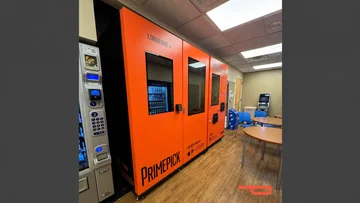
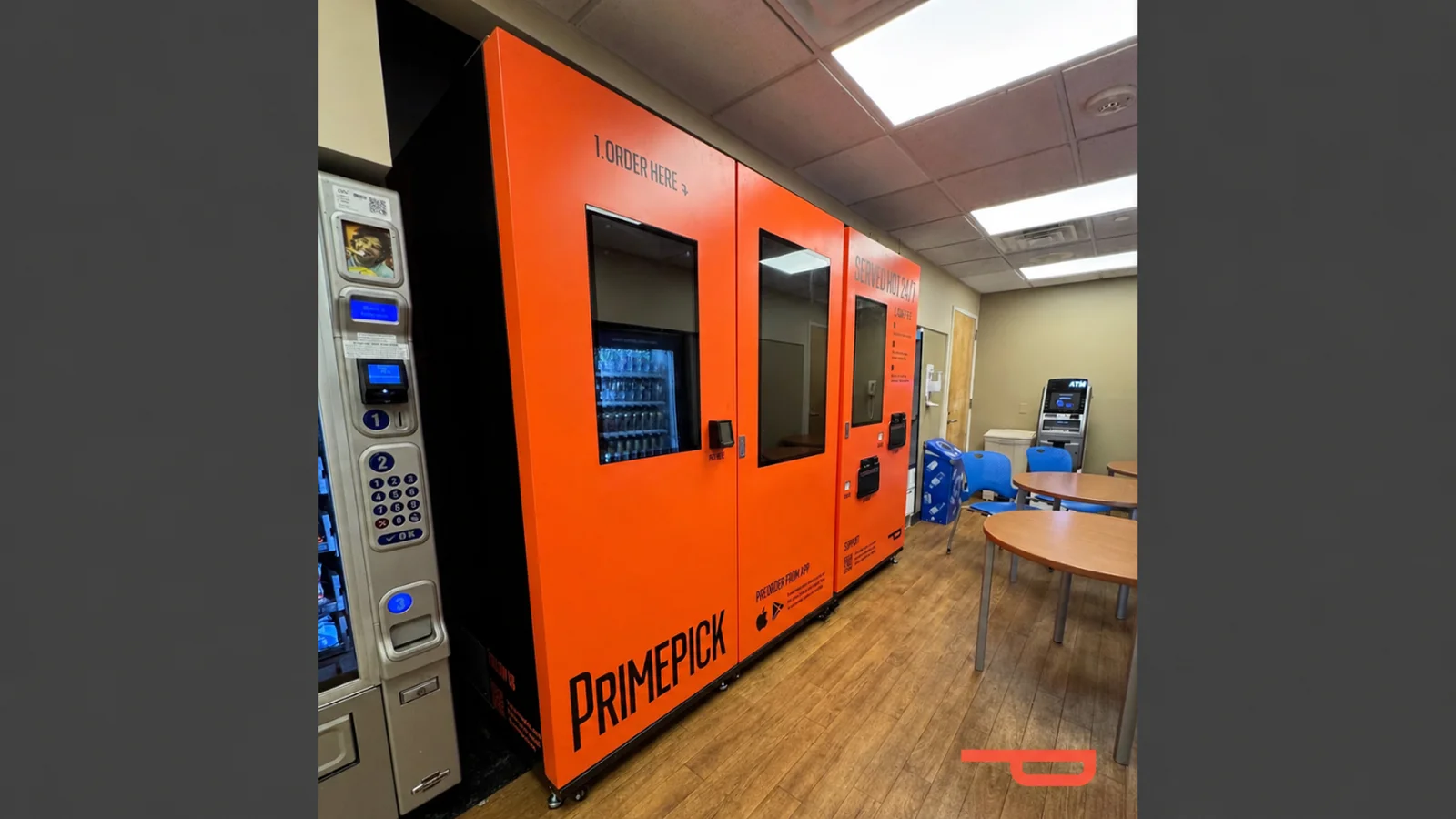
Primepick’s MealMate system combines robotic meal preparation with individual meal tracking, temperature monitoring and automatic sales lockouts to help operators manage hot food vending.
October 9, 2026 by Richard Slawsky — Editor, Connect Media
 ChatGPT
 Grok
Grok Perplexity
 Claude
Selling a complete hot meal from a vending machine adds responsibilities to an operator's route: maintaining frozen storage, reheating food, managing holding times and keeping equipment clean. Primepick is building those controls into its MealMate system, with individual meal tracking designed to connect food safety, inventory and servicing.
The privately-held Brooklyn, New York-based foodservice automation company uses a robot to move individually packaged, precooked frozen meals into microwave ovens for preparation and dispense them to customers. Each meal has a unique identifier linked to its product information, cooking instructions and status inside the machine, according to Primepick.
The company said its machines typically sell 10 to 50 meals daily, depending on location, foot traffic and how established the installation is. Average meal prices generally range from $8 to $10. Those figures make site selection an important part of the operating equation, alongside food costs, replenishment and equipment servicing.
Primepick identified Molloy University in New York, a leading beauty products manufacturer and Ashcroft, a Connecticut-based manufacturer of pressure and temperature instruments, as installations providing operational experience.
A planned installation at a New Jersey medical facility is preparing for launch, with a health department inspection being arranged. The company said two additional deployments are scheduled for 2026.
Work schedules suggest a significant customer base for food outside conventional dining hours. In 2024–25, 14.8% of U.S. wage and salary workers usually worked a non-daytime schedule, including 5.3% who worked evenings and 3.4% who worked nights, according to the Bureau of Labor Statistics.
"Serving complete hot meals is obviously very different from dispensing snacks or drinks, and it brings a different level of food-safety and operational responsibility with it," Vanessa Christelis, Primepick's head of marketing, said in written responses incorporating input from the company's technical and operational teams.
"At the same time, we've tried to keep the day-to-day operation of the system as straightforward as possible for the operator," she said.
Following each meal
MealMate configurations range from 91 meals in the smallest model to 320 in the largest. Features include touchscreen ordering, mobile preordering, cashless payments, frozen storage, automated heating, temperature-controlled holding and remote monitoring. The large configuration has three ovens and separate ordering and pickup areas.
Inventory tracking begins with a QR code identifying the product type and individual meal. That identifier connects to nutritional information, allergens and the cooking program. Production and expiration information is associated with the product, while the meal's serial number supports tracking through transportation, replenishment, preparation and sale.
Operators can load meals into available freezer positions rather than following a fixed layout, Primepick said. The robot scans the storage area, identifies the meals and records their locations so it can retrieve the selected item.
After purchase, the meal's serial number can be associated with the transaction and a customer support ticket. Primepick said those records can help trace a complaint to an individual meal and identify other meals from the same production batch.
Meals arrive precooked, individually packaged, sealed and flash frozen. The company's procedures cover transportation, stock rotation, reheating, hot holding, dispensing, sanitation and disposal.
Responsibilities vary by operating location. Under Primepick's New York City framework, the food producer handles safe preparation and packaging, while Primepick manages transportation, vending, rotation, sanitation and waste handling, Christelis said.
Controlling temperature and reheating
Primepick described a combination of continuous storage-temperature monitoring, individual meal tracking, validated heating programs and automatic sales lockouts.
Its frozen-storage target is 0 degrees Fahrenheit. If defined temperature limits are exceeded for longer than the permitted period, the software marks affected inventory as scrap and prevents its sale. That status cannot be reversed to make the food eligible for sale again. The event can also trigger a maintenance task to remove the meals.
The warm compartment has separate temperature and holding-time controls. Each prepared meal's holding time is tracked, and meals become ineligible for sale if required temperatures or allowable holding times are breached.
A fault in one compartment does not necessarily disqualify food elsewhere. A freezer problem, for example, would not automatically invalidate prepared meals safely held in the warm compartment, according to the company.
The robot can move an unsaleable prepared meal into a designated quarantine position in the freezer pending removal during a service visit. The move isolates the meal; it does not restore its eligibility for sale.
Reheating uses inverter-controlled microwave ovens and multistage programs specifying power levels and timing. Each meal type is validated in advance using the same microwave system, with temperatures measured during validation. Its approved program is stored in the cloud and downloaded to the machine.
Keeping service within the route
Primepick said a conventional vending operator can perform normal cleaning and preventive maintenance after basic training. Authorized personnel use service credentials, with training materials covering cleaning, inspection and maintenance.
The company's maintenance schedule calls for weekly cleaning of customer-contact areas and more extensive work monthly and quarterly. Deeper procedures include microwave cavities, the warm compartment, grippers, trays, shelves and dispensers. The freezer also needs periodic defrosting and deep cleaning.
Frequencies can change with usage, operating conditions and local health requirements, Christelis said. More complex technical problems are escalated for specialist support.
The system also collects information from drives, sensors and other components. Changes in drive behavior, unusual readings and recurring abnormal events can be flagged for inspection before they cause downtime, Primepick said.
A subsystem-monitoring function checks machine health and availability. Following a recoverable fault, the system can attempt to restore the affected subsystem, reschedule operations and continue where doing so is safe and technically possible, according to the company.
"The goal is to move away from the traditional service model where the first indication of a problem is simply that the machine has stopped working," Christelis said.
Matching the menu to demand
MealMate handles sealed meals rather than exposed ingredients. Each product's labeling includes a Nutrition Facts panel, ingredient list and allergen declaration, Primepick said. Corresponding information also appears in the ordering interface.
Sales and inventory records show performance by machine and menu item. Temperature histories, meal status, faults and service events supply additional information for assessing waste and reliability.
Christelis said installations in different settings are helping Primepick identify meal preferences, sales patterns and replenishment needs. Those findings can guide menus, promotions and service schedules.
For operators, the reported range of 10 to 50 meals daily leaves a central question: how much demand does a site need to support the equipment, food and route costs? Tracking each meal can help inform that decision, but the financial outcome will depend on what customers buy and what it takes to keep the machine supplied and running.
Self-service is no longer just about convenience. It’s becoming a powerful way to increase sales, reduce costs and reach customers in new places — and you can see what’s next at the Automated Retail & Kiosk Innovation Show, Dec. 14-16 in Miami Beach.
About Richard Slawsky
In addition to writing, Slawsky serves as an adjunct professor of Communication at the University of Louisville and other local colleges. He holds both a Bachelor’s and a Master’s degree in Communication from the University of Louisville and is a member of Mensa and the National Communication Association.
Related Media
Featured Vendor

Give your kiosks the best in managed connectivity and placement flexibility with powerful 4G LTE
Subscribe
Get the latest news and resources from Vending Times.
Recent Posts