Micro Markets
Building Loudega: What it takes to launch a smart cooler business
Dan Ross-Li saw an opportunity for modern unattended retail in Louisville. Turning that idea into a workable vending route required him to learn the business from the ground up.
September 25, 2026 by Richard Slawsky — Editor, Connect Media
 ChatGPT
 Grok
Grok Perplexity
 Claude
Before Dan Ross-Li received his first smart cooler, he had already committed himself to figuring out how to operate seven of them. The founder and CEO of Loudega had scheduled seven placements, even though he was new to vending and still had to learn the language of shelves, slides, pushers, product selection and remote inventory management.
It was a deliberate gamble. Ross-Li believed the best test of his idea was whether location owners would agree to it.
"Go sell first," he said in a Google Meet interview. "We had seven machines scheduled for deployment before I had my first machine delivered."
Only after proving that customers wanted the service did he turn fully to the less glamorous work of making it function.
That sequence captures both the promise and the difficulty of launching a vending business. A new operator must find viable locations, choose dependable equipment, learn what customers will buy, manage inventory and build routes dense enough to control labor and transportation costs. Smart coolers can automate parts of the transaction, but they do not eliminate the need for disciplined retail operations.
A more defensible business
Ross-Li came to vending from technology startups, software and other office-based work rather than from the vending industry. The rapid development of artificial intelligence helped push him toward a business he considered more defensible than another software venture. Technology jobs and products can change quickly, he reasoned, but people will continue to need food and drinks.
"I wanted to start a business that had a higher chance of success," Ross-Li said. Vending remains difficult, he added, but appeared less vulnerable than a technology startup built around a product that could be overtaken by the next software advance.
The company name combines Louisville and bodega, reflecting Ross-Li's goal of bringing small-scale, always-available retail closer to where people live and work. After moving to Louisville three years ago, he noticed that parts of downtown and the trendy NuLu neighborhood had few convenient places to buy a drink or a snack without getting in a car. He also believed Louisville had been slower than larger cities to adopt smart coolers and other forms of unattended retail.
Loudega set out to bring that model to local apartments, offices, gyms and breakrooms. The company places equipment, installs it, monitors inventory, restocks products and services the machines at no cost to qualifying host locations. Its machines leverage centralized monitoring, contactless payments and real-time inventory data to keep equipment in service.
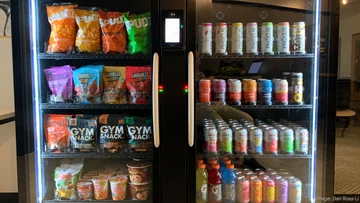
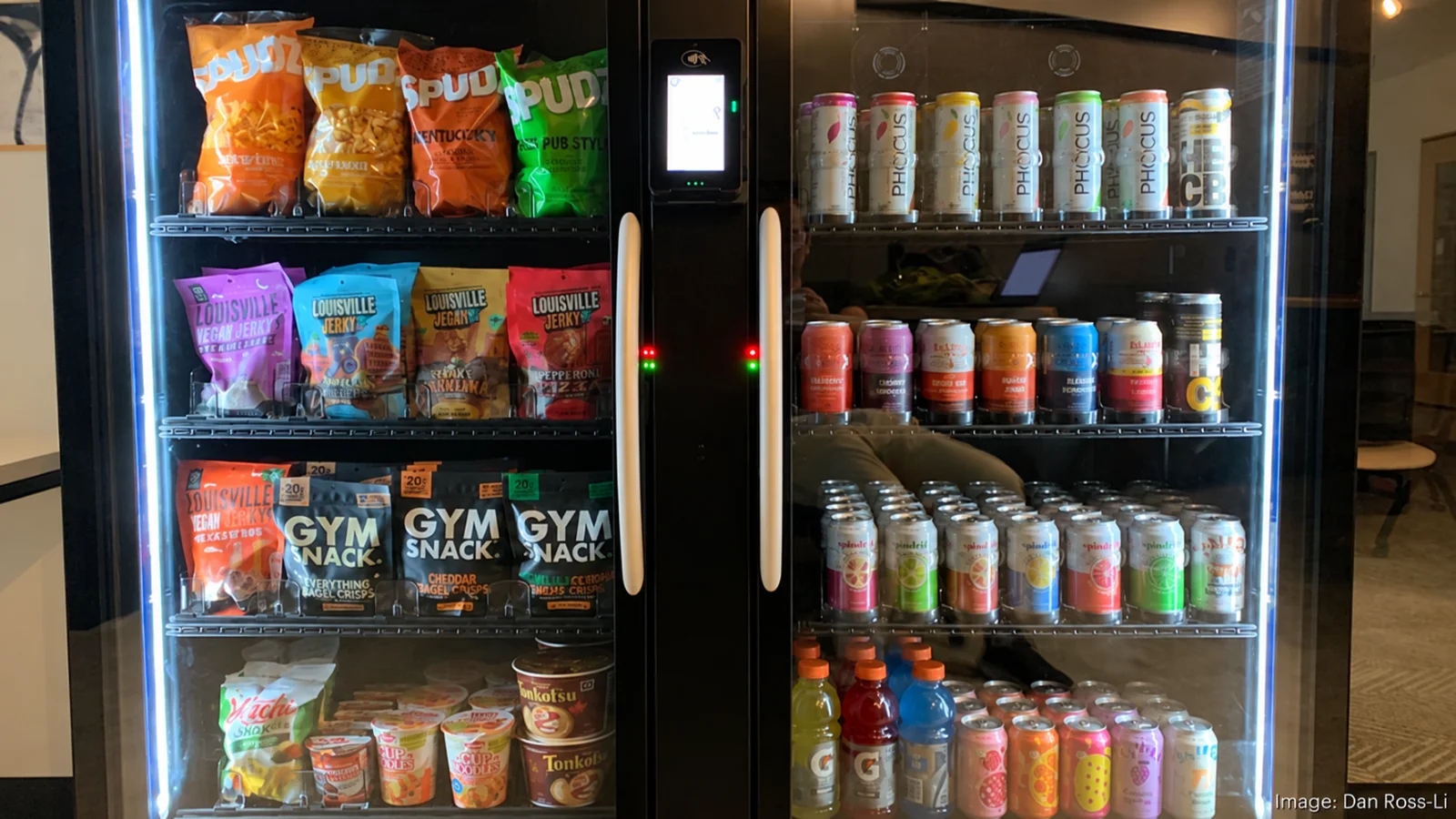
The coolers operate more like refrigerators than conventional coil machines. A customer taps a payment card, prompting a preauthorization that unlocks the door. The customer removes one or more products and closes the cooler, and the system identifies the selections and completes the transaction. The open-shelf experience gives customers more freedom to examine products while allowing Loudega to monitor purchases and stock levels remotely.
The technology, however, created an early sourcing challenge. Ross-Li had to identify a hardware provider he could depend on while teaching himself how smart coolers were configured and managed. He also had to determine what products to stock and how to price them.
For a first-time operator, the ability to see inventory remotely was useful, but the data only became valuable after he learned how to translate it into purchasing and restocking decisions.
Location still comes first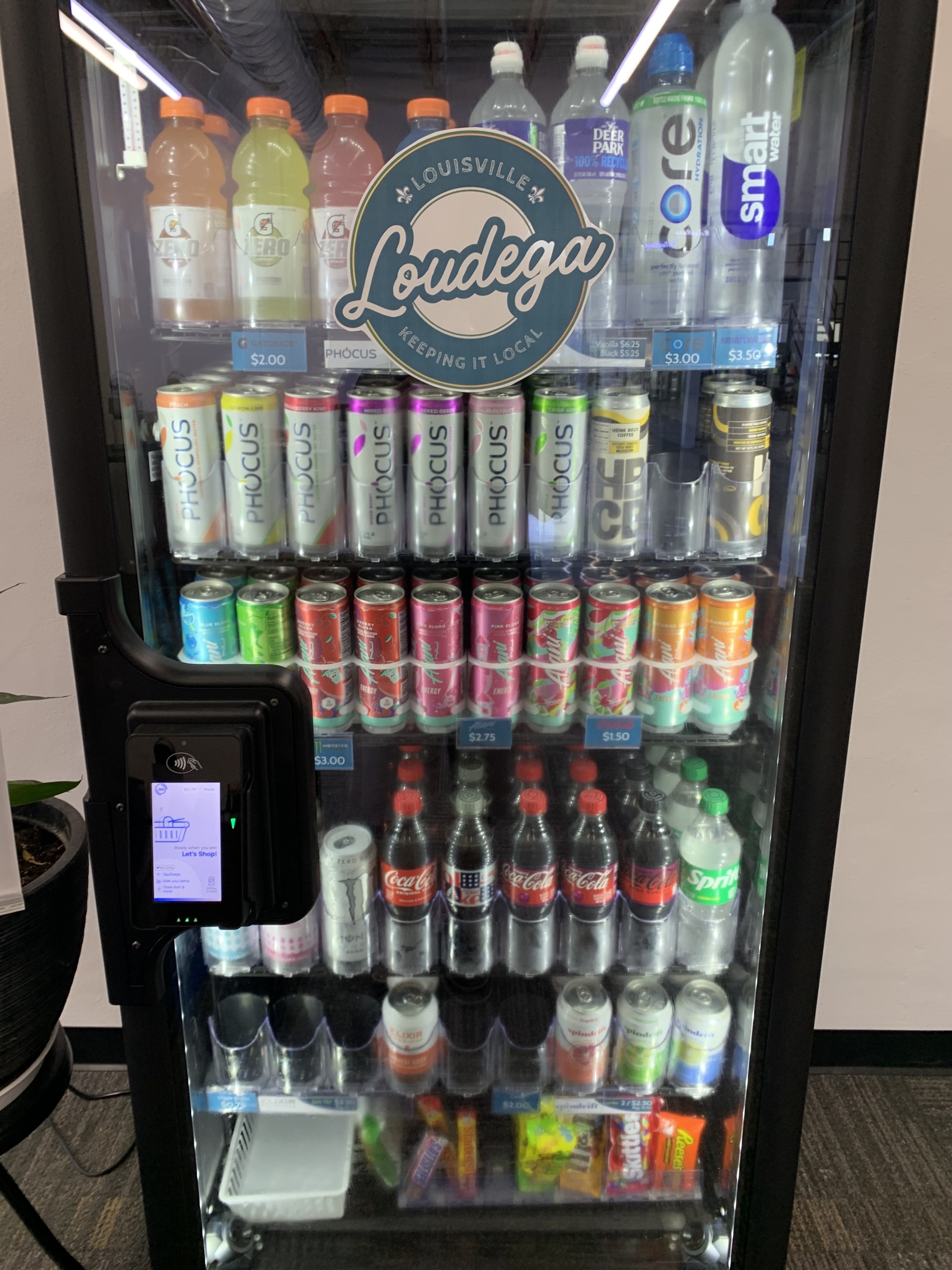
Location selection quickly emerged as the most important variable. Loudega currently has 13 operating machines, with apartment buildings representing its primary market. Ross-Li said a centrally organized 200-unit building is more attractive than a 200-unit garden-style complex spread among multiple buildings.
A cooler near a lobby or common entrance can serve a concentrated stream of residents, while a machine located far from normal foot traffic may struggle regardless of the technology inside it.
Apartments also require patience. Ross-Li described their sales pattern as a "steady drip" that may take about six months to reach full strength. Once residents discover the machine and incorporate it into their routines, purchasing can continue throughout the day and night. That consistency helps, but it places added importance on securing the right building and the right position inside it.
Product selection presents another learning curve. Energy drinks and other caffeinated beverages have become strong sellers for Loudega.
Ross-Li estimated that caffeine-related items, including energy drinks and sodas, can account for 60% to 70% of a machine's assortment. Familiar national products generally deliver better recognition, margins and sales velocity than lesser-known alternatives, he said.
The economics of product selection
That lesson complicated one of Loudega's original goals: using vending as a distribution channel for emerging local brands. Ross-Li initially paired a local product with a national brand in many categories. The local items often carried higher wholesale costs, required the operator to arrange pickups and came from suppliers with less-developed billing and distribution systems. Once placed in the cooler, they still had to compete with products customers already recognized.
Ross-Li has not abandoned the idea, but he now approaches it more selectively. Emerging brands need enough scale and organization to supply products reliably, and a machine devoted specifically to local goods may work better than scattering unfamiliar products throughout a conventional assortment.
The experience illustrated a recurring startup challenge: a compelling mission must still survive the economics of each shelf and each location.
Loudega has also tested Pokémon card machines, office coffee and micro-markets. The card business has performed well, Ross-Li said, but the potential pool of locations is limited and requires specialized product knowledge.
One of the company's part-time stockers trades Pokémon cards and understands their value and consumer demand, expertise Ross-Li considers essential to making the category work. Loudega's core business remains smart coolers, while micro-markets and fresh food represent longer-term growth opportunities.
Building the scale for fresh food
Fresh food may be the company's most ambitious next step and one of its clearest operational tests. Perishable products require accurate demand forecasts, expiration tracking and more frequent service. A small cooler might sell out of one sandwich while leaving another variety unsold, turning an assortment mistake into waste. The operator must also produce sufficient volume to attract an outside supplier or to invest in its own food operation.
"We just need a little bit more scale," Ross-Li said. Building route density in downtown Louisville and NuLu could make the numbers more workable by shortening service trips and increasing the volume of fresh products moving through the system. For now, he sees enough opportunity close to home that Loudega does not need to rush into distant markets.
Ross-Li's experience offers a counterpoint to the notion that artificial intelligence makes unattended retail easy. Automated product recognition, inventory visibility and cashless checkout can remove friction, but the operator must still secure productive locations, keep equipment online, stock the right assortment and build enough density to support expansion. The machines may be intelligent, but the business remains intensely physical.
For Ross-Li, that is part of its appeal. Loudega is applying technology to an enduring need while building its route one location at a time. His advice to other newcomers is to test demand early, understand the unit economics and be prepared to learn quickly. Selling the first placement is only the beginning; the harder task is creating an operation capable of serving it every day.
About Richard Slawsky
In addition to writing, Slawsky serves as an adjunct professor of Communication at the University of Louisville and other local colleges. He holds both a Bachelor’s and a Master’s degree in Communication from the University of Louisville and is a member of Mensa and the National Communication Association.
Related Media
Subscribe
Get the latest news and resources from Vending Times.
Recent Posts