Foodservice
The battle for the breakroom: Which automated retail model wins?
Micro-markets, smart coolers, connected vending machines and specialty food systems are giving employers and property managers far more choices when providing food. Consumers can access fresher food, broader assortments, digital payments and more convenient meal options without requiring a staffed cafeteria.
August 12, 2026 by Ben Wheeler — Dir. of Business Dev. - Automated Retail, T-ROC
 ChatGPT
 Grok
Grok Perplexity
 Claude
For years, the workplace breakroom had a fairly predictable formula: a beverage machine, a snack machine and maybe a coffee station.
That formula is changing.
Micro-markets, smart coolers, connected vending machines and specialty food systems are giving employers and property managers far more choices. Consumers can access fresher food, broader assortments, digital payments, and more convenient meal options without requiring a staffed cafeteria.
That does not mean traditional vending is disappearing.
It means operators have more tools available—and choosing the right one matters more than ever.
In my work across automated retail, I have found that the best solution is rarely determined by which technology is newest. It comes down to location economics, customer behavior, product mix, available space, service requirements and the experience the operator is trying to create.
The real question is no longer, "What replaces vending?"
It is:
Which automated retail format fits this location best?
Traditional vending still has a job to do
Traditional vending remains one of the simplest automated retail formats to operate.
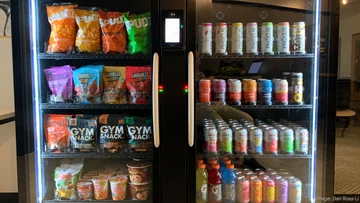
Products are secured inside the machine until payment is completed. The footprint is relatively small. The equipment can work well in locations where customers primarily want drinks, snacks, or a limited selection of familiar products.
That simplicity has value.
Traditional vending may be a strong fit when:
- Space is limited
- Transaction volume is moderate
- The assortment is primarily packaged snacks and beverages
- Security is a major consideration
- The location does not justify a larger retail footprint
- Service routes need to remain simple
Its limitations are equally clear.
The assortment is constrained by machine design. Product visibility can be limited. Fresh-food options may be harder to support. The customer generally cannot pick up an item, examine it and compare alternatives before buying.
Traditional vending is dependable, but the experience is still largely transactional.
For many locations, that is perfectly acceptable.
For others, customers now expect more.
Micro-markets change the customer experience
Micro-markets move automated retail closer to a small convenience store.
Customers can browse open shelves and refrigerated cases, compare products, read labels, select multiple items and complete the transaction through a self-checkout system.
That flexibility supports a much broader assortment.
Fresh meals, salads, snacks, beverages, better-for-you options and locally relevant products can live in the same space.
The experience can also feel more natural than buying from a traditional vending machine.
That broader selection creates new operating requirements.
Open access means operators need stronger inventory controls. More SKUs create greater replenishment demands. Fresh food introduces shelf-life management. The checkout experience must be intuitive. Inventory records have to remain accurate.
A micro-market is not simply a larger vending machine.
It is a small unattended retail operation.
That distinction matters.
Smart coolers fill an important gap
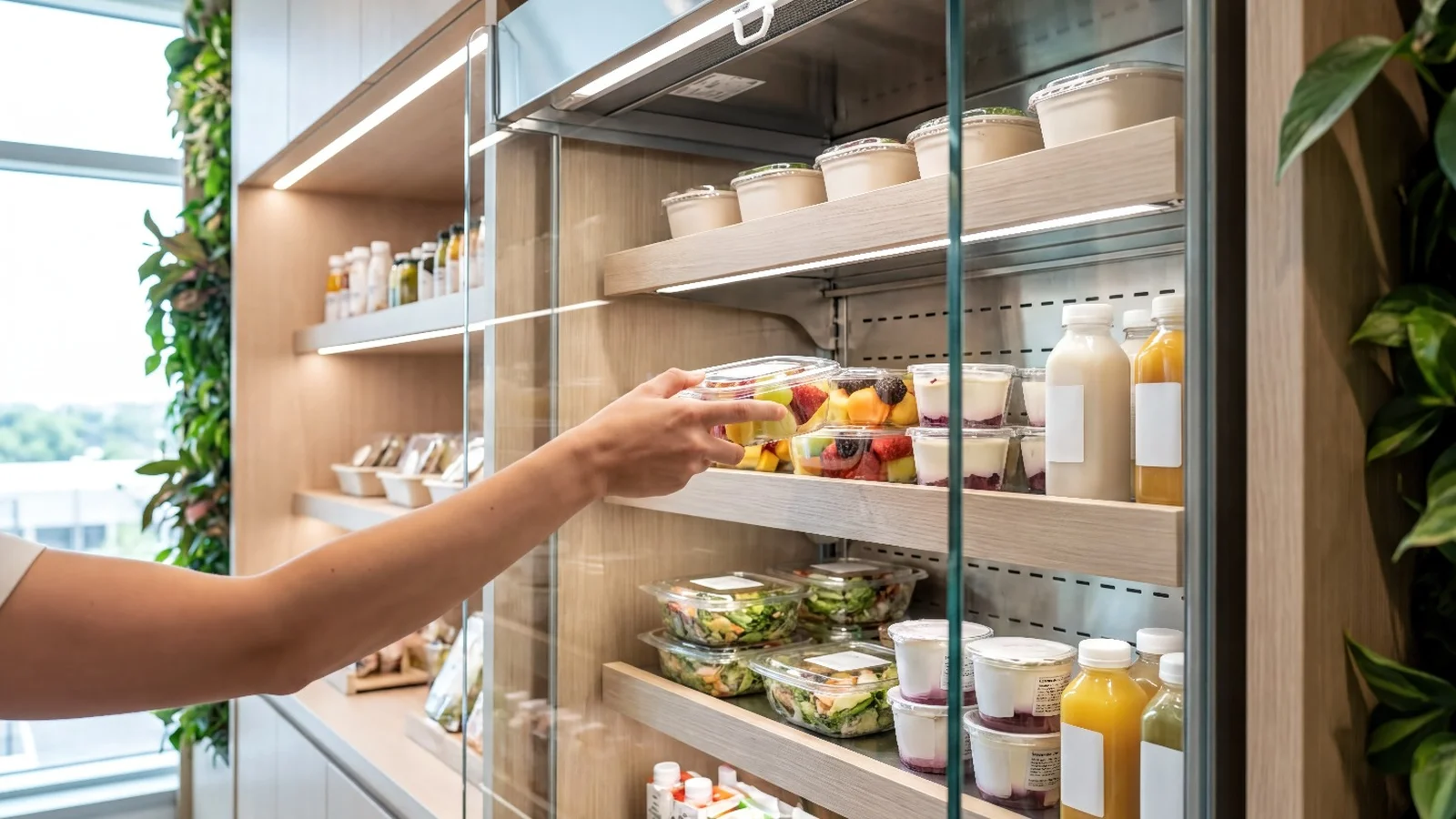
Between traditional vending and a fully open micro-market sits another model: the smart cooler or controlled-access cabinet.
These systems can provide much of the product flexibility of a micro-market while keeping merchandise inside a controlled environment.
Depending on the technology, a shopper may unlock the unit with a payment card or mobile credential, select products and have the system determine what was removed.
Product recognition may rely on computer vision, weight sensing, RFID, or a combination of technologies.
This format can make sense in locations where operators want to offer fresh food or premium products but do not have the space, volume, or operating model to support a full micro-market.
That is why I see smart coolers less as a replacement for micro-markets and more as another tool in the operator's portfolio.
The real trade-off is control versus choice
Each format creates a different balance between customer freedom and operator control.
Traditional vending provides the most physical control over merchandise but limits the shopping experience.
Open micro-markets provide the greatest customer choice but require stronger inventory discipline and loss-prevention practices.
Smart coolers sit between the two.
None is automatically better.
The right decision depends on what matters most at the location.
An operator serving a manufacturing facility with overnight shifts may need a very different mix than one supporting a corporate office with heavy lunchtime traffic.
A hospital may need continuous access to fresh food.
A residential property may prioritize compact equipment and simple replenishment.
A transportation hub may require speed, durability and high product availability.
The format should follow the use case.
Shrink is only one part of the economics
Shrink gets a lot of attention in unattended retail, but operators should avoid making decisions based on theft risk alone.
The real financial picture includes:
- Equipment cost
- Installation
- Connectivity
- Software fees
- Payment processing
- Replenishment labor
- Product spoilage
- Inventory accuracy
- Service frequency
- Maintenance
- Customer support
- Lost sales from stockouts
- Shrink and unexplained inventory variance
A format that produces more revenue may also require more service.
A highly secure machine may limit product selection and reduce basket size.
A large micro-market may perform very well in one location and underperform in another if traffic does not support the operating expense.
The best operators look at the entire location-level profit equation.
Fresh food changes the equation
One of the biggest reasons automated retail is becoming more sophisticated is the demand for better food options.
Consumers increasingly expect access to more than chips, candy and soda.
Fresh meals can increase the usefulness of a breakroom, especially in facilities where employees work long shifts or have limited access to nearby restaurants.
They also create operational demands.
Fresh food requires closer attention to:
- Expiration dates
- Temperature control
- Replenishment frequency
- Product rotation
- Demand forecasting
- Waste
- Food safety procedures
That does not make fresh food a bad investment.
It means operators need the operating structure to support it.
The technology may sell the product, but the field operation determines whether the program performs consistently.
Specialty food automation creates a third category
The choice is also becoming broader than vending versus micro-markets.
Automated hot-food systems are opening another category.
Pizza systems, coffee platforms, robotic food preparation and other specialty machines can provide made-to-order or heated products without a permanently staffed kitchen.
These systems can serve locations where customers want something closer to a meal than a snack.
That creates interesting opportunities in:
- Manufacturing environments
- Hospitals
- College campuses
- Hotels
- Transportation locations
- Entertainment venues
- Residential properties
- Overnight workplaces
But specialty food automation comes with its own requirements.
Operators may need additional cleaning procedures, food handling processes, electrical capacity, ventilation, maintenance expertise and technical support.
A machine that delivers a premium food experience also requires a premium operating model behind it.
Connectivity is now part of the retail infrastructure
Another change operators need to account for is connectivity.
Traditional vending may require relatively modest communications for payments and telemetry.
More advanced automated retail formats can depend on cloud-based systems for payments, inventory reporting, monitoring, software updates, digital displays and remote diagnostics.
That makes network reliability part of the customer experience.
Operators should address connectivity during site planning rather than after installation.
Questions should include:
- What network options are available?
- Is cellular connectivity reliable inside the facility?
- Can the location provide secure internet access?
- Does the technology require continuous connectivity?
- What happens if the connection fails?
- Can transactions continue offline?
- How quickly can support teams diagnose a problem?
The answers can influence both equipment selection and operating cost.
Loss prevention should be built into the program
Open retail environments require a different loss-prevention mindset from locked vending machines.
The answer is not necessarily more surveillance.
It is better visibility.
Operators should be able to compare customer transactions, inventory movement, replenishment activity, service access and system alerts.
Depending on the format, useful controls may include:
- Transaction-linked video
- Individual service credentials
- Inventory reconciliation
- Exception reporting
- Smart access controls
- Weight or RFID validation
- Photo-verified replenishment
- Regular cycle counts
The goal is to identify where discrepancies originate.
Not every missing item is theft.
Inventory errors can also come from incorrect counts, misplaced products, damaged merchandise, equipment issues, or incomplete service records.
A good system helps the operator tell the difference.
The people behind the machines still matter
Automated retail can reduce the need for on-site retail staff.
It does not eliminate the need for people.
Route teams still replenish product.
Field technicians still maintain equipment.
Program managers still monitor performance.
Customer support teams still handle transaction issues.
Warehouse teams still receive, organize and distribute inventory.
The stronger the technology becomes, the more important disciplined field execution becomes.
Poor replenishment data fed into a sophisticated system is still poor data.
Incorrect product placement can affect inventory recognition.
A dirty camera, damaged sensor, or missed service visit can quickly affect the customer experience.
Automation changes the work.
It does not eliminate the work.
Why hybrid programs often make sense
One of the most useful lessons I have seen in automated retail is that operators do not always have to choose one format.
A location may benefit from several.
Traditional vending can handle high-volume beverages.
A smart cooler can offer sandwiches, salads and fresh meals.
An open micro-market can support broader daytime demand.
A specialty food machine can serve employees during late shifts.
The result can be a more complete retail environment than any single technology could provide on its own.
That is where automated retail becomes especially interesting.
The conversation moves from "Which machine should we install?" to "How should we serve this customer throughout the day?"
Start with the location, not the technology
There is no universal winner in the battle for the breakroom.
Traditional vending remains practical.
Micro-markets offer greater assortment and flexibility.
Smart coolers provide controlled access with a broader product mix.
Specialty food automation can add an entirely different meal occasion.
The mistake is choosing the technology first and trying to force the location to fit it.
At T-ROC, we look at automated retail from the opposite direction.
Start with the customer.
Study the traffic.
Understand the operating environment.
Evaluate the product opportunity.
Look at the service requirements.
Then determine which technology—or combination of technologies—best supports the business case.
The future of the breakroom will not belong to one machine.
It will belong to operators who know how to combine technology, field execution, inventory management and customer experience into the right solution for each location.
That is the real opportunity in automated retail.
About Ben Wheeler

Related Media
Subscribe
Get the latest news and resources from Vending Times.
Recent Posts