Vending
Modern vending: Factory-built, field-tested
Behind great vending customer experiences lies a collaborative design process involving cabinet manufacturers, payment providers and software developers. In recent interviews, industry experts described how these partnerships are reshaping unattended retail from the inside out.
July 22, 2026 by Dale Laszig — Founder, DSL Direct LLC
 ChatGPT
 Grok
Grok Perplexity
 Claude
No two vending locations are exactly alike, which may be why today's cabinets are increasingly being designed as platforms rather than fixed-purpose machines. A university campus has different requirements than a luxury apartment building. A hotel has different priorities than a mining operation. In response, manufacturers are designing modular, connected and adaptable cabinets that allow operators to tailor payment choices, product selections and merchandising strategies to each environment.
Behind those customer experiences lies a collaborative design process involving cabinet manufacturers, payment providers and software developers. In recent interviews, industry experts described how these partnerships are reshaping unattended retail from the inside out.
Hardware as a blank canvas
In a July 10, 2026, Zoom interview, Jason Moss, director, unattended North America at Castles Technology and Peter Zoumboulakis, president, WeVend, described a typical collaboration between a manufacturer and payment provider.
"Projects generally start with hardware," Moss said, noting that manufacturers look for POS devices that are compatible with their cabinets. Machines with embedded displays require only a compact payment terminal, while cabinets without screens rely on larger integrated devices that combine the customer interface and payment experience. When integrations are complete, manufacturers hand the project to software and payment-processing teams, such as WeVend.
Zoumboulakis described a twofold integration process: activating the payment-processing account and provisioning each device for its environment. A hotel, for example, that wants to sell beer and wine, will need age verification, an available feature that is easy to add. A smart retail brand that wants its app and skin to be front-facing for customers will need to message WeVend to charge a customer's cart, which is easy to accomplish through a backend integration.
"WeVend thinks of hardware as different-sized canvases," he said. "There are different-sized screens that we can use and different form factors determine how we will develop our solutions for the customer."
Coils to coolers
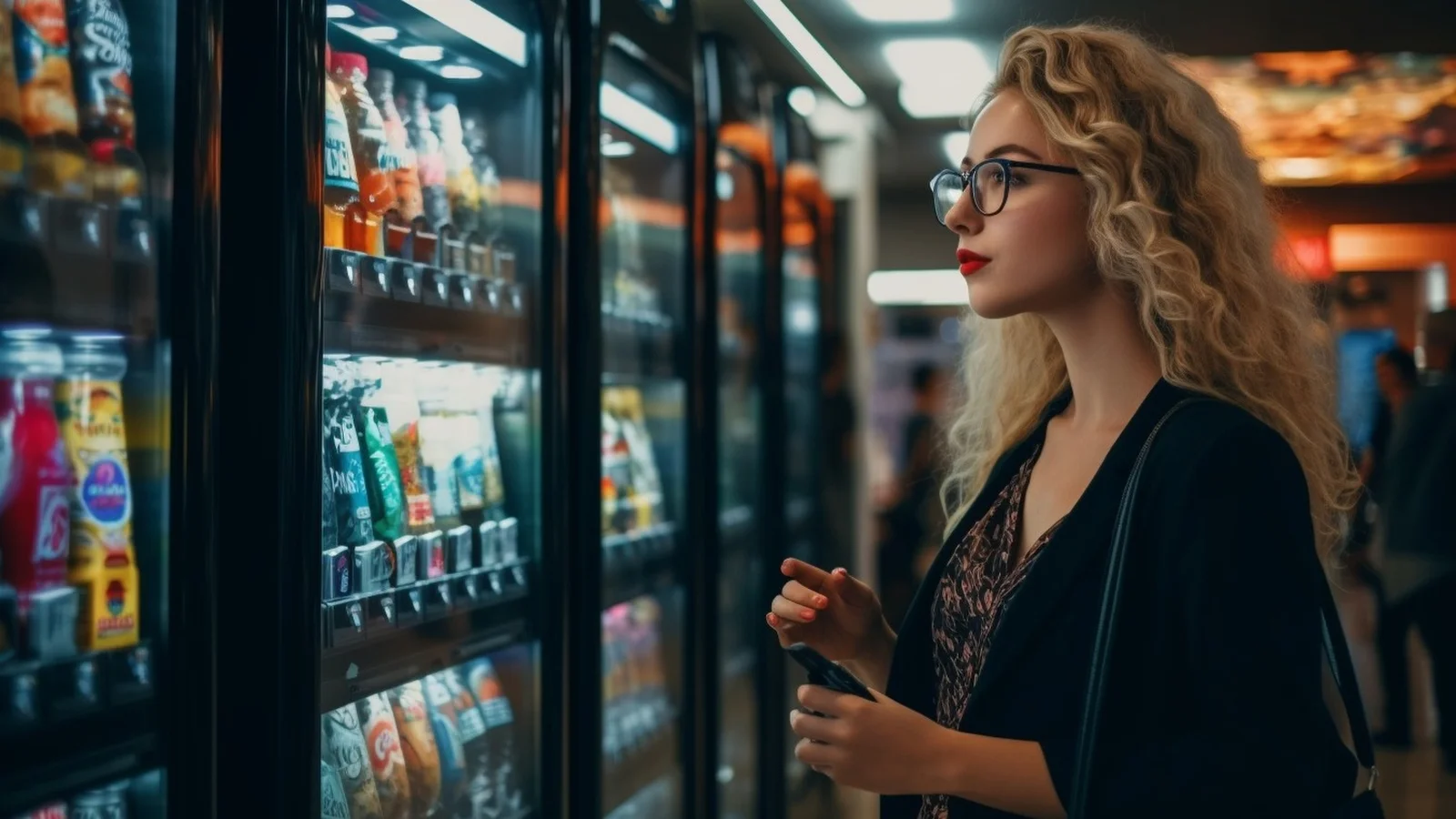
Moss, a 30-year vending industry veteran, called glass-front vending machines a game-changer. Unlike traditional vending machines, which can behave like slot machines that occasionally don't pay out due to some malfunction, like a vending machine arm that sticks or doesn't dispense a product, smart coolers provide a more reliable purchasing experience. Customers can tap their card, unlock the door and grab whatever they want, even multiple items at a time.
Smart cooler operators can expand their entire product portfolios while being protected against theft and loss because transactions are no longer anonymous; people must present a card to unlock a cabinet. Another huge benefit is not having to worry about lockdowns. Think of how many products are behind locked display cases at major retailers. Now customers can access these products without waiting for an associate to come and unlock a cabinet.
Moss also noted that traditional machines use coils to activate and push products out. The coils limit what you can sell because operators need to stock items that fit into the coils, and the coils are not easy to modify. By contrast, smart coolers accommodate not just cans and bottles but whatever fits on a shelf. Operators can put almost any size product in a smart cooler and easily configure it. The machines have fewer moving parts and can be changed frequently.
Customized experience
The flexibility built into modern cabinets ultimately shapes the customer experience, according to Mike Burnett, co-founder and CEO of SmartMarket Solutions. In a June 11, 2026, email interview, he described smart coolers as a micro retail store, where customers 'walk in,' touch and feel products, check expiration dates, inspect ingredients, and check out in seconds.
"We can stock fresh food, premium snacks, drinks, even local products, not just what fits in a coil," he said. "People buy more when they can touch it, see it, and trust it. The result is multiple products purchased and a revenue ceiling that traditional vending simply can't reach."
He added that secure, camera-vision technology has transformed the unattended retail experience. Customers can now have a personalized grab-and-go experience. Operators can have a scalable business that delivers real-time intelligence on transactional data, inventory levels and customer behavior. As locations accumulate, these businesses may also become self-sustaining through recurring customer traffic, referrals and standardized operating procedures.
"The best sites aren't always limited to the volume of strangers walking by," Burnett said. "Sometimes they're about the same people coming back, day after day."
Next-generation innovators
Burnett credited imaginative service providers and owner-operators for innovations in the space.
"We've seen deployments we never would've drawn up ourselves, and some of them are crushing it," he said. "It taught me to listen to the field. Our operators are out there discovering use cases faster than we could dream them up."
In fact, Burnett said some of the company's highest-performing operators entered the business with little or no experience in vending or retail. They just had good instincts when choosing equipment and technology, sourcing high-traffic locations and creating a merchandising mix.
Zoumboulakis mentioned that WeVend has also implemented good ideas from young, technically savvy operators, recalling a recent installation at a facility catering to miners and oil field workers. In such a remote place, you can't just run to the store to buy work boots, so operators removed two shelves from the cabinet, updated the vending management system and began selling work boots in addition to snacks.
"We said, what a good idea, let's just do it," he said. "That is where good ideas come from, from people who know their customers."
About Dale Laszig
Related Media
Subscribe
Get the latest news and resources from Vending Times.
Recent Posts