Vending
Balanced Vending builds on growth with First Choice deal
New York-based Balanced Vending expanded its operational footprint by acquiring First Choice Vending earlier this year, adding established routes and micro markets in New Jersey, while strengthening its presence across the New York City market.
July 31, 2026 by Richard Slawsky — Editor, Connect Media
 ChatGPT
 Grok
Grok Perplexity
 Claude
New York-based Balanced Vending expanded its operational footprint by acquiring First Choice Vending earlier this year, adding established routes and micro markets in New Jersey, while strengthening its presence across the New York City market.
The companies declined to state how many machines were involved, but the deal nearly doubled Balanced Vending's size.
Integrating the operation required more than changing logos. Balanced Vending Founder Alan Basel and his team evaluated locations and product mixes, standardized operations across the combined route network and removed some underperforming machines.
First Choice's modern control boards and cashless payment capabilities provided a solid technological foundation, but Basel said in a phone interview the larger challenge was aligning operating practices while earning the confidence of experienced route employees.
Building a different vending business
The deal accelerated a business that began with six machines in 2012. Basel said Balanced Vending grew steadily over the years before the COVID-19 pandemic interrupted that pattern. It took some time to bounce back. Today, the company serves office buildings, law firms, architectural firms, major corporations, television stations, schools and hotels across New York City, with a growing presence in New Jersey.
Basel traces much of that growth to an operating philosophy built around service, appearance and attention to detail. Growing up in Germany shaped his preference for accuracy and order, he said. Machines should be clean, products should be arranged properly and route employees should present themselves professionally.
Every vending machine is a salesperson for me," Basel said. "Every vending machine needs to look sharp."
Balanced Vending also tries to distinguish itself through products. Alongside familiar snacks and beverages, the company rotates in healthier, organic, gluten-free and kosher options. Basel said customers have compared the company to the "Whole Foods of vending," a description he embraces.
The assortment is not static. Basel continually tests products and uses remote vending-management data to identify strong sellers and products that have lost momentum. A new item may sell rapidly for several months before customers tire of it, making rotation essential.
"I never want the customer to always have the same stuff in the vending machine," he said.
Micro markets bring new opportunities
The acquisition also doubled Balanced Vending's micro-market business. Basel sees considerable potential in micro markets, but he said New York City customers remain cautious. Many locations prefer enclosed vending machines because they do not want to manage the possibility of theft in an unattended market.
Other installations demonstrate that the model can work. Basel said a school in Harlem has successfully offered fresh food through a micro market with little apparent theft. Sales and inventory data allow the company to compare what was delivered with what was purchased and identify losses by location.
"In the right place, it's an amazing fit because you can put so many more different things in it," Basel said.
Resolving issues with speed
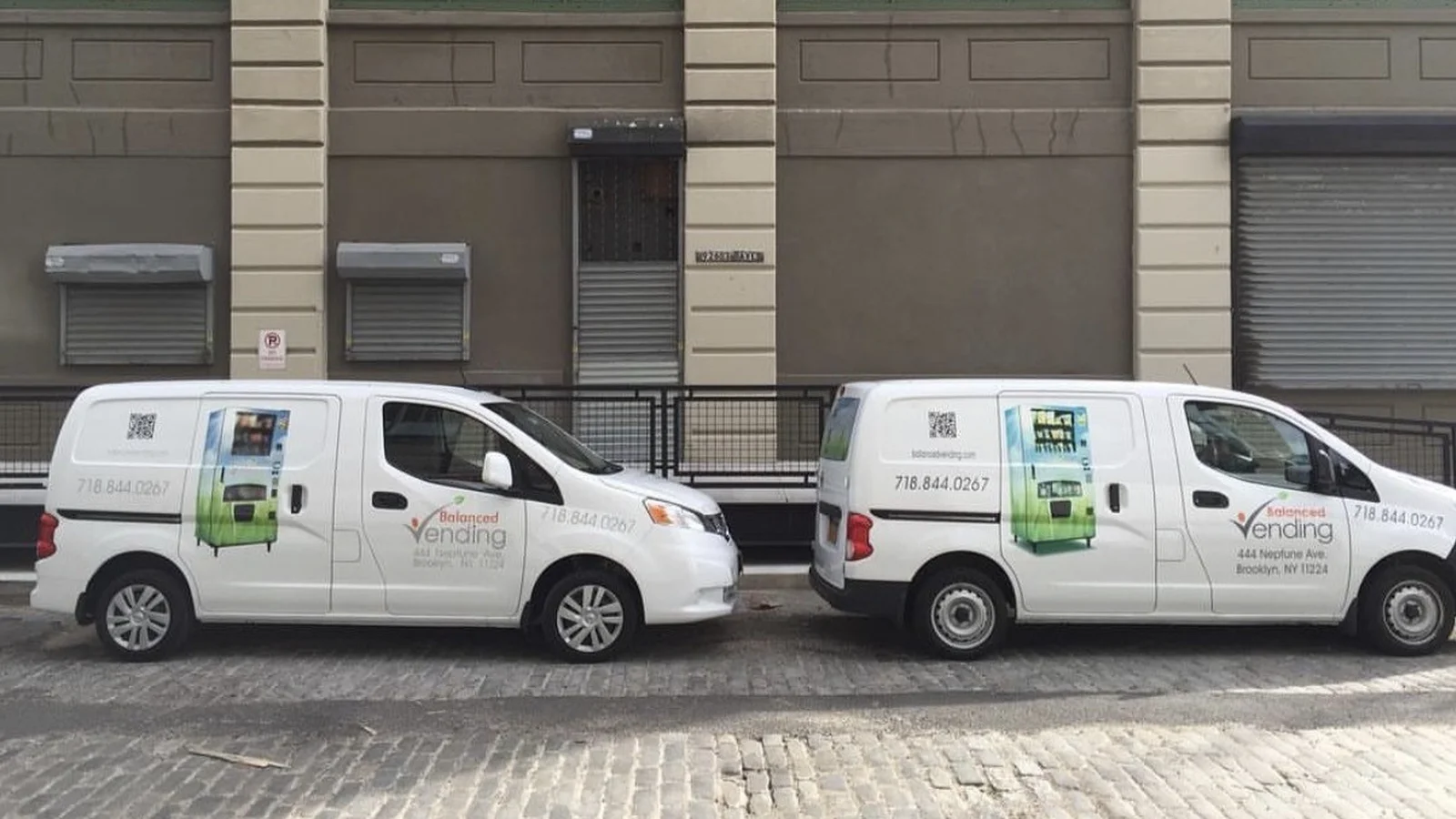
Technology is also changing how Balanced Vending handles customer service. Labels on its machines include a QR code, telephone number and machine identifier. Customers can use the code to report a failed purchase, request a refund, suggest a product or flag an equipment problem. Refunds can be returned through the original card or services such as Zelle and Venmo.
The system gives customers an Immediate acknowledgment and reduces the number of calls the company must handle. That became increasingly important after the acquisition expanded the number of machines and customer interactions.
Basel is now looking to AI to improve routing, product selection and other operating decisions. He also plans to continue expanding, although that growth is paired with an effort to refine the enlarged company and keep prices competitive as suppliers raise their costs.
Basel does not know how large Balanced Vending will ultimately become. For now, he is focused on making the combined operation more efficient without losing the service standards that helped the original company grow.
"I'm not stopping anytime soon," Basel said. "I'm not there yet."
About Richard Slawsky
In addition to writing, Slawsky serves as an adjunct professor of Communication at the University of Louisville and other local colleges. He holds both a Bachelor’s and a Master’s degree in Communication from the University of Louisville and is a member of Mensa and the National Communication Association.
Related Media
Subscribe
Get the latest news and resources from Vending Times.
Recent Posts