Vending
AI Vending Machines Are Here. The Machines You Already Own Can Keep Up.
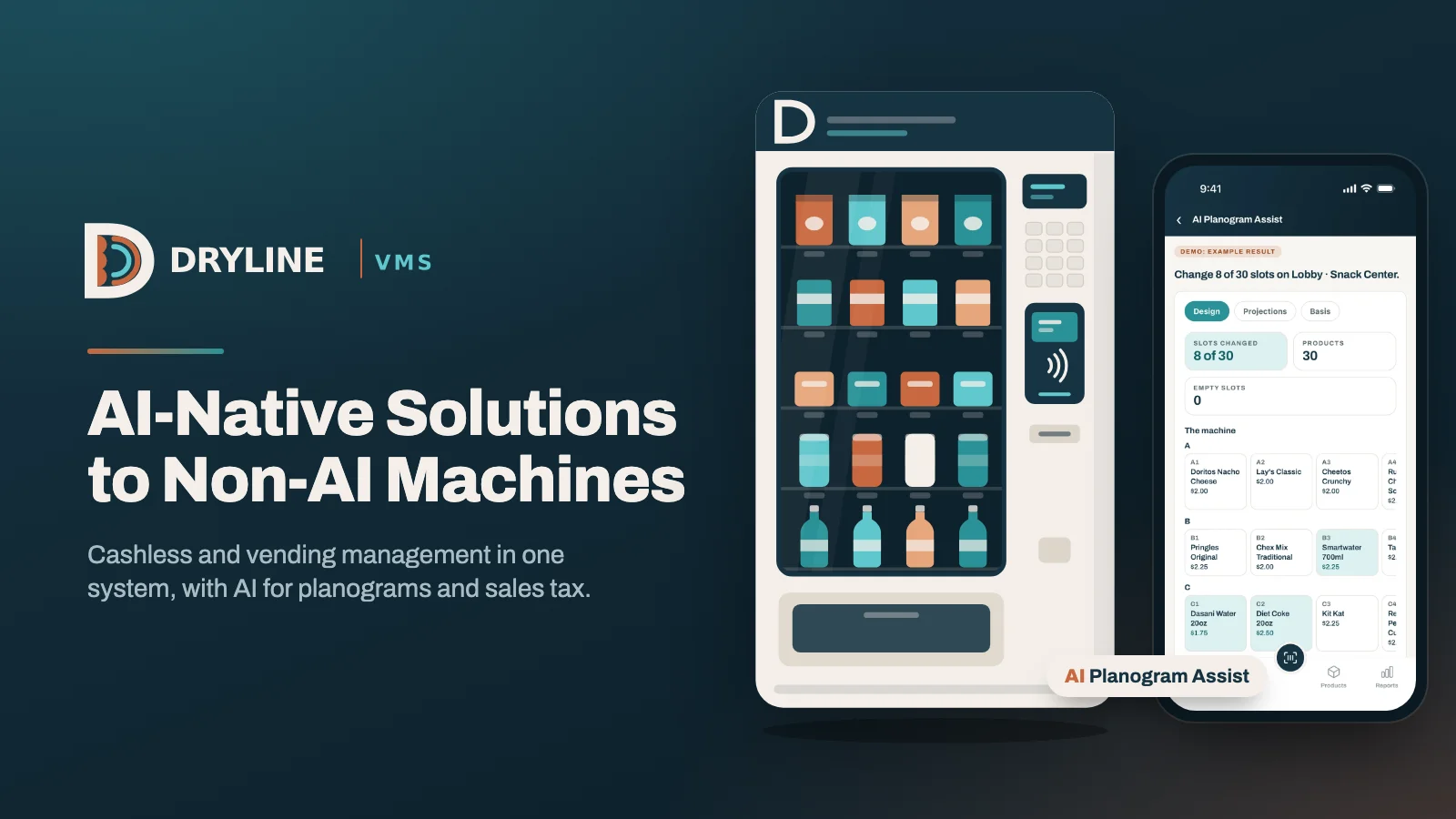
AI vending machines get the headlines, but traditional snack and drink machines still earn every day. Dryline VMS explains how a cashless reader and vending management system built as one, plus new AI tools for planograms and sales tax, make the machines operators already own smarter, more organized and ready to compete.
October 20, 2026
 ChatGPT
 Grok
 Perplexity
 Claude
AI vending machines and camera-based smart coolers are getting a lot of attention, and for good reason. They take cards by default, they know what sold the moment it sold, and they tell the operator what to restock before the route starts. For a location manager comparing options, that looks like the future.
But most of the vending business still runs on traditional spiral machines: snack machines, cold drink machines and combos that are paid for, reliable and already placed at good locations. At Dryline VMS, we do not think those machines are the past. We think they are missing the same intelligence the new machines were built with, and that intelligence can be added without buying a new machine.
What makes an AI vending machine different
Take away the cabinet and the camera, and an AI vending machine offers three things: every customer can pay with a card or a phone, every sale is tied to a product, and the operator sees the machine's stock without opening the door. None of that depends on the machine itself. A traditional machine that supports MDB cashless can do the same with the right reader and the right software behind it.
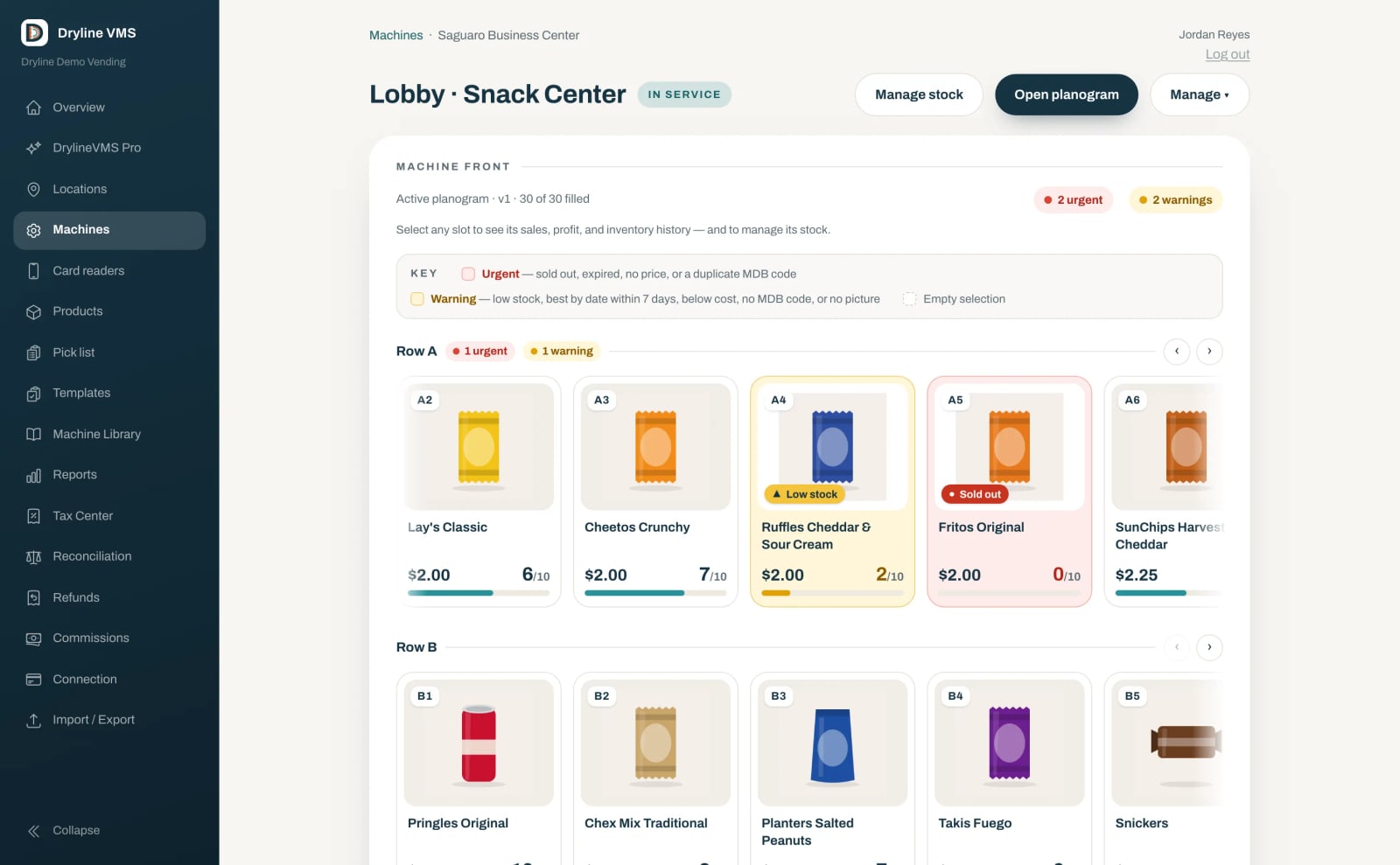
A traditional snack machine in Dryline VMS: every slot with its product, price and stock level.
Integrated beats either half on its own
Operators usually add these capabilities in pieces. A cashless reader from one company, a management system from another, and a spreadsheet in between. Each piece works, but each only sees part of the business.
Cashless reader only: tells you a card was charged at a machine, but not which slot it was, what is left in the coil, or what to bring on the next visit.
Management system only: knows what a machine should hold, but waits on DEX files, a separate telemetry device or payment data imported from another provider, and the operator is left to reconcile two portals that never quite agree.
Dryline VMS: the Rain Pay cashless reader and the management software, built as one system.
Every card sale is tied to the product in the slot it came from, so reports show what sold, not just what was charged. DEX reads arrive from the same reader automatically, so cash sales are recorded alongside card sales. The DEX meter, the dispense records and the card settlements are checked against each other continuously, and anything that does not match is flagged. One account covers the software, the reader, its cellular connection and card processing, and the reader ships registered to your account.
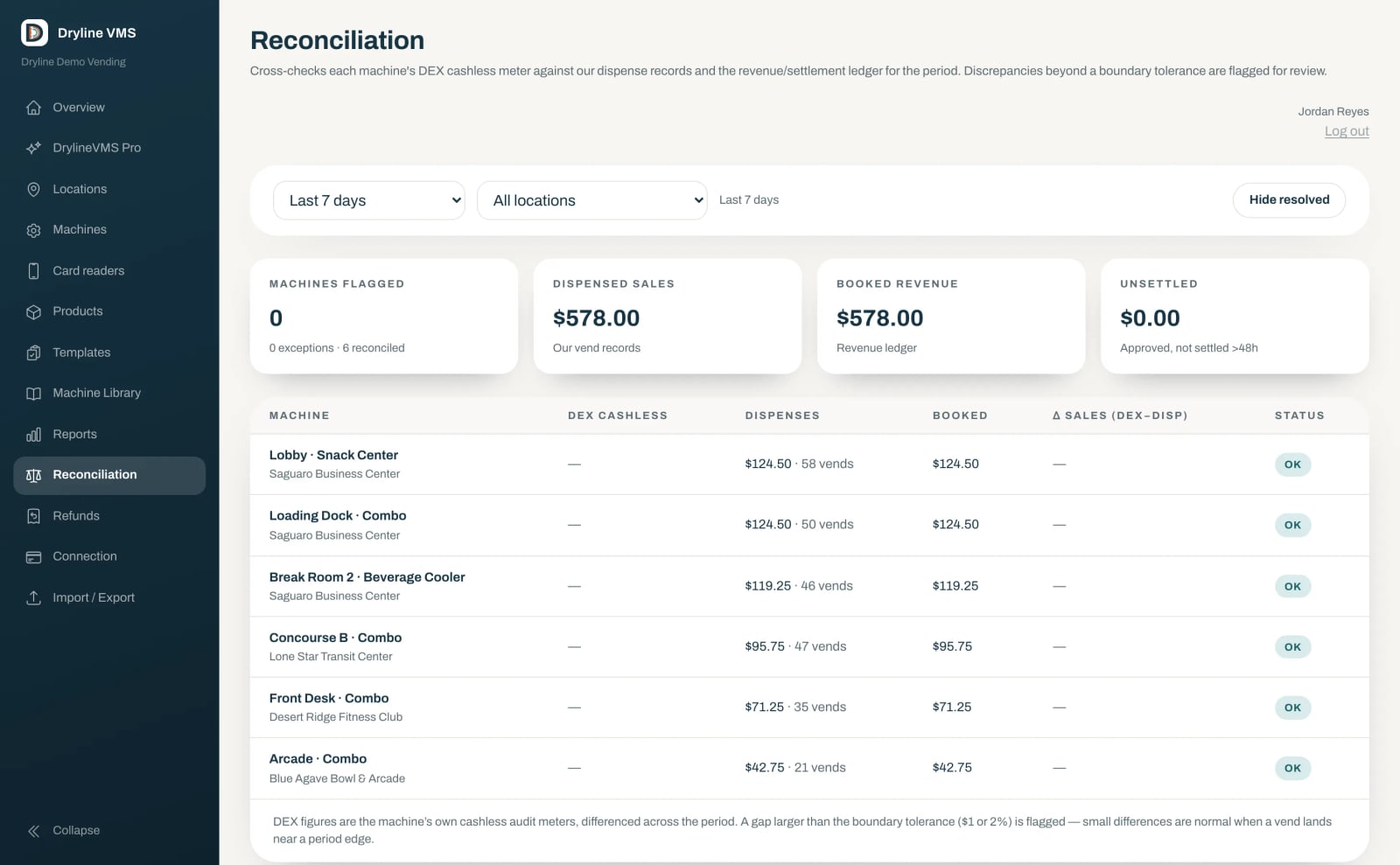
Reconciliation in Dryline VMS: every machine's sales checked against its booked revenue, with any gap flagged.
Because the sales data is complete, everything else in Dryline VMS runs from it, including the features below.
Where AI belongs on a vending route
The most useful AI for an operator is not inside the machine. It is in the decisions the operator makes about the machine.
DrylineVMS AI Planogram Assist
AI Planogram Assist asks five short questions about a machine, then uses AI to draft a planogram from the operator's own products and sales history. It shows the machine slot by slot, with projections and the reason for every slot. The operator reviews it, asks for changes in plain language and publishes only when it is right.
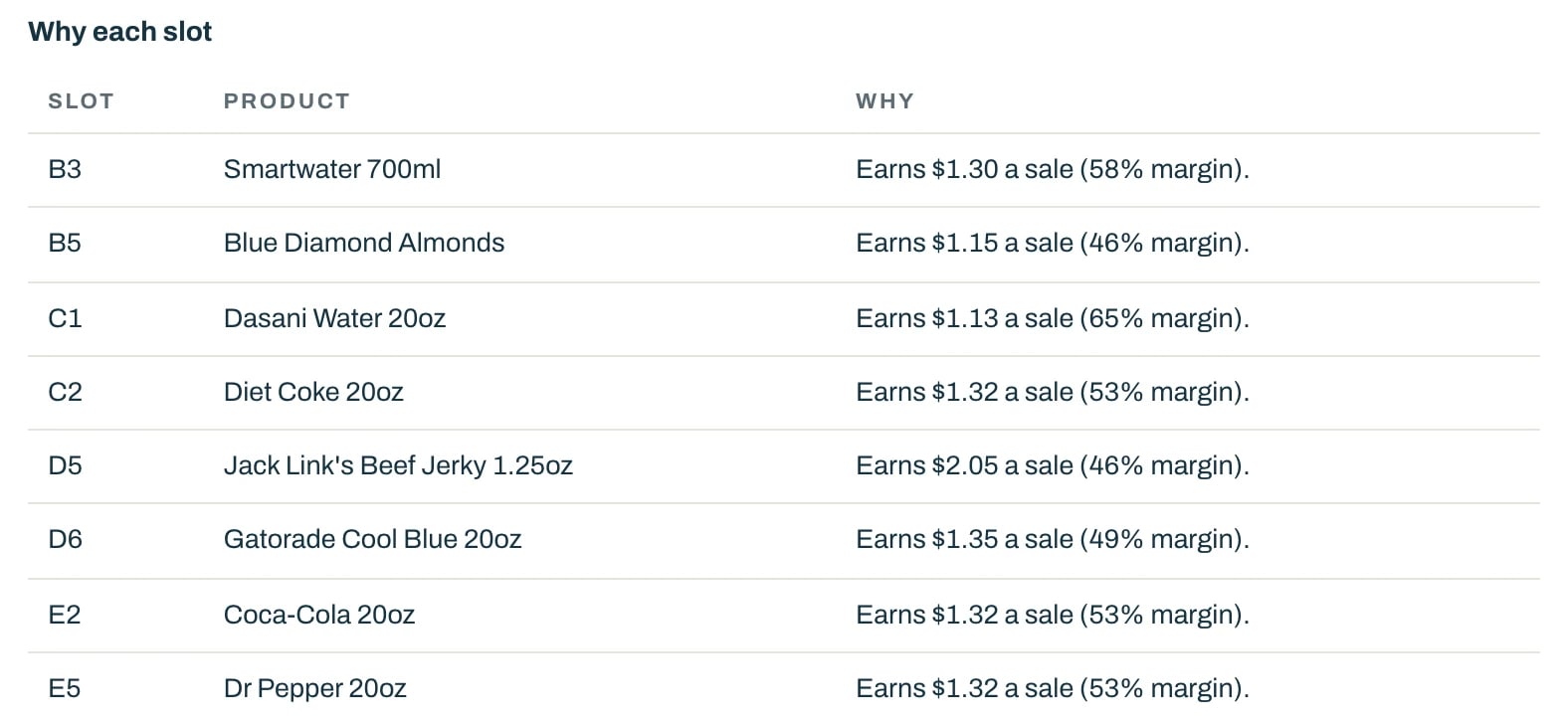
AI Planogram Assist gives the reason for every slot, worked out from the operator's own sales.
DrylineVMS AI Tax Assist
AI Tax Assist sorts every product into its tax category, food or non-food, from what the product is. Dryline VMS then applies the right rate at each location, and nothing changes until the operator accepts it.
Dryline VMS uses large language models from both Anthropic and OpenAI. The AI makes suggestions; the prices, projections and tax rates are worked out by Dryline VMS from the operator's own data.
What we released this fall
Beyond the two AI tools, Dryline VMS added:
- Route planner: lists the sites that need a visit and why, builds each driver's route with arrival times and sends it to the driver's phone.
- Alerts: an email when a machine goes offline or starts failing vends, with a daily list of low and empty selections.
- Pick list: exactly what to bring to each machine, slot by slot.
- Location commissions: what each venue is owed on cash and card sales, with a statement for any period.
- Expiry dates: a best-by date on each restock, with slots holding out-of-date stock flagged.
- Tax Center: sales tax worked out for each machine's address, with each period closed with its reports.
- API and webhooks: sales, stock and visits sent to the operator's own systems.
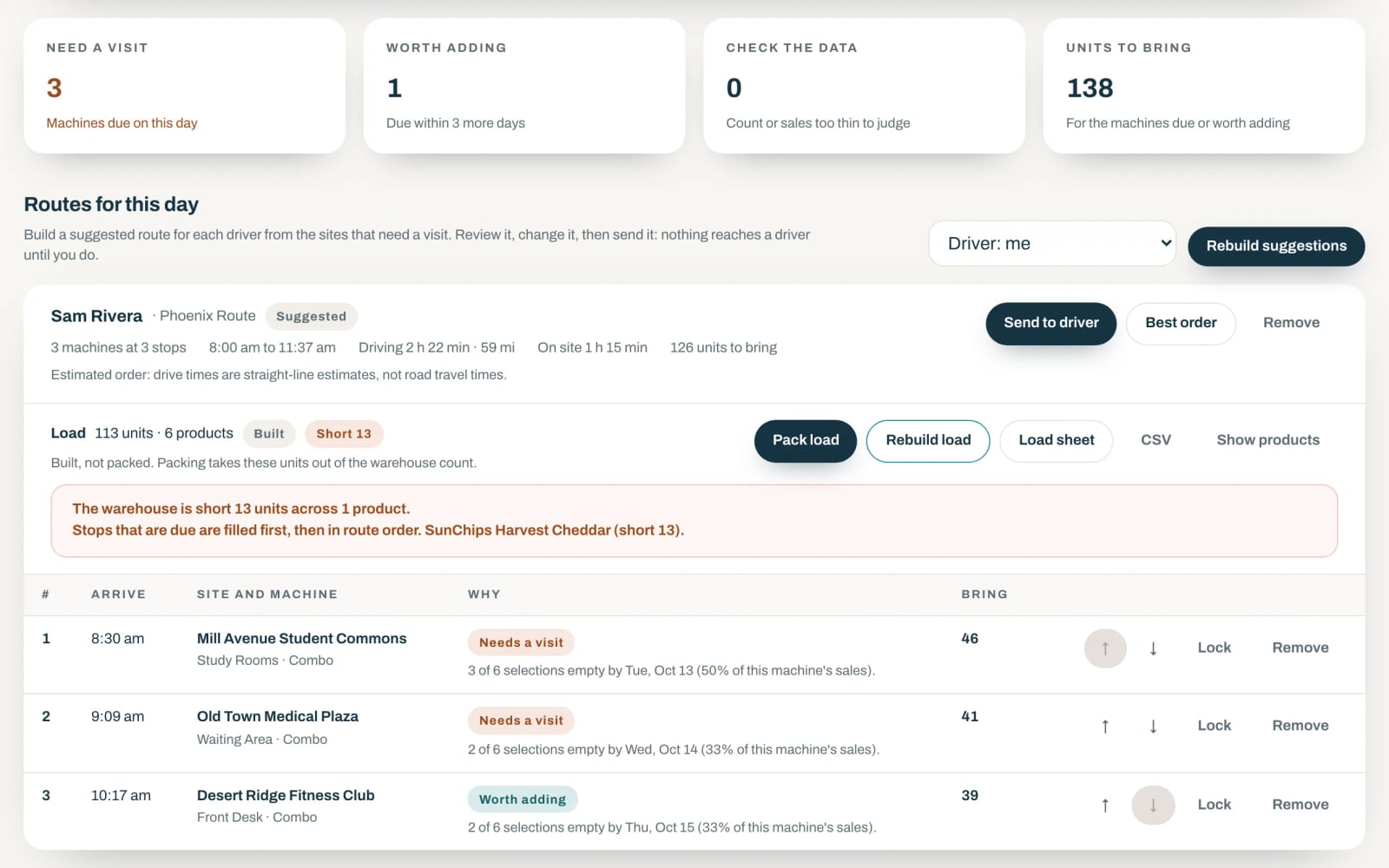
The route planner lists the machines that need a visit and why, then builds the driver's route.
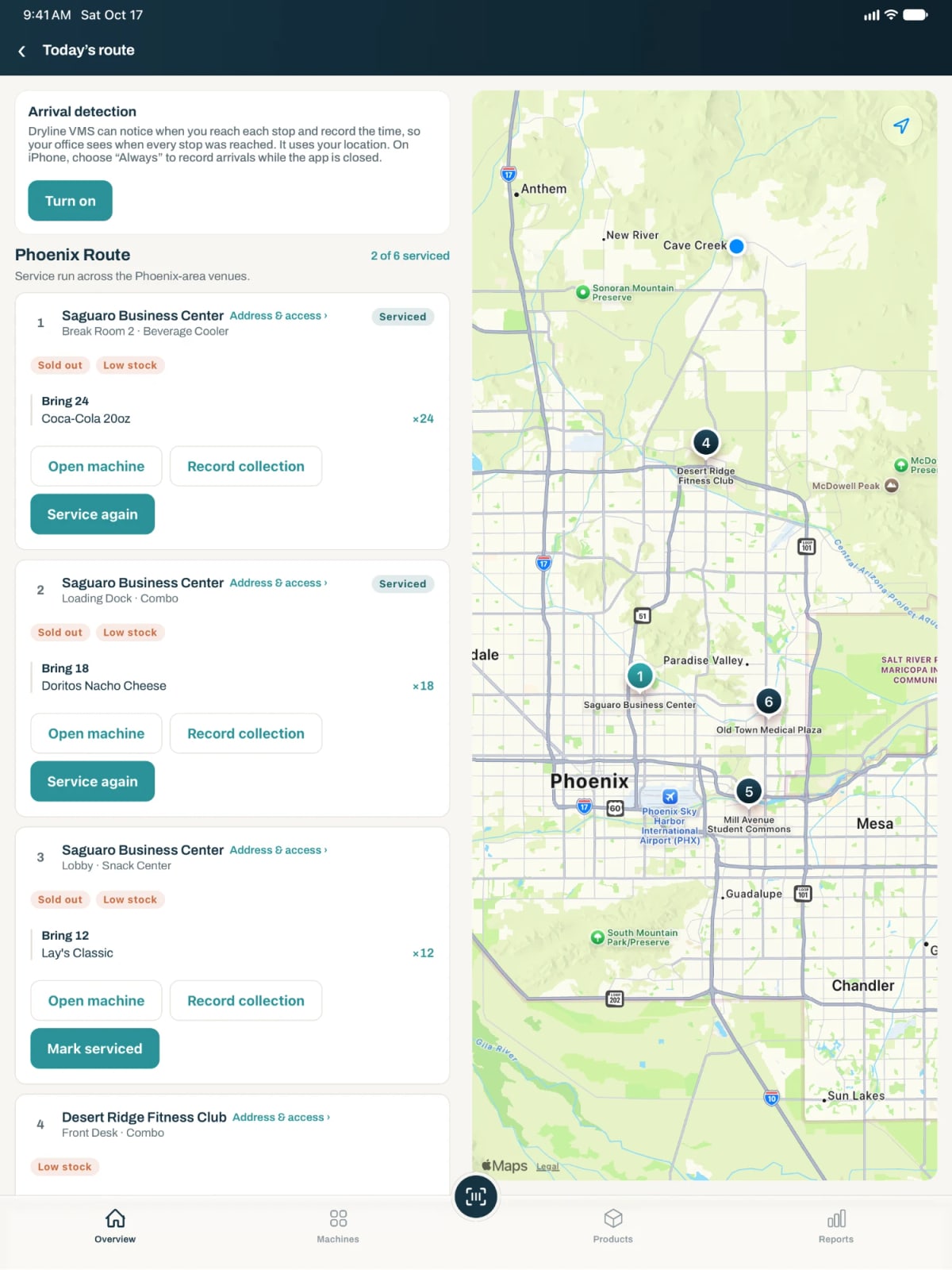
Today's route in the Dryline VMS app: each stop, what to bring, and the route on a map.
What it takes to start
Rain Pay works with most modern vending machines that support MDB cashless. It installs alongside the coin and bill acceptors, so customers keep every way they pay today. Operators bring their locations, machines, products and planograms into Dryline VMS from a spreadsheet or a NAMA VDI 2.0 file.
Traditional vending is still relevant
The machines that built this industry are not going anywhere. They are placed, paid for and trusted by the locations that host them. What they need is the same visibility and decision support that AI vending machines were designed with. Dryline VMS brings AI-native solutions to the non-AI machines operators already own, one reader and one system at a time.
See Dryline VMS on your own machines. Visit www.drylinevms.com or call 844-723-9732.
Included In This Story

DrylineVMS
Run Unattended. Stay in Control.
Dryline VMS is vending management software for unattended retail operators. It shows each machine as its real front with product, price, and fill level per slot; builds planograms by scanning barcodes; reconciles DEX and settlement; and reports sales tied to the actual product sold. It imports and exports NAMA VDI 2.0.
Related Media
Subscribe
Get the latest news and resources from Vending Times.
Recent Posts