Payments
Does cash still matter?
For many operators, accepting bills and coins remains a strategic business decision. While cash transactions continue to decline, eliminating them entirely could mean turning away customers, particularly in certain markets and demographic groups.
July 10, 2026 by Richard Slawsky — Editor, Connect Media
 ChatGPT
 Grok
Grok Perplexity
 Claude
As cashless payments become the norm, operators face a balancing act between efficiency and accessibility.
Walk into almost any modern vending location and you're likely to see stickers promoting contactless payments, mobile wallets and tap-to-pay transactions. Cashless technology has transformed the industry over the past decade, making purchases faster, improving accountability and providing operators with real-time sales data.
But while Vending Times has discussed the benefits of incorporating cashless payment methods into vending machines, it would be wrong to imply that cash no longer has a place in the industry.
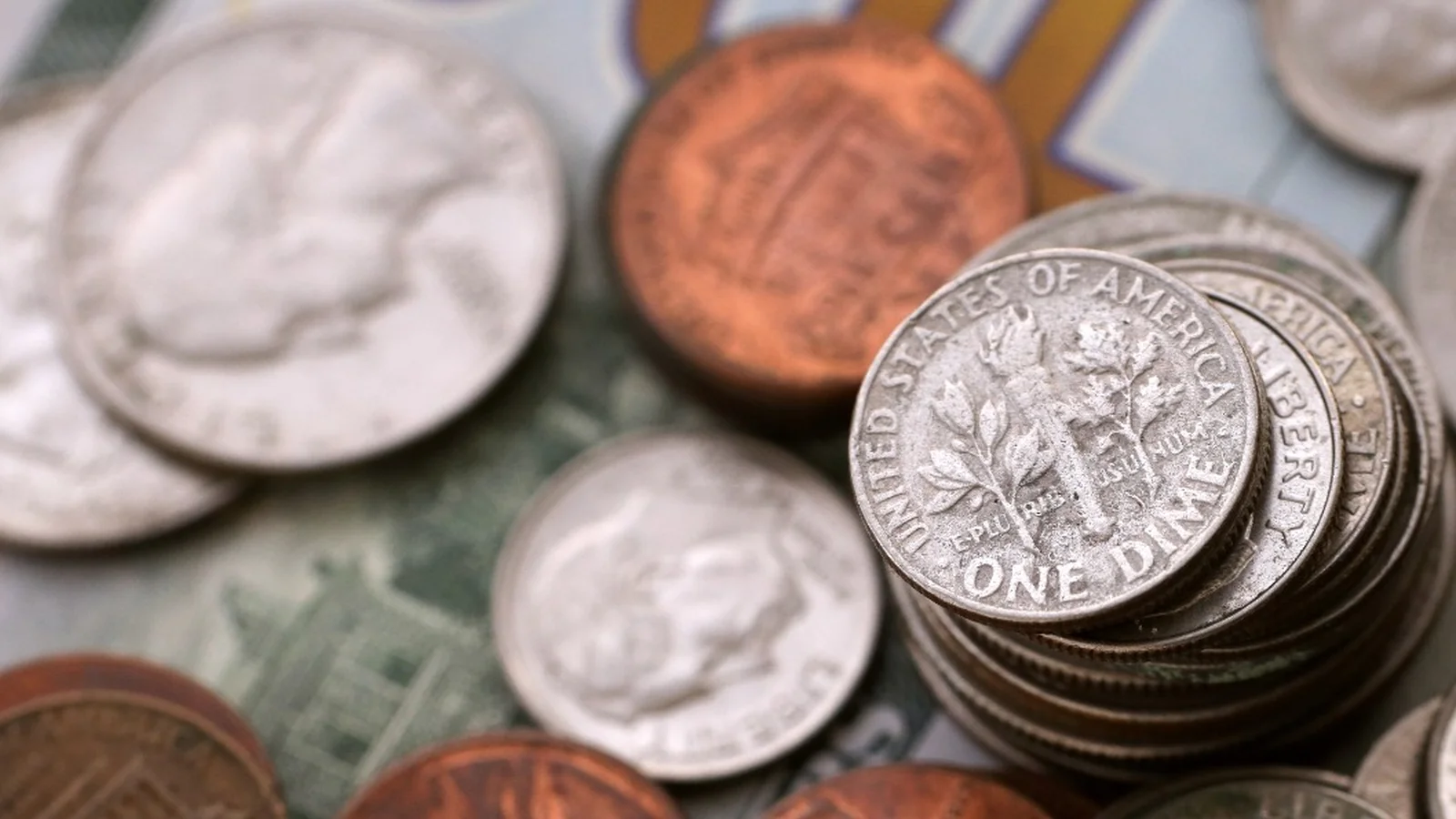
Consumers used cash for 14% of all payments in 2024, according to the Federal Reserve's 2025 Diary of Consumer Payment Choice. Cash remained the third most-used payment method, behind only credit and debit cards, and consumers averaged seven cash payments per month.
Additionally, the Federal Reserve's 2025 Economic Well-Being of U.S. Households found that 6% of U.S. adults do not have a checking, savings or money market account. That's around 16 million adults. And 24% of transactions by low-income consumers are made with cash.
For many operators, accepting bills and coins remains a strategic business decision rather than a legacy obligation. While cash transactions continue to decline, eliminating them entirely could mean turning away customers, particularly in certain markets and demographic groups.
"Cash does still have a place in vending, but whether an operator needs to accept it depends on a few things," Lynda Clarke, general manager U.K . for global commerce enablement and payment platform Nayax, said in an email interview. "First and foremost, who are they serving and how do those customers prefer to pay?"
The question for operators is no longer whether cashless payments are the future. They clearly are. The challenge is determining when and where cash still deserves a place.
Cashless is becoming the default
The advantages of cashless payments are well established.
Card readers and mobile payment systems eliminate many of the operational headaches associated with cash handling. Operators spend less time collecting money, counting receipts and reconciling cash boxes. Security risks associated with theft are reduced, while telemetry systems provide immediate visibility into sales and machine status.
Cashless payments also encourage impulse purchases. Customers who may hesitate before spending the last few dollars in their wallet are often more willing to make additional purchases with a tap of a credit card or smartphone. For operators managing hundreds or thousands of machines, these efficiencies add up quickly.
The National Automatic Merchandising Association estimates that about three-quarters of U.S. vending machines now accept cashless payments, up from 69% in 2018.
But cash hasn't disappeared. Despite steady growth in digital payments, cash continues to play an important role in many vending environments.
Whether cash remains worthwhile often depends on the location. A Class A office building may be almost entirely cashless, while a manufacturing plant or school may still see significant cash transactions. Manufacturing facilities often employ workers who may not carry credit cards during their shifts, while schools frequently serve younger customers who receive lunch money in cash. Public transportation centers, government buildings and lower-income communities also tend to see higher rates of cash usage.
Tourists represent another important segment. International travelers may not always have payment cards compatible with local networks, while cash remains common in some countries.
For these customers, cash isn't a preference. It's their primary payment method. Increasingly, operators are using machine telemetry to evaluate payment preferences on a site-by-site basis rather than applying a single payment strategy across their entire fleet.
The hidden costs of cash
Of course, accepting cash is not without expense.
Every dollar inserted into a machine must eventually be collected, counted, transported and deposited. Bills jam. Coin mechanisms require maintenance. Change must be replenished.
"For many businesses, those costs are becoming increasingly difficult to justify where cash usage is already low," Clarke said. "By contrast, modern cashless payment systems do much more than process a transaction. Once machines are connected, operators gain real-time visibility into sales, stock levels and machine performance, helping them understand what's selling and when, optimize replenishment routes, reduce unnecessary service visits, and keep machines stocked when customers need them."
Cash also increases security concerns. Machines containing significant amounts of currency may become targets for theft or vandalism, while route personnel face additional risks when transporting collections.
Those costs rarely appear on a balance sheet as a single line item, but they affect labor, fuel, maintenance and insurance expenses. For many operators, reducing cash handling has become as much about operational efficiency as payment convenience.
The risk of going cashless
Removing cash acceptance altogether carries its own set of hazards.
Some customers simply walk away when they cannot pay with cash. Others may view cashless-only machines as exclusionary, particularly in communities where banking access remains limited.
Additionally, it may not be possible to obtain the connectivity necessary to implement a cashless payment system, such as in a building's basement, ruling out what may otherwise be a prime location.
Operators also need to keep an eye on changing regulations. Several states and municipalities have enacted cash acceptance laws for retailers, and while traditional vending machines are often exempt, automated retail continues to attract greater legislative attention.
For operators serving public venues, eliminating cash may also affect customer satisfaction.
The lost sale is only part of the equation. A frustrated customer may be less likely to return to that machine, or even the location itself.
"By layering mobile options alongside cash and traditional card acceptance, operators expand their addressable customer base rather than limiting it," Daniel Saitta, payment processing solutions manager with Crane Convenience, told Vending Times in May. "When consumers can pay the way they prefer, transactions increase and missed sales due to lack of exact change or payment friction are reduced."
The future isn't one-size-fits-all
Industry observers generally expect digital payments to continue growing, particularly as younger consumers become the dominant customer base. Still, the transition is unlikely to occur uniformly.
Regional demographics, customer behavior, legislation and location type will all influence how quickly operators can reduce or eliminate cash acceptance.
"Consumer behavior differs vastly by location far more than it does by technology," Cyrus Kennedy, CEO of digital marketing agency The Ad Firm and a certified professional behavioral analyst, said in an email interview. "Let transactions tell you how people are paying instead of the headlines. Operators that analyze payment trends machine by machine make wiser investments than operators that force one policy on an entire fleet."
And rather than choosing between cash and cashless, many operators are embracing both.
Modern payment systems increasingly integrate bills, coins, EMV cards, contactless payments and mobile wallets into a single interface. Customers simply choose whichever payment method they prefer.
This hybrid approach provides flexibility while allowing operators to monitor payment trends over time. The most successful operators are likely to be those who remain flexible, using payment data to guide decisions rather than following blanket policies.
As cash usage gradually declines, operators can make informed decisions based on actual transaction data instead of assumptions.
Cashless technology has unquestionably improved the vending business. It has simplified operations, increased convenience and provided operators with unprecedented visibility into their businesses.
But convenience isn't the only measure of success. For many customers, cash remains the easiest — or only — way to make a purchase. As long as those customers continue to use vending machines, operators will need to weigh the efficiencies of cashless payments against the realities of the markets they serve.
The industry's future is almost certainly more digital than physical. But for now, cash still matters; not because it's the payment method of the past, but because it continues to help operators serve every customer who walks up to a machine.
"Ultimately, accepting cash should be a commercial decision rather than a default one," Clarke said. "If customers genuinely rely on it, it absolutely has a place. But where cash usage has declined, operators should consider whether the ongoing cost and effort of supporting it is still justified."
About Richard Slawsky
In addition to writing, Slawsky serves as an adjunct professor of Communication at the University of Louisville and other local colleges. He holds both a Bachelor’s and a Master’s degree in Communication from the University of Louisville and is a member of Mensa and the National Communication Association.
Related Media
Featured Vendor

Give your kiosks the best in managed connectivity and placement flexibility with powerful 4G LTE
Subscribe
Get the latest news and resources from Vending Times.
Recent Posts