Vending
The kiosk shift, part 3: From USB chaos to smarter kiosk architecture
Modular kiosk design separates customer interfaces, payments and mechanical controls, helping operators diagnose faults, replace components and standardize fleets. Android and ARM platforms can support the shift, reducing complexity and service costs while keeping critical functions local when internet connections fail.
October 29, 2026 by Ben Wheeler — Dir. of Business Dev. - Automated Retail, T-ROC
 ChatGPT
 Grok
 Perplexity
 Claude
In Part 2 of this series, I looked at how Android and ARM-based systems are changing the way kiosks communicate with scanners, payment devices, printers, sensors, and other peripherals.
That discussion leads to a more interesting question.
What if every device inside the kiosk did not need to communicate directly with the main computer at all?
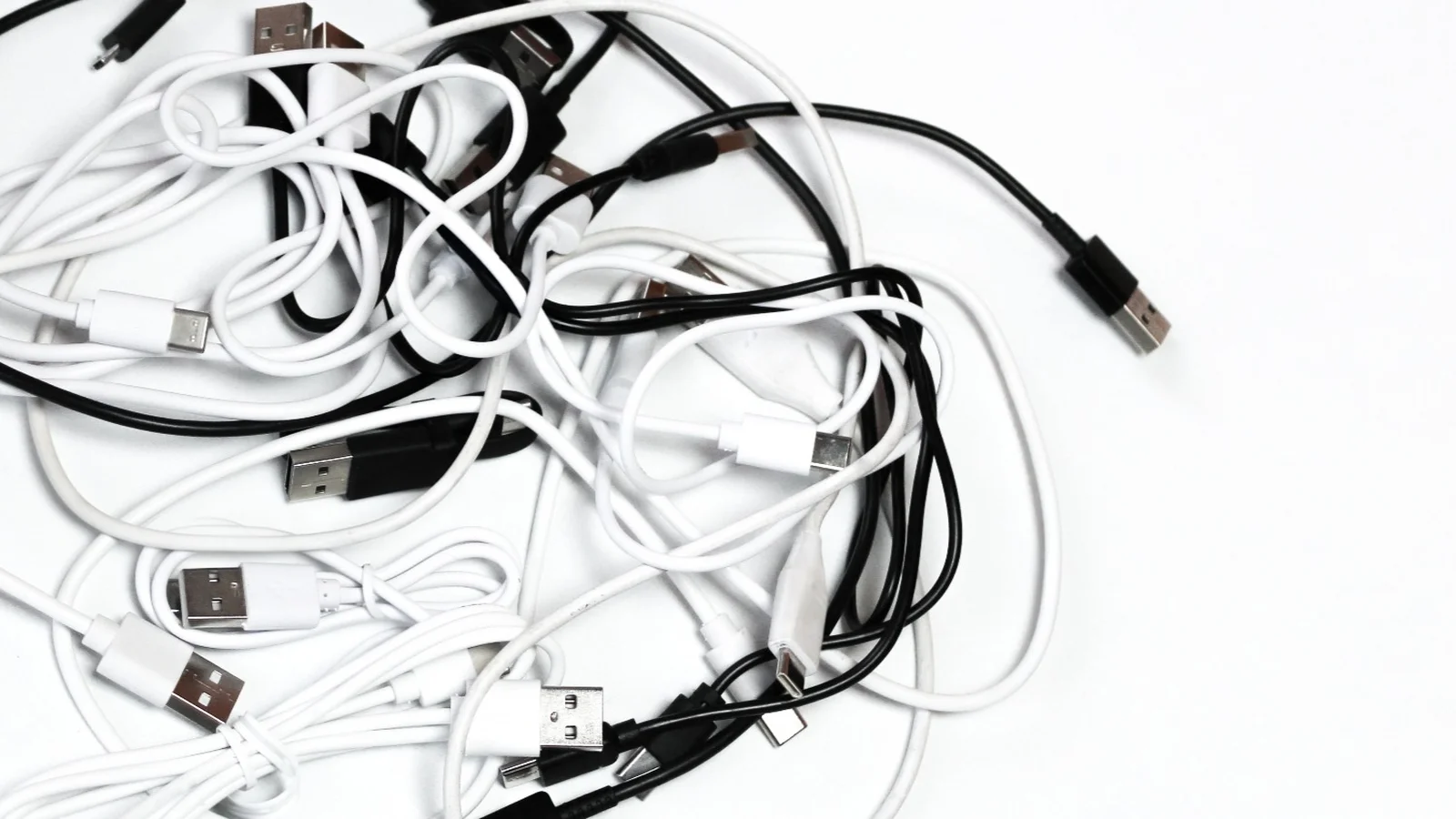
For years, many automated retail machines were built around a central PC that sat in the middle of everything. As machines became more capable, manufacturers added USB hubs, serial adapters, interface boards, drivers, and wiring to connect each new component.
It worked, but it also created a lot for manufacturers and service teams to manage.
A different architecture is becoming increasingly practical. Rather than asking one computer to manage every motor, sensor, lock, scanner, and mechanical movement, manufacturers can divide those responsibilities among network-connected devices and dedicated controllers.
That may sound like an engineering change. In practice, it can change how the entire kiosk is built, serviced, and scaled.
Not every device needs a USB cable
The first shift is fairly simple: physical proximity no longer has to dictate how every component communicates.
Android applications can communicate with devices across local networks, and industrial hardware can support Ethernet, Wi-Fi, Bluetooth, or other local interfaces depending on the device and installation.
That gives kiosk designers more options. A payment terminal may communicate across a local network rather than through a traditional PC connection. A printer may expose a manufacturer-supported network interface. Monitoring hardware can report status through an IP connection, while a dedicated controller manages the motors and sensors inside the machine.
The result is not a kiosk without cables. Mechanical equipment still needs reliable connections, and wired communication often makes sense inside an unattended machine.
The important change is that every cable no longer has to terminate at the same computer. That distinction opens the door to a much cleaner architecture.
Let the controller control the machine
This is where I think the conversation becomes especially relevant for automated retail.
Consider a machine with several motors, product-detection sensors, door switches, lighting, temperature monitoring, and a robotic dispensing mechanism.
The customer selects an item and completes the transaction through the Android application. At that point, the main computer does not necessarily need to know how to operate each motor or interpret every sensor individually.
It can send a command to a dedicated controller: dispense the product in location B12.
The controller then handles the mechanical sequence. It can move the dispensing mechanism, watch the necessary sensors, confirm position, release the item, and report whether the operation succeeded.
The Android computer is coordinating the transaction, but it is no longer micromanaging every electrical event inside the machine.
That separation is important because software and mechanical systems change at different speeds. A retailer may update the customer interface several times during the life of a kiosk, while the manufacturer may replace a sensor, motor, or dispensing assembly in a later generation.
If those functions are separated through well-defined interfaces, a change to one part of the machine is less likely to require a redesign of everything around it. That is the real value of modular architecture.
Local intelligence matters most when something goes wrong
Cloud connectivity is now central to automated retail. Inventory, reporting, monitoring, software management, and business analytics may all depend on remote systems.
The machine itself still needs to know how to function when connectivity becomes unreliable.
This is where local controllers become valuable. A dispensing controller does not need to ask a cloud server how to move a motor every time someone buys a product. Once the kiosk has a valid instruction to complete the transaction, the local system can manage the mechanical sequence and report the result.
Keeping those time-sensitive functions inside the machine reduces unnecessary dependence on an internet round trip.
Payments need to be treated separately. Whether a transaction can continue during a connectivity outage depends on the payment provider, terminal, card type, configuration, and merchant risk rules. Some payment platforms support specifically configured offline or store-and-forward transactions, but those modes carry limits and financial risk and cannot simply be assumed to work in every deployment.
That distinction matters because "offline capable" can mean very different things inside one kiosk. The dispensing system may be able to operate locally while payment authorization still depends on an approved payment configuration. Inventory records may queue for later synchronization, while a safety controller should continue doing its job regardless of whether the cloud connection is available.
A well-designed machine knows which decisions belong locally and which ones require another system.
Payments and printing are becoming their own subsystems
Payments are a good example of why this architecture matters.
Older kiosk designs often tied payment hardware closely to the main PC through drivers and specialized software. Modern commercial payment systems can support other models, including local network communication between the application and the payment terminal.
In that model, the payment device handles the sensitive payment functions while the kiosk application manages the larger transaction flow.
That division of responsibility is useful. The customer-facing application does not need to become the payment terminal, just as it does not need to become the motor controller.
Printing offers a similar lesson. Android includes a system print framework, while commercial kiosk and receipt-printer deployments may rely on manufacturer SDKs, direct command protocols, or network interfaces depending on the hardware.
The lesson is not that Android removes every driver or vendor dependency. It is that kiosk designers have more choices about where those dependencies live.
A specialized device can own its specialized function while exposing a cleaner interface to the rest of the system.
Modular design changes the service call
This is where architecture stops being an engineering discussion and starts becoming an operations discussion.
Every kiosk eventually needs service. A cable loosens, a component fails, a printer stops responding, a dispensing mechanism develops a problem, or a compute module reaches the end of its useful life.
In a tightly interconnected machine, technicians may have to work through several layers of hardware and software before they can isolate the cause.
A modular design can make that process much clearer.
If the customer-interface computer is healthy but the dispensing controller is reporting a fault, the technician has a much narrower area to investigate. If the controller itself fails, it may be possible to replace that module without disturbing the customer-facing computer or rebuilding the rest of the machine.
The same thinking can apply to printers, payment terminals, refrigeration systems, cameras, and other subsystems.
That does not guarantee easy service. The machine still has to be engineered well, documented correctly, and supported with the right diagnostics.
But there is an enormous difference between servicing a machine built from identifiable modules and tracing an issue through a collection of adapters, drivers, and connections that have accumulated over several hardware generations.
At T-ROC, we spend a great deal of time thinking about what happens after an automated retail machine reaches the field. A technically impressive design has limited business value if every failure requires an expensive service visit or a technician needs hours to determine which component caused the problem.
Good architecture should make the service organization's job easier, too.
Standardization Is where scale starts paying back
From a business development perspective, this may be the most interesting part of the shift.
Imagine a manufacturer building several automated retail platforms. One sells electronics. Another dispenses refrigerated products. A third uses robotics to retrieve merchandise, while another controls secure access to higher-value inventory.
Mechanically, those machines may have very little in common. The central computing platform does not necessarily have to be different.
The same industrial Android platform could potentially manage the customer interface, transaction workflow, remote management, and cloud connectivity across several product lines, while specialized controllers deal with the unique mechanical systems inside each machine.
That kind of standardization can change the economics of a fleet.
A company may be able to stock fewer varieties of replacement computers, train technicians around a more consistent platform, maintain a smaller set of software configurations, and simplify the process of deploying updates across different machine types.
This is where seemingly small engineering decisions begin to affect national operations.
Across 20 kiosks, maintaining an extra adapter or computer configuration may not seem important. Across 2,000 kiosks, every unique component becomes another item that has to be purchased, documented, stocked, diagnosed, shipped, and supported.
Scale has a way of exposing unnecessary complexity.
The goal is not a smaller PC. It is a better machine.
One mistake manufacturers can make is treating this shift as a simple computer replacement.
Remove the Windows PC, install a smaller Android board, reconnect all the same devices, and declare the project complete. That misses the larger opportunity.
Android and ARM-based computing become much more interesting when manufacturers reconsider which responsibilities belong on the main computer in the first place.
The customer-facing application should concentrate on the customer experience and transaction flow. Dedicated controllers can manage specialized mechanical functions. Payment hardware can handle payment-specific tasks. Remote systems can support monitoring, reporting, inventory, and device management.
Each layer has a clear job.
That separation can make it easier to change one piece without disrupting the entire machine. It can also make problems easier to isolate, replacement parts easier to manage, and future machine designs easier to build around a common foundation.
For companies hoping to deploy automated retail across hundreds or thousands of locations, those benefits may eventually matter more than the initial savings on the computer itself.
The goal is not simply to build a less expensive kiosk. The goal is to build a machine that is easier to deploy, easier to diagnose, easier to service, and more economical to operate throughout its life.
That is what makes modular architecture worth paying attention to.
Coming in Part 4:We will move beyond the machine itself and look at what happens when Android- and ARM-based kiosks reach national scale, including remote device management, security, software updates, uptime, and the long-term cost of supporting a distributed fleet.
About Ben Wheeler

Related Media
Subscribe
Get the latest news and resources from Vending Times.