Vending
Predictive vending: Why telemetry Is changing the way we think about service
The most important change in the vending industry is not simply contactless payment, better screens, or smarter-looking machines. It is visibility. We can now know what is happening inside a machine before the customer has to tell us.
June 9, 2026 by Dave Berman — Co-Founder & Director, VendEase
 ChatGPT
 Grok
Grok Perplexity
 Claude
For years, vending was managed with a mixture of routine, experience and crossed fingers.
A driver visited the machine on Tuesday because Tuesday was the scheduled day. If the machine was full, the visit was unnecessary. If it had been empty since Saturday, the visit was too late. If there was a payment fault, a temperature issue or a product jam, the operator often discovered it only after a customer had already been disappointed.
That was the old model. Familiar, workable in places, but blunt.
After more than twenty years in vending, I think the most important change in our industry is not simply contactless payment, better screens or smarter-looking machines. It is visibility. We can now know what is happening inside a machine before the customer has to tell us.
That changes the job entirely.
The weakness of the scheduled visit
The traditional service model was designed around the operator's timetable, not the user's need.
That matters because demand is rarely predictable. A machine in a university library behaves very differently during exam season than it does in August. A hotel machine can be quiet all week and then suddenly busy after a delayed coach arrival. A hospital machine may see its most important demand at three in the morning. A construction site changes as the project moves from groundwork to fit-out.
A fixed visit schedule cannot properly respond to that. It can only make an educated guess.
And when the guess is wrong, the result is usually visible to the person least able to solve it: the customer standing in front of the machine.
There is not much romance in vending when someone needs water, food or a phone charger and finds an empty spiral.
What telemetry actually does
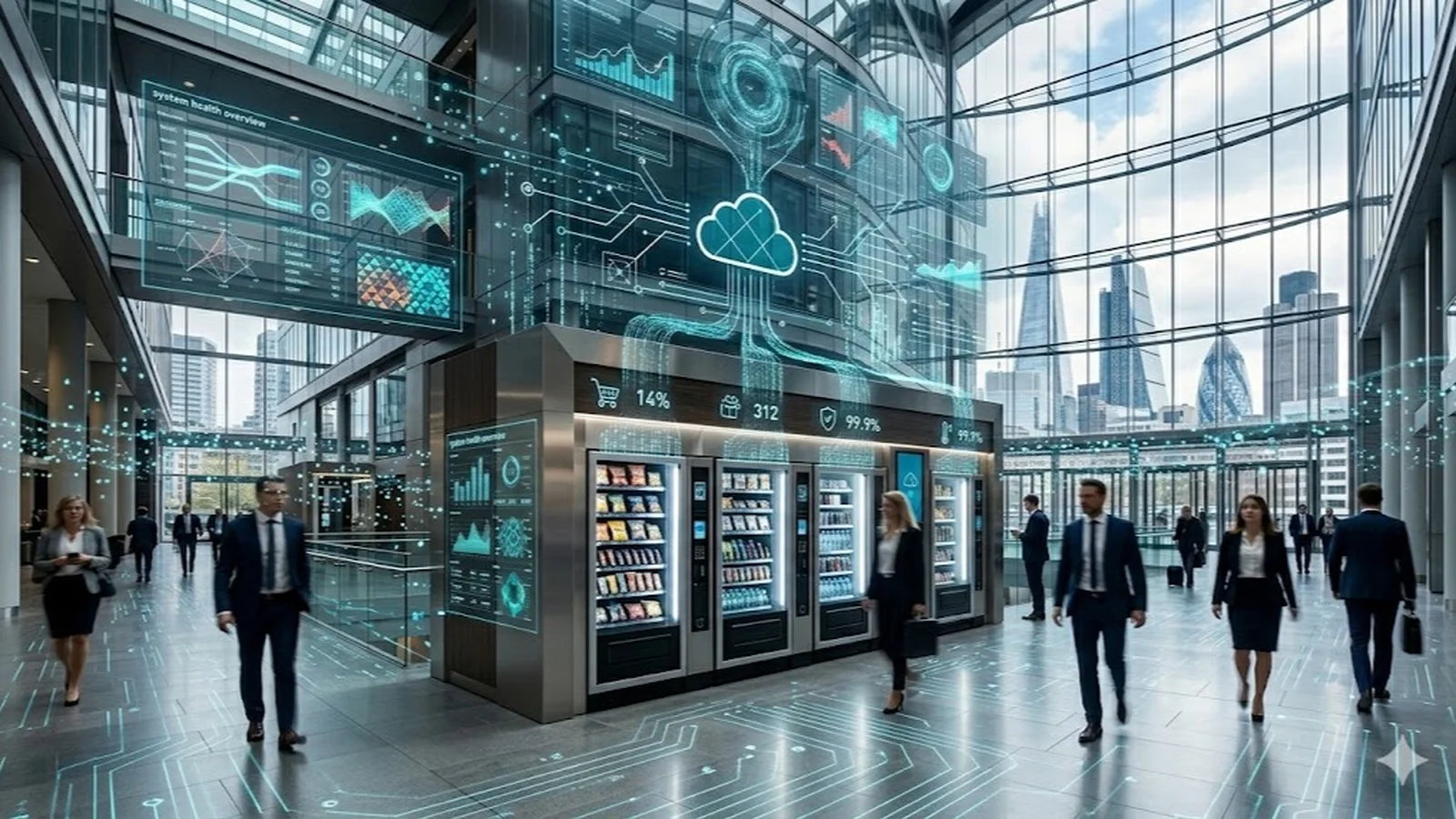
Telemetry can sound more complicated than it is. In simple terms, it allows a vending machine to send live information about stock levels, payment status, machine health, temperature and usage back to the operator.
So instead of guessing, we can see.
If a popular product is running low, the machine can trigger a restocking alert. If a card reader fails, the service team can know before the next complaint. If a chilled machine shows a temperature issue, that can be flagged quickly. If a certain product is not selling, the data will say so clearly.
This moves vending from a reactive model to a managed service model.
At VendEase, that distinction is central to how we think about the business. A machine is not simply placed and left to fend for itself. It is monitored, stocked, maintained and adjusted based on what is actually happening.
Uptime is a service standard
One mistake people make with vending is to treat downtime as a minor inconvenience. It is not.
If a hotel guest arrives late and cannot get water, that is a service failure. If a nurse on a night shift finds the machine empty again, that is a welfare issue. If a student revising at midnight cannot get food or a charger, that affects the campus experience. If a construction worker cannot get a drink during a demanding shift, that has a practical impact.
A vending machine that does not work is worse than no vending machine at all, because it creates an expectation and then breaks it.
Telemetry allows uptime to become measurable. We can see whether the machine is functioning, when a fault appeared, how quickly it was resolved and whether stock availability matched demand.
That matters for facilities teams, estates managers and clients who increasingly need evidence, not anecdotes. "The machine seems fine" is not a service metric. Live operational data is.
Better data means better choices
Telemetry is not just about avoiding empty machines. It also helps answer a more interesting question: what do people actually want?
For too long, vending was stocked as if every environment were the same. A hospital, a hotel, a university, an office and an events venue might all receive broadly similar product ranges, because that was easier to manage.
But people use vending differently depending on where they are and why they are there.
In some environments, healthier options move quickly. In others, water, energy drinks, protein products or personal care items are the real essentials. In hotels, late-night demand often looks different from daytime demand. In universities, the calendar makes a huge difference. In healthcare, the night shift matters as much as the lunch rush.
Sales data helps the product mix evolve. If something sells, we can expand it. If something sits there, we can replace it. The result is a machine that feels more relevant because it is being shaped by real behaviour.
Operationally, this also makes the service more efficient. Drivers can be sent where they are needed, rather than where the old schedule says they should go. That reduces wasted journeys, improves restocking and supports better route planning. It is good service and, quietly, better environmental practice too.
From machine in the corner to managed infrastructure
The vending industry has sometimes undersold itself by allowing people to think of vending as a box in the corner.
That view is out of date.
Modern vending, done properly, is part of a wider service environment. It supports hospitality, healthcare, education, workplace experience, site welfare and property management. But it only earns that role if it is reliable.
Telemetry is one of the tools helping the industry get there. It gives operators the information to act sooner, clients the confidence to expect better service and users the simple experience they actually want: they walk up to the machine, find what they need, pay easily and get on with their day.
The old question was, "When is the next visit?"
The better question is, "What does the machine need right now?"
That is where vending is heading. More responsive. More measurable. More useful. And far less likely to leave someone standing in front of a machine wondering why the future still cannot dispense a bottle of water.
About Dave Berman
Dave Berman is the Co-Founder of VendEase, a leading UK-based automated retail operator revolutionising the sector alongside his business partner, Jonny Holmes. From their London headquarters, the duo has established VendEase as a top-tier partner, renowned for tech-led programmes and a 'fully managed' model. Today, the business boasts high profile clients and partners, including Premier Inn, University of Greenwich, and Mars, Inc., delivering bespoke solutions that place VendEase at the very forefront of modern British vending.
Related Media
Subscribe
Get the latest news and resources from Vending Times.
Recent Posts