Payments
Beyond surge pricing: A smarter model for automated retail
Should prices inside an automated retail environment change based on current conditions? The technical answer is yes. The more important business answer is: only when the change creates clear or at least a perceived value for the customer and the operator.

August 10, 2026 by Ben Wheeler — Dir. of Business Dev. - Automated Retail, T-ROC
 ChatGPT
 Grok
Grok Perplexity
 Claude
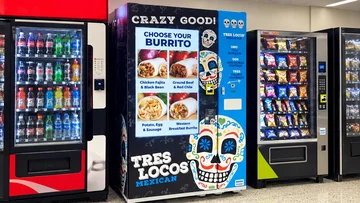
Automated retail has become much more capable than the traditional vending machine.
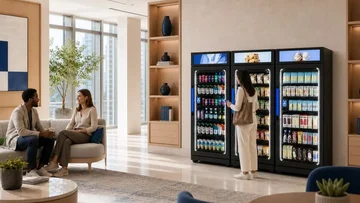
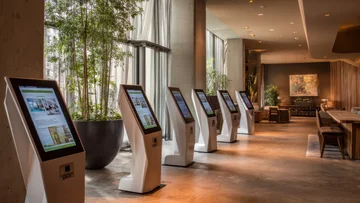
Connected coolers, kiosks, smart cabinets, and micro markets can now monitor inventory, recognize products, process digital payments, track sell-through, and update information remotely. With the right systems in place, an operator can see what is selling, when it is selling, and which items may become waste.
That creates an important question:
Should prices inside an automated retail environment change based on current conditions?
The technical answer is yes. The more important business answer is: only when the change creates clear or at least a perceived value for the customer and the operator. You have to find a balance to the decision that creates a Win/Win for the operator and especially for the customer or you risk alienation of the customer.
The term "surge pricing" tends to focus the discussion on charging more during periods of strong demand. That is a narrow—and potentially damaging—way to view the opportunity.
A better approach is responsible dynamic pricing. Prices may adjust based on factors such as product freshness, inventory position, time of day, location demand, or a planned promotion. The objective is not to find the highest price a customer will tolerate. It is to improve product availability, reduce waste, support smarter promotions, and protect long-term customer trust.
Automated retail now produces actionable data
Older vending equipment gave operators limited information. A route operator might know that a machine needed service or that a product slot was empty, but deeper decisions often depended on manual counts and past experience.
Modern automated retail systems can provide a much fuller operating picture.
Depending on the equipment and program data, operators should have access to:
- Real-time inventory levels
- Product sell-through rates
- Transaction times
- Payment activity
- Product expiration dates
- Machine health alerts
- Local traffic patterns
- Weather information
- Promotion performance
- Location-specific purchasing trends
That data can support better pricing decisions. It can also create poor customer experiences if used without clear rules.
The presence of data does not mean every variable should control price. Operators must decide which signals are relevant, which are reliable, and which uses are consistent with the brand promise.
Start with the best use case: reducing waste
Fresh-food discounting may be the clearest starting point for dynamic pricing in unattended retail.
A sandwich with several days of shelf life remaining may sell at its standard price. As the product approaches its sell-by date, the system could apply a clearly labeled discount.
The customer receives a better value. The operator has a stronger chance of selling the product rather than removing it as waste. The location can improve sell-through without placing an added burden on the customer.
This model is easier to explain than a demand-based price increase because the customer can see the reason for the change.
Examples might include:
- "Freshness Savings"
- "Enjoy Today and Save"
- "End-of-Day Special"
- "Afternoon Meal Deal"
The language matters. A customer should know the current price before making a purchase and understand why the offer is available.
This is where automated retail can move past traditional vending. The unit becomes an active inventory-management channel rather than a static box waiting for the next service visit.
Dynamic pricing should create value in both directions
Pricing technology should do more than raise prices. In many automated retail programs, its best uses may involve discounts, bundles, or incentives.
An operator could use it to:
- Discount fresh products before they expire
- Offer breakfast or afternoon promotions
- Pair complementary items at a package price
- Encourage trial of a new product
- Move slow-selling inventory
- Reward repeat customers
- Test location-specific promotions
- Support planned events or seasonal offers
These cases can improve the economics of the unit while giving customers a visible benefit.
Upward adjustments require more care.
A sudden increase on bottled water during extreme heat, for example, may be technically possible. It may also feel unfair, especially in a workplace, hospital, school, airport, or other setting where customers have limited alternatives.
The key question is not simply whether demand supports a higher price.
The better question is:
Will the customer understand and accept the reason for the change?
If the answer is uncertain, the pricing strategy needs more work.
Trust is a business metric
Customers build expectations around repeated purchases.
An employee who buys the same beverage from the same workplace cooler each afternoon will probably remember the normal price. If that price changes without explanation, the customer may view the machine as unreliable—even when the increase is small.
That reaction can affect more than one transaction. It may reduce future purchases, generate complaints, or create distrust toward the employer, operator, and product brand.
Operators should monitor customer response with the same attention they give revenue.
A pricing pilot should track:
- Unit sales
- Gross revenue
- Gross margin
- Product waste
- Basket size
- Repeat purchases
- Refund requests
- Customer complaints
- Abandoned transactions
- Location-level satisfaction
A price increase that produces a brief margin gain but reduces repeat use is not a successful result.
Automated retail depends on habitual customer behavior. Protecting that habit often matters more than capturing a few extra cents during a busy hour.
Dynamic pricing is different from personalized pricing
There is an important distinction between changing a price based on general operating conditions and changing it for a particular person.
A freshness discount applied to every customer is dynamic pricing.
A scheduled afternoon promotion available to everyone is dynamic pricing.
A different price based on an individual customer's location history, browsing activity, device information, purchasing behavior, or assumed willingness to pay moves into personalized pricing.
That creates a different level of risk.
For most unattended retail programs, pricing should be based on transparent operational conditions rather than hidden personal profiles. Customers should not have to wonder whether someone standing beside them is receiving a different base price for the same item at the same moment.
Loyalty programs can still offer member discounts or earned rewards. Those benefits should be clearly communicated and consistently applied.
Practical guardrails for automated retail
Before activating any pricing model, operators should establish rules that the system cannot override without approval.
1. Display the full price before purchase
The customer should see the current price before opening a controlled-access unit or confirming the transaction. Any promotion, discount, or member price should be easy to identify.
2. Avoid surprise changes during a transaction
The price shown when a customer begins the purchase should remain valid through checkout. A price should never change after the product has been selected.
3. Begin with discounts and promotions
Freshness discounts, timed offers, and product bundles give operators a lower-risk way to test the systems and measure customer response.
4. Set program-specific limits
There is no universal percentage that is appropriate for every product or location. Operators should set boundaries based on product category, price point, customer expectations, contractual requirements, and pilot results.
5. Keep a complete pricing record
Every price change should create a record showing:
- The previous price
- The new price
- The time of the change
- The reason for the change
- The rule or person who authorized it
- The locations and products affected
- The time the price returned to normal
This record supports customer service, financial review, and program accountability.
6. Require human oversight
Automated recommendations can help teams act faster, but people should remain responsible for pricing policy. High-impact changes should require approval, especially when they affect essential goods or sensitive locations.
7. Build an immediate rollback process
If complaints increase, sales decline, or the system behaves unexpectedly, teams should be able to restore the standard price at once.
Test in stages, not across the entire fleet
A pricing program should begin with observation.
During an initial analysis period, the system can study sales activity, inventory movement, product life, and demand patterns without changing customer prices. This helps the operator judge data quality and identify patterns.
The next phase should test one clear use case in a limited group of locations.
Expiration-based discounting is a strong example. It has a measurable goal, a customer benefit, and a direct connection to inventory waste.
After the test, operators can compare participating locations with similar locations that retained standard pricing.
Questions to examine include:
- Did more products sell before expiration?
- Did waste decrease?
- Did customers respond to the discount?
- Did total margin improve?
- Did the offer affect full-price sales?
- Were there transaction or display errors?
- Did customer questions or complaints increase?
- Did field teams have to change replenishment practices?
Only after those questions are answered should an operator consider a broader rollout or a second pricing variable.
Testing several rules at once makes it difficult to know which change produced the result.
Field operations still determine success
Pricing software does not work in isolation.
The data is only useful when the physical operation is accurate. Products must be placed in the correct location. Expiration dates must be captured correctly. Inventory counts must match what is inside the unit. Digital displays must show the same price that appears at checkout.
Field teams remain central to the process.
They confirm that:
- Products are loaded into the correct positions
- Inventory records match physical inventory
- Date information is accurate
- Promotional labels display correctly
- Pricing changes appear across all customer touchpoints
- Damaged or expired items are removed and recorded
- Customer issues are reported quickly
A pricing rule built on bad inventory data will produce bad results faster. The quality of field execution sets the quality of the pricing decision.
Technology must serve the program
At T-ROC, we look at automated retail as a complete operating program.
The equipment matters. So do deployment, replenishment, merchandising, inventory control, maintenance, data review, customer support, and field accountability.
Dynamic pricing belongs inside that larger system.
Before recommending a pricing strategy, operators should understand the customer, the location, the product category, the service model, and the program's long-term goals. A hospital lobby has different customer expectations from an entertainment venue. A workplace micro market differs from an airport kiosk. Fresh meals require a different pricing model from electronics or personal-care products.
The technology should adapt to the use case. The customer should not be forced to adapt to a poorly planned algorithm.
The real opportunity is smarter retail
The future of automated retail pricing should not be judged by how high a price can move during a period of demand.
It should be judged by whether the operator can make better decisions.
Can the program reduce food waste?
Can it offer timely customer savings?
Can it improve inventory movement?
Can it test promotions with greater accuracy?
Can it protect product availability?
Can it improve margins without weakening trust?
Those are stronger measures of success.
Responsible dynamic pricing can help automated retail operators respond to real conditions in ways that fixed pricing cannot. Yet the strategy must remain visible, controlled, measurable, and grounded in customer value.
A machine may be able to change a price in seconds.
Knowing when it should—and when it should not—is where the real intelligence begins.
About Ben Wheeler

Related Media
Subscribe
Get the latest news and resources from Vending Times.
Recent Posts