Automated Retail & Kiosk Innovation Show
Ray Friedrich talks AI, automation, next era of self-service
Ray Friedrich reflects on the lessons learned from introducing some of the industry's earliest self-service technologies, discusses how AI is changing customer experiences and explains why successful automation is about enhancing — not replacing — the human element.
July 17, 2026 by Richard Slawsky — Editor, Connect Media
 ChatGPT
 Grok
Grok Perplexity
 Claude
After nearly four decades in vending, foodservice and self-service technology, Ray Friedrich has helped shape many of the innovations that are now commonplace across the convenience services industry. An early adopter of micro markets, digital menu boards and mobile ordering, Friedrich has consistently viewed technology as a strategic advantage rather than simply an operational tool.
Friedrich recalled that one of his earliest innovations was an advance-ordering system that allowed employees to order lunch from their desks and simply pick it up later; a concept that anticipated today's widespread mobile ordering.
And in 2006, after seeing an RFID-based self-checkout system demonstrated at an industry trade show, Friedrich installed one in his own office to test it. The technology was unreliable, customer acceptance was slow and employees were skeptical, but the experiment ultimately gave his company a competitive advantage and helped establish his company as an early leader in micro markets.
Following the sale of his company in 2019, Friedrich helped guide technology initiatives before launching East Street Business Advisors, where he now advises startups and established operators on strategy, technology and growth.
Friedrich serves on the steering committee for the Automated Retail and Kiosk Innovation conference, where he works with other industry leaders to develop educational programming focused on emerging trends in self-service technology.
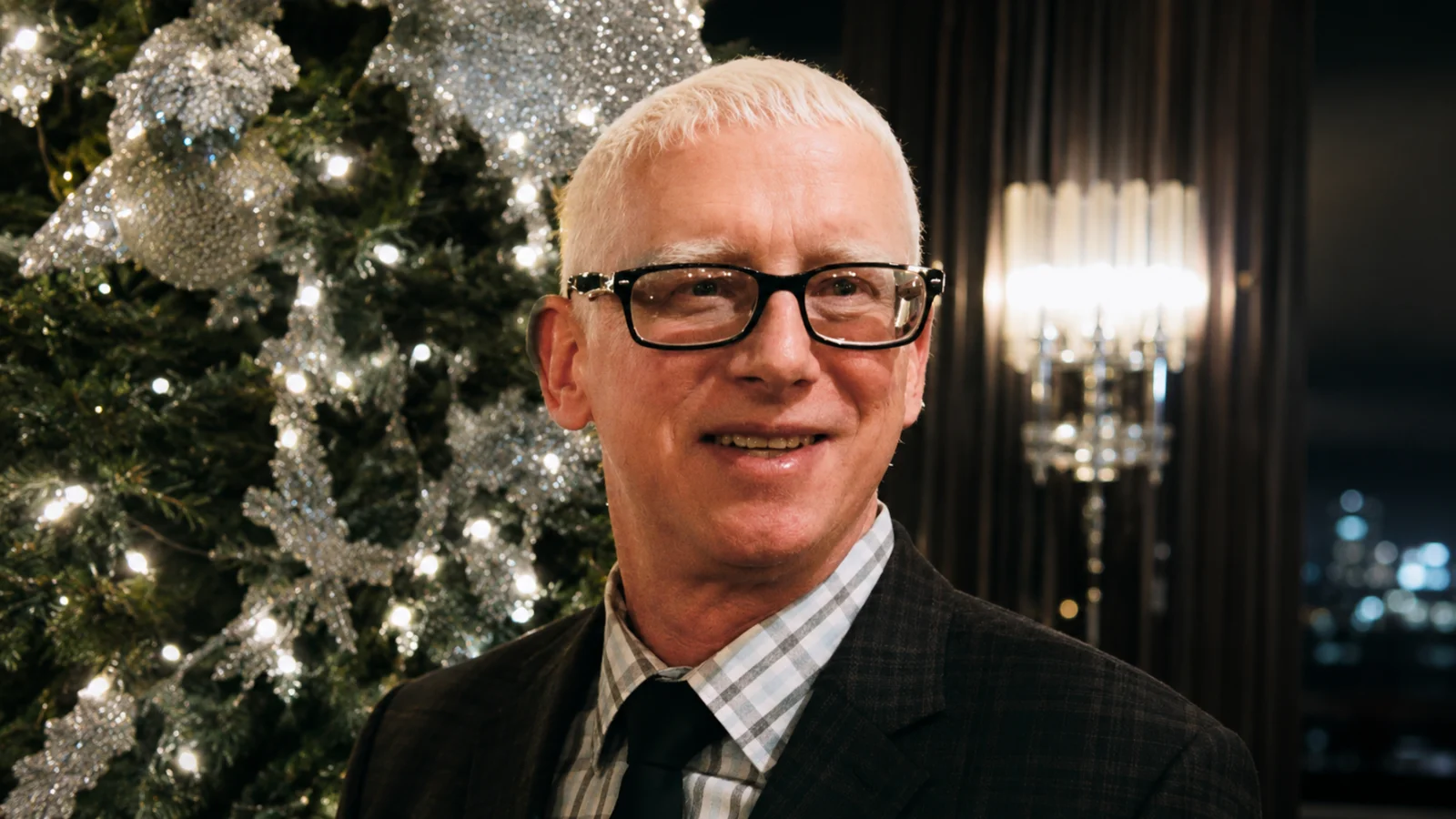
In a video interview with Vending Times, Friedrich reflected on the lessons learned from introducing some of the industry's earliest self-service technologies, discussed how artificial intelligence is changing customer experiences and explained why successful automation is about enhancing — not replacing — the human element.
Vending Times: You've spent more than three decades in restaurants, vending, entertainment and self-service. Looking back, what are the biggest changes you've witnessed, and what lessons from earlier disruptions still apply as AI and automation reshape the industry today?
Friedrich: Every major technology shift has come with skepticism. When we introduced micro markets in the mid-2000s, the questions were whether the technology would work, whether customers would trust it and whether employees would embrace it. At the time, reliability was a major concern. Internet connectivity wasn't nearly as dependable as it is today, and if a self-checkout system failed, the entire operation stopped. We were going from multiple vending machines to one central hub. If that hub went down, everything went down.
Getting customers comfortable with self-service was another challenge. Many people simply preferred familiar processes, and some demographics were particularly resistant. Employees worried the technology would eliminate route driver positions, while consumers disliked seeing familiar cashiers replaced by self-checkout. We learned that success depended on choosing reliable technology, creating intuitive user interfaces and clearly communicating the value to both customers and staff. Those lessons still apply as AI becomes more prevalent.
Vending Times: You've argued that automation doesn't replace people — it changes the work they do. Where do you see companies getting that balance right?
Friedrich: Automation is a tool, not a replacement for people. Companies get into trouble when they deploy technology simply to reduce labor without thinking about the customer experience. We've all dealt with frustrating automated phone systems where you just keep asking for a human representative. That's a friction point. It's a problem for the consumer.
AI is beginning to change that. Voice systems have become dramatically more conversational, and they're much better at handling exceptions than earlier automation. The key is using AI to support employees and improve customer interactions rather than trying to remove people from every step of the process.
Vending Times: As chief strategy officer at Easy Street Business Advisors, what challenges are clients bringing to you today?
Friedrich: It depends on the company. Startups typically ask whether their concept is viable, whether it can scale and how they should bring it to market. They're looking for guidance on funding, competitive positioning and strategic planning.
Established companies have different concerns. They want to know which technologies make sense for their business, how AI can improve operations and which platforms best fit their needs. In many cases, those discussions expand into broader strategic planning because companies often don't spend enough time defining where they're going before deciding which technology to adopt. Sometimes those conversations even lead into acquisition or exit planning.
Vending Times: You've worked with startups as well as established operators. What separates companies that successfully bring innovative self-service technologies to market from those that struggle?
Friedrich: Leadership and planning. Great ideas alone aren't enough. Successful companies have leaders who understand both the opportunity and the competitive landscape. They develop realistic business plans, conduct honest SWOT analyses and recognize where they'll need outside expertise.
Entrepreneurs sometimes become so excited about their idea that they overlook obvious obstacles or underestimate existing competitors. They also underestimate the resources required to scale. Whether you're deploying hardware, software or both, you need to understand manufacturing, financing, operations and market demand. The companies that think methodically tend to succeed. Those that skip the planning often encounter problems they could have anticipated much earlier.
Many entrepreneurs also underestimate the value of strategic partnerships instead of trying to build every capability internally.
Vending Times: Consumers ultimately judge the experience rather than the technology itself. What makes an automated experience genuinely valuable?
Friedrich: Technology for technology's sake is a mistake. If it doesn't improve the customer experience, it's probably the wrong solution. Good automation removes friction and makes interactions easier. We've all experienced poorly designed automated customer service systems that force callers through endless menus. That's a horribly frustrating experience.
I believe AI will significantly improve user interfaces. Voice interaction will eliminate many of today's barriers by allowing people to simply talk with machines naturally. I recently tested an AI-powered catering ordering system that convinced me conversational interfaces are approaching human interactions. It was like I was talking to a person.
That creates a much more personal experience than forcing customers through complicated menus or poorly designed touchscreen interfaces. Companies that focus on usability rather than novelty will win.
Vending Times:When people look back 10 years from now, what will they see as the biggest transformation in self-service?
Friedrich:I think we'll look back and realize how early we really were in AI's development. Today people worry that AI still makes mistakes or isn't mature enough, but that's true of every transformational technology in its infancy.
Ten years from now, organizations will accomplish dramatically more with the same number of employees. AI will free people to focus on higher-value work while automating repetitive tasks. Companies will serve more customers, grow faster and become more efficient. We'll probably laugh at some of the concerns we're debating today because the technology will have advanced so far beyond what we currently imagine. We'll realize we were babes in the woods. We didn't know what we didn't know.
Vending Times: Is there anything we haven't covered that you'd like readers to understand?
Friedrich:I'm optimistic. I don't subscribe to the idea that AI will eliminate all jobs. It will certainly change some roles, but history shows that technology creates new opportunities as it removes repetitive work. Companies that embrace AI thoughtfully will become far more productive.
We're already seeing dramatic improvements. Tasks that once took dozens of hours can now be completed in a fraction of the time. My son's company uses AI to analyze lengthy government RFPs. A process that once required roughly 40 hours now takes about five.
Marketing, content creation, proposal development and customer service are becoming far more efficient. For those of us who've watched self-service evolve from its earliest days, it's exciting to see the industry entering another transformational period. We watched the birth of self-service, and now we're watching the next revolution unfold. It's going to explode.
Upcoming Events
Automated Retail & Kiosk Innovation Show
December 14-16, 2026 | Miami Beach, FL
Explore the latest breakthroughs in automated retail, interactive kiosks, and unattended technology — and unlock new ways to serve customers and grow revenue.
View AgendaRegister NowAbout Richard Slawsky
In addition to writing, Slawsky serves as an adjunct professor of Communication at the University of Louisville and other local colleges. He holds both a Bachelor’s and a Master’s degree in Communication from the University of Louisville and is a member of Mensa and the National Communication Association.
Related Media
Featured Vendor

Unlock the future of retail with AmeriKiosks! Our end-to-end solutions empower retailers to thrive in automated retail. With years of experience, we guide your transition into a cutting-edge automated retail company, ensuring growth and success.
Subscribe
Get the latest news and resources from Vending Times.
Recent Posts