Automated Retail & Kiosk Innovation Show
Valentina Ellison brings airport restaurant experience to automated vending
In this Q&A, Ellison discusses the challenges behind unattended food service, how she evaluates locations and why traveler interest does not always translate into a sale.
October 2, 2026 by Richard Slawsky — Editor, Connect Media
 ChatGPT
 Grok
Grok Perplexity
 Claude
Valentina Ellison spent nearly two decades learning how to feed people in places where operating a restaurant can be especially complicated. Now she is applying that experience to automated food vending.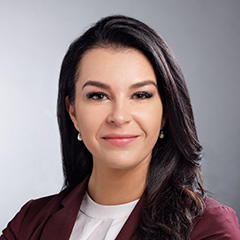
The CEO and co-founder of Evolvending joined Areas USA in 2007 after completing her MBA at Salisbury University in Maryland. She spent about 15 years with the airport concessions operator as it expanded in the United States, then worked at REEF Kitchens and Earl Enterprises. Her career has centered on nontraditional restaurant locations, with responsibilities spanning business development, relationships and contract negotiations.
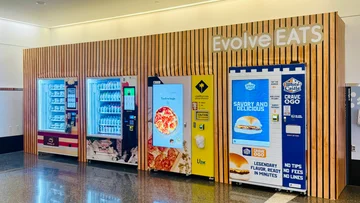
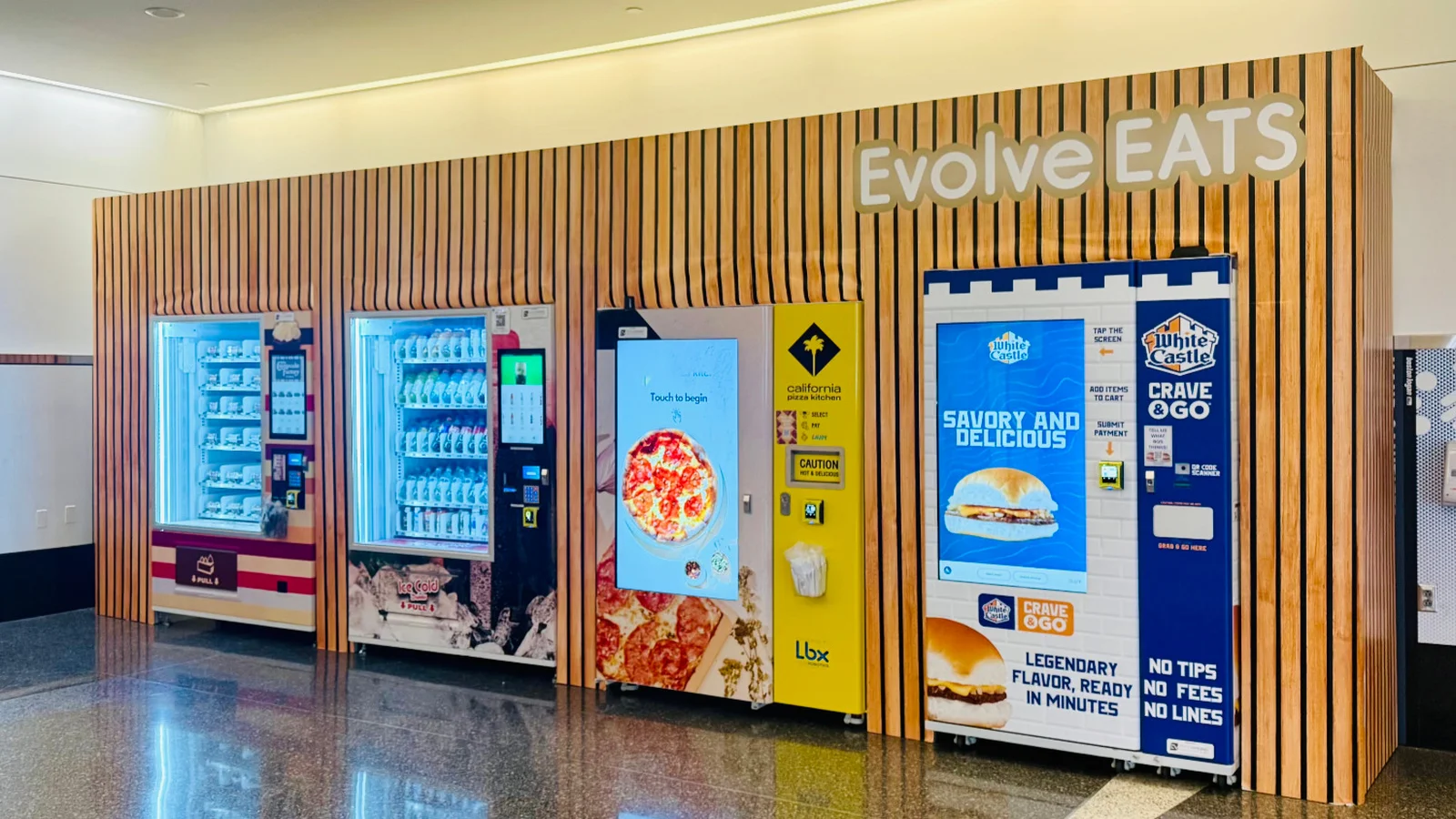
In 2024, Ellison founded Evolvending with her sister Irina Viveiros-Capcelea, the company's chief financial officer. The business operates restaurant-branded food kiosks in airports, supported by kitchens and on-site operations teams. At the time of the interview, Ellison said Evolvending operates at eight airports, with another eight planned within six months.
Ellison is a member of the steering committee for this year's Automated Retail and Kiosk Innovation show, scheduled for Dec. 14-16 in Miami Beach, Florida. She will participate in "Making Automated Retail & Kiosks Fit: Integrating Across Venues," a panel scheduled for 11:45 a.m. Tuesday, Dec. 15, examining deployment and operations across airports and other venues.
In this Q&A conducted via Teams, Ellison discusses the challenges behind unattended food service, how she evaluates locations and why traveler interest does not always translate into a sale. Her answers have been edited for length and clarity.
Q: What led you to leave the corporate restaurant world and start Evolvending?
Ellison:Most of my career has been in airport concessions and nontraditional restaurants. After the pandemic, staffing shortages became a huge issue. Airport employees have to get to the airport, park and go through security before they can even clock in. There are a lot of complexities.
The capital investment is also very high. There are food deserts, and traditional concessions do not always have the flexibility to respond to trends, different demographics or changes in location. Those problems opened my mind to doing something on my own.
My introduction to automated pizza vending came from Michael Beacham, a friend and former colleague who recruited me to REEF and Earl Enterprises before serving as president of California Pizza Kitchen. Market validation from my contacts in the airport industry confirmed a high demand for the concept.
I soon discovered why the model wasn't more widespread—the extreme complexity, particularly around permitting, creates a high barrier to entry and minimal competition.
I partnered with my sister, who has a strong finance background with Fortune 100 and Fortune 500 companies. My background has been more in sales, business development, relationships and contract negotiation. Together, we created Evolvending.
Q: What is the biggest challenge in getting automated food kiosks into airports?
Ellison:One of the biggest issues is working with health agencies. This technology is new to them. The ovens or microwaves inside the kiosks use the same kinds of technology as other kitchens, but the approval process is different.
You need to understand restaurant operations and food permits. We hired an experienced airport restaurant operating team and built permitted commissary kitchens to support the kiosks at each airport.
Even though the kiosks are automated, they are backed by a kitchen and restaurant operators who are on-site every day, preparing food, refilling the machines and maintaining them.
Q: How much human involvement does an unattended operation require?
Ellison:It requires less staffing than a typical quick-service restaurant, but I describe it as the same restaurant. Instead of a smiling person handing you food, there is a smiling person preparing the food that is then stocked in the kiosk.
Although, our operating approach varies by location and is tailored to local needs.
Q: How do you decide whether a location or restaurant brand will work?
Ellison:First, we look at the availability of food. Some airports have too many concessions; others do not have enough. Is there really a need for another concession? Is there a food desert toward the end of a concourse?
Then we look at culinary categories. When we went into Dallas Love Field, there was no pizza in the food court, so we brought in California Pizza Kitchen. We also look at price points. If the options are mainly expensive sit-down restaurants, there may be a need for more quick-service choices.
Operating hours are important. At some smaller regional airports, concessions close at 9 p.m., but flights continue much later. We look at those hours and how frequently delays happen.
We also consider airport and airline employees. Who is the customer: a traveler or someone who works there? Employees need food options, too.
Construction is another opportunity because we can be mobile. We can operate in front of a barricade for six months and then move when the construction changes.
Q: What has surprised you about how travelers respond to the machines?
Ellison:We have learned that younger travelers are very receptive. Other people see the machines as an innovation. They take a selfie or a picture to send to their family, but they may not be ready to make a purchase.
That has led us to adjust which terminals and traveler groups we pursue. We have found interest among travelers using lower-cost carriers, including Southwest and Frontier.
The brand matters as well. We are working with recognizable names such as TGI Fridays, White Castle, California Pizza Kitchen and Garbanzo and adjusting the offering to the customers in a particular terminal. We are still learning which combinations of brands, airlines and traveler demographics work best.
Q: How are you managing the company's growth?
Ellison:We are at eight airports, with another eight to open in the next six months. We have another 12 in the pipeline that we are trying to push back. There are only so many things a team can do.
Airports are an incredible world, and they are the world I know. I thrive in it. I love it. I am not going to stop until we solve every airport problem. I am excited about what is ahead.
Register for the Automated Retail and Kiosk Innovation Show here.
From smart vending to interactive kiosks, discover new ways to reach customers and improve operations. Join Linda Johansen-James of International Retail Group and Ian Benson of Prepango in Miami Beach, at the Automated Retail & Kiosk Innovation Show, December 14–16. Save your spot: https://automatedretailandkiosks.com/
Upcoming Events

Automated Retail & Kiosk Innovation Show
December 14-16, 2026 | Miami Beach, FL
Explore the latest breakthroughs in automated retail, interactive kiosks, and unattended technology — and unlock new ways to serve customers and grow revenue.
View AgendaRegister NowAbout Richard Slawsky
In addition to writing, Slawsky serves as an adjunct professor of Communication at the University of Louisville and other local colleges. He holds both a Bachelor’s and a Master’s degree in Communication from the University of Louisville and is a member of Mensa and the National Communication Association.
Related Media
Featured Vendor

Stern Pinball, Inc. is a global lifestyle brand based on the iconic and outrageously fun modern American game of pinball
Subscribe
Get the latest news and resources from Vending Times.
Recent Posts