Vending
How vending machines can help reduce plastic, other waste
Vending machines are commonly associated with disposable bottles, wrappers and cups, but the same automated infrastructure could help move consumers away from single-use packaging. The concept has already taken root in Europe and could potentially offer benefits to the United States as well.
August 21, 2026 by Richard Slawsky — Editor, Connect Media
 ChatGPT
 Grok
Grok Perplexity
 Claude
Vending machines are commonly associated with disposable bottles, wrappers and cups, but the same automated infrastructure could help move consumers away from single-use packaging.
Machines that dispense products into reusable containers, manage perishable inventory or accept used packaging can reduce several types of waste while preserving the convenience that made vending popular. The concept has already taken root in Europe and could potentially offer benefits to the United States as well.
The scale of the plastic waste problem
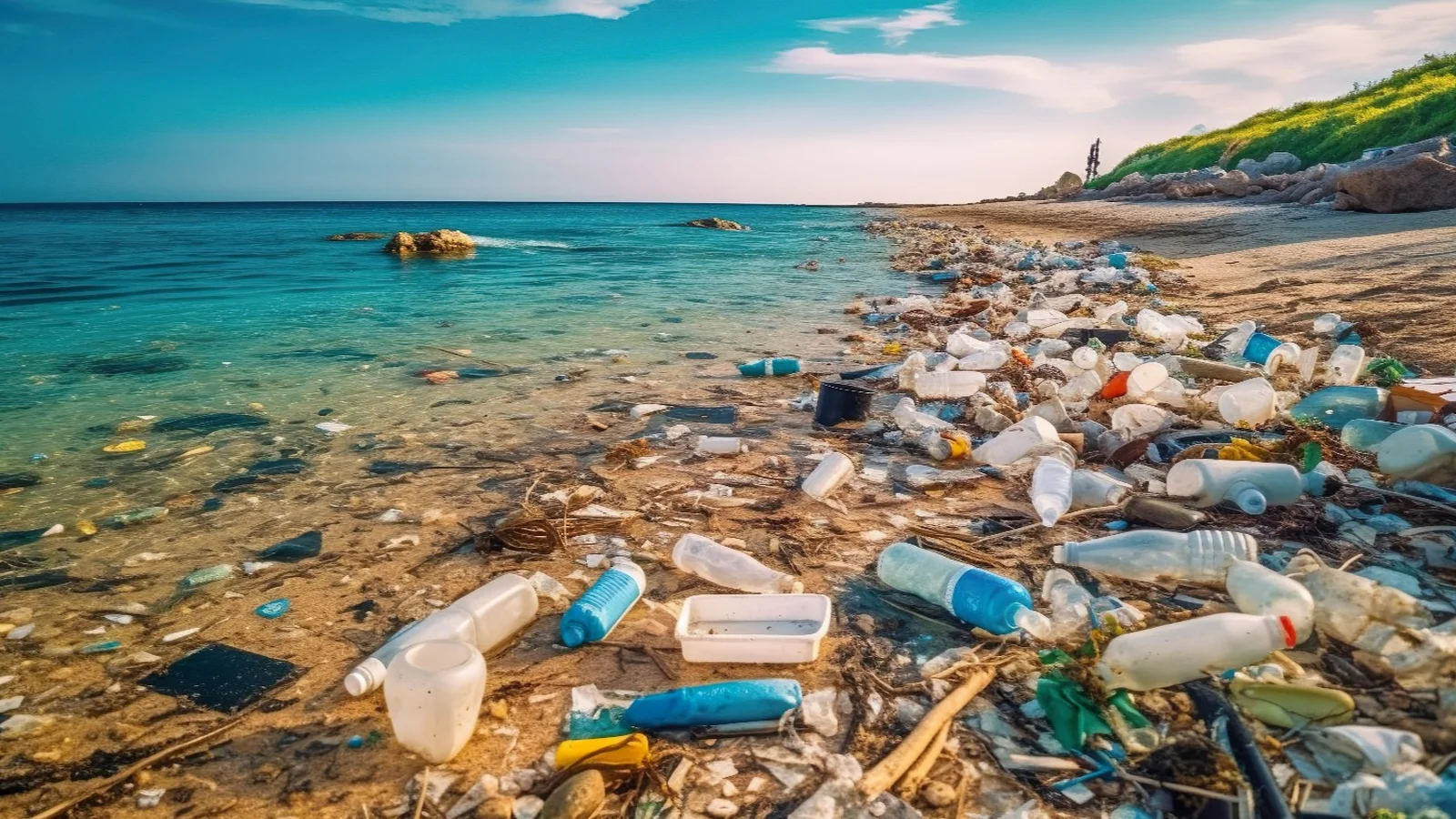
The scale of the problem shows why waste prevention matters. No national estimate is available for 2025, but the most recent analysis, published in Communications Earth & Environment, found that the United States generated about 40.1 million metric tons of plastic waste in 2022, equivalent to about 44.2 million U.S. tons. Of that, about 5% was recycled.
Globally, the study estimated that 267.7 million metric tons of plastic waste were generated in 2022. About 38 million metric tons, or approximately 14% of the total, were mechanically recycled, while 103.1 million metric tons, or about 39%, were landfilled. An additional 90 million metric tons, or roughly 34%, were incinerated, and 29.6 million metric tons, or about 11%, were mismanaged.
One of the greatest opportunities for vending machines may be dispensing products traditionally sold in plastic bottles, pouches and other single-use containers. Instead of distributing a packaged item, a machine can store products in bulk and dispense only the quantity selected by the customer, often into a reusable container.
Milk, water, detergent, shampoo, dry food and cooking oil are among the products that could be sold through this model.
Milk vending reduces packaging waste
Vending machines are already helping to address waste outside of the United States.
India offers a recent example. Officials in Dindigul district introduced a 24-hour milk vending machine in Kodaikanal, a tourist destination in the southern state of Tamil Nadu. Customers bring containers and purchase chilled milk from a machine installed at a modern milk parlor.
The project is intended to keep thousands of multilayer plastic milk pouches out of municipal waste and drainage systems. The machine uses stainless-steel tanks, flow meters and temperature controls to keep milk below 4 degrees Celsius, or about 39 degrees Fahrenheit. It serves residents, tourists and hospitality businesses while operating without additional overnight staffing.
Direct dispensing may also reduce the need for plastic film, pouch printing, filling equipment and shipping crates. Because milk is transported in bulk, dairy processors could move more product using less packaging material and potentially less cargo space. Dindigul district officials said reducing polythene use was a primary objective of the installation.
Milk vending is also established in parts of Europe. Farms in Britain increasingly use machines to sell milk directly to consumers, who may bring containers or purchase reusable glass bottles. Meggy Moo's Dairy is one of several British operations promoting vending as an alternative to plastic packaging, while Jersey's Classic Herd has introduced a machine that dispenses pasteurized milk into reusable vessels.
The model offers benefits beyond packaging. Selling milk at or near the farm shortens the supply chain and can improve returns for producers. Research involving Czech dairy farms found that vending offered a profitable or more advantageous sales channel for many participating farms, particularly smaller operations facing low wholesale prices or unreliable milk collection.
A separate study found that milk vending could reduce environmental impacts by eliminating intermediaries and lowering packaging and transportation requirements, although the results depended partly on electricity use, machine distribution and the distance customers traveled.
Refills beyond dairy
The concept can be extended to household products. Chilean company Algramo developed vending-style dispensers that sell detergent and other staples by weight. Customers use reusable containers equipped with digital identification, allowing the system to recognize the package and charge for the quantity dispensed.
Since 2020, Algramo customers have reused more than 900,000 packages, representing more than 100,000 kilograms, or about 220,000 pounds, of plastic that otherwise could have become waste, according to the United Nations Environment Programme. During one pilot with Unilever, some customers refilled the same detergent bottle 15 times.
This approach attacks waste at its source. Conventional recycling attempts to recover a package after it has been manufactured, filled, transported, purchased and discarded. Refill vending can eliminate the need to make that package in the first place.
Water dispensers offer another readily scalable application. Stations in airports, universities, train stations, parks and shopping centers allow people to refill bottles instead of buying packaged water. A study along the Brisbane River in Australia found that plastic bottle litter declined after a filtered refill station began operating, although researchers said its location limited the potential impact.
Reducing food and inventory waste
Vending can also reduce waste that has little to do with packaging. Connected machines provide operators with real-time information about sales, inventory, expiration dates and temperature. That data can show which products are selling, which are approaching expiration and how demand changes by location or time of day.
Operators can use the information to reduce orders for slow-selling products, move inventory to stronger locations or discount food before it expires. Temperature alerts can identify refrigeration problems before an entire machine of fresh food must be discarded.
The technology is particularly important as vending expands beyond shelf-stable snacks into sandwiches, salads, dairy products and prepared meals. Traditional restocking schedules can lead operators to overfill machines to avoid empty shelves. Demand-based replenishment makes it possible to carry less excess inventory without creating frequent stockouts.
Similar controls can reduce waste in factories and other workplaces. Industrial vending machines dispense gloves, safety glasses, tools and maintenance supplies after identifying employees through badges or access codes. Usage limits and tracking can discourage workers from taking more supplies than necessary.
Inventor-e, a British inventory-management technology provider, reported in a 2025 case study that an unidentified U.K. automotive manufacturer reduced personal protective equipment spending by 34% during the first year after replacing a manually operated storeroom with industrial vending machines and inventory-management software. Inventor-e attributed the savings to reduced pilferage and excess use, optimized inventory levels and better product selection.
Reverse vending completes the loop
Some machines reduce waste by taking products back rather than dispensing them. Reverse vending machines identify returned bottles, cans or reusable cups and issue refunds or store credits.
Germany's deposit system uses a large network of these machines and reports a 98% return rate for eligible single-use beverage containers. The high rate is supported by convenient return locations and a meaningful deposit, demonstrating that technology works best when paired with financial incentives.
Aarhus, Denmark, is applying the concept to reusable coffee cups. Customers pay a deposit when receiving a cup and return it through one of 27 machines. The cups are collected, washed and sent back to participating businesses. During the first year, about 630,000 reusable cups prevented an estimated 10 tons of waste, with 88% of cups returned.
Machine speed can matter as much as deposit size when return volumes rise. At Bungas, a fuel station and retail site in the Netherlands, Envipco said its Quantum bulk-feed machine processed 7.5 million containers in 21 months.
"People want fast machines rather than waiting in long supermarket lines," Jan Lindenaar, Envipco's senior sales manager for Benelux, said in a press release.
Marc Vlaar, owner of the Bungas location, said in the same press release that customers had built returns into their routines, stopping after work or on weekends when convenient. The experience suggests high-throughput machines can make deposit redemption feel like a normal errand instead of a separate recycling trip.
Convenience will determine success
Vending cannot eliminate waste by itself. Refill systems require customers to carry clean containers, while reusable packaging must survive enough cycles to offset the resources used to manufacture and wash it. Machines require electricity, maintenance, sanitation and reliable bulk delivery. Poorly located equipment may attract too few users to justify its environmental cost.
Food-safety requirements are especially important for milk and other perishables. Operators need dependable refrigeration, cleaning procedures and monitoring systems. Refill programs must also prevent contamination caused by unsuitable customer containers.
The strongest projects make reuse nearly as convenient as disposal. Machines must be accessible, easy to operate and compatible with common payment methods. Containers should be affordable, and return points must be located where customers already travel.
Hank Cai, founder of travel technology company JetKonnect, said in an email interview that the most successful milk and reverse vending machines he has encountered in Asian and European airports shared several characteristics.
"The machines that worked smoothly had clear visual instructions in multiple languages," Cai said. "The ones that didn't had a small crowd of confused people staring at them."
Machines also had an effect on behavior, Cai said, with travelers holding bottles through layovers so they could claim an immediate reward at a reverse vending machine. His experience points to practical requirements for expansion: prominent placement, simple instructions, language accessibility and a reward customers understand before they begin.
Seymen Usta, founder and CEO of Modern Chandelier and a frequent international traveler who has used the machines, said in an email interview that European reverse vending and Asian refill systems represent two complementary approaches.
"In Europe, reverse vending machines are optimized to recycle used packaging," Usta said. "In Asia, vending machines are being developed to minimize the need for packaging."
That distinction can help operators choose machines based on local priorities. Deposit-return equipment may be most useful where beverage containers are already common, while refill machines may offer greater waste-prevention potential where products can safely be sold in bulk.
Vending's environmental potential lies less in the machine itself than in the system built around it. When bulk distribution, reusable containers, inventory data and convenient returns work together, vending can become more than an automated sales channel. It can provide the infrastructure for a more circular economy in which consumers buy the product they need without automatically taking home another piece of waste.
About Richard Slawsky
In addition to writing, Slawsky serves as an adjunct professor of Communication at the University of Louisville and other local colleges. He holds both a Bachelor’s and a Master’s degree in Communication from the University of Louisville and is a member of Mensa and the National Communication Association.
Related Media
Featured Vendor

Give your kiosks the best in managed connectivity and placement flexibility with powerful 4G LTE
Subscribe
Get the latest news and resources from Vending Times.
Recent Posts