Vending
Bouncer Digital founder Juan Carlos Corvera on innovative age verification
Juan Carlos Corvera, president and founder of Bouncer Digital, discusses how his technology works, regulatory acceptance and why he believes automated age verification could expand the market for unattended retail.
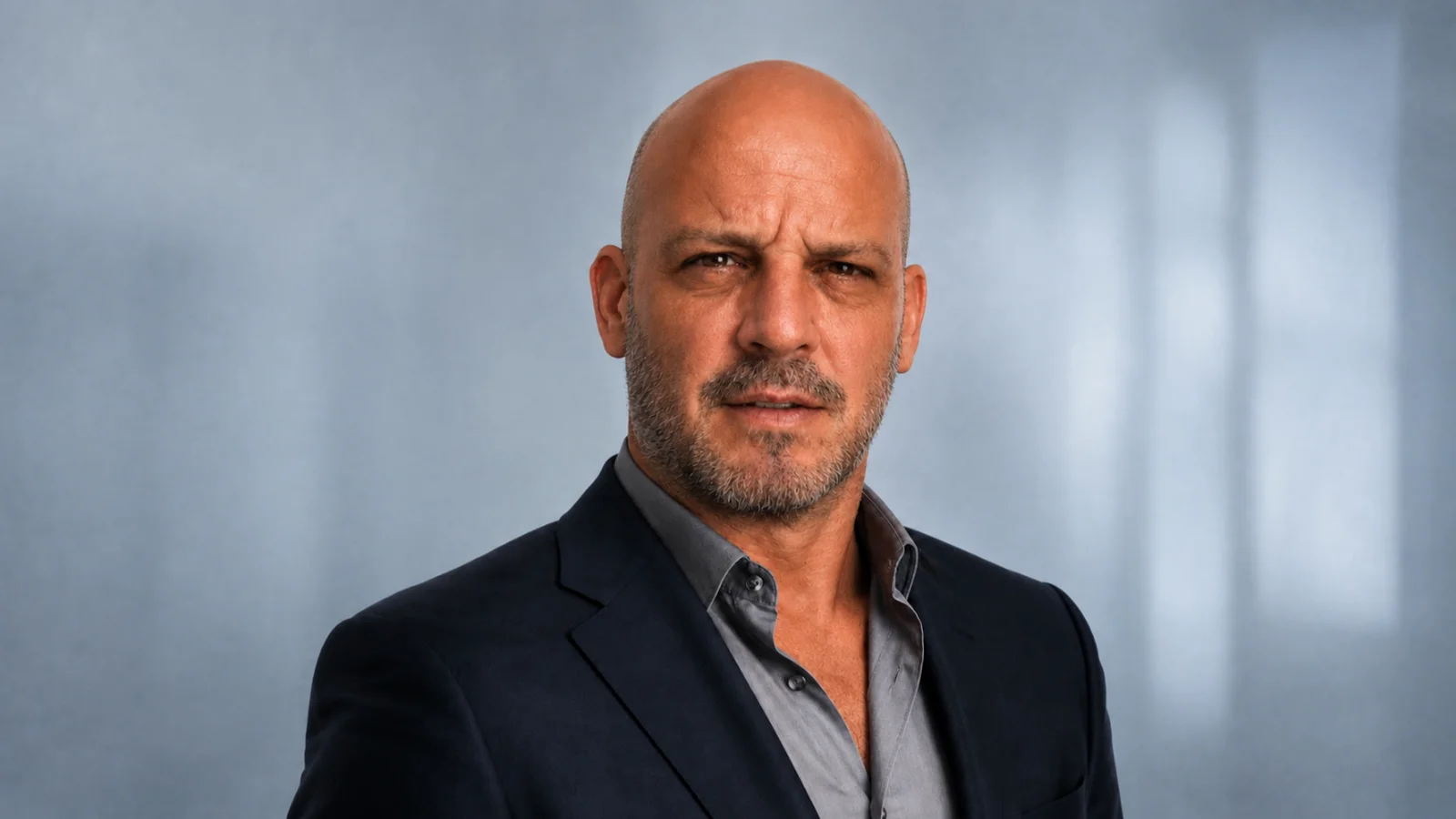
August 14, 2026 by Richard Slawsky — Editor, Connect Media
 ChatGPT
 Grok
Grok Perplexity
 Claude
As vending machines, kiosks and self-checkout systems expand into products traditionally sold only with employee oversight, verifying a customer's age has become an increasingly important part of the unattended retail equation. Madrid-based Bouncer Digital is developing technology designed to automate that process through AI-powered facial age estimation, with ID verification available when the system cannot confidently determine whether a customer meets the required age threshold.
Juan Carlos Corvera, president and founder of Bouncer Digital, says the technology has applications ranging from alcohol, tobacco and vaping products to energy drinks and other age-restricted merchandise. The company is already working in online age verification and is pursuing vending and self-service deployments primarily in Europe, while exploring opportunities in the United States.
In a Teams interview, Corvera discussed how the technology works, regulatory acceptance and why he believes automated age verification could expand the market for unattended retail.
Q: Tell me about Bouncer Digital and why the company became involved in age verification.
Corvera: Our core mission when the company was created was to protect the mental health of children. We initially addressed the online environment, including areas such as adult content, gambling and e-commerce. That required us to develop robust technology that could provide a very fast user experience while meeting requirements involving biometrics, data protection and privacy.
We don't retain the data from the verification, so compliance with requirements such as GDPR and anonymity is very important to us. From there, we saw an opportunity in unattended sales. Vending traditionally has been focused on products such as soft drinks and snacks. With age verification, unattended retail can potentially expand into products such as beer, vaping products, tobacco and other merchandise subject to age restrictions.
Q: How does Bouncer Digital's technology work at a vending machine?
Corvera: The customer selects the product and a QR code appears on the screen. The customer scans that code using a mobile phone. There is no app to download; the verification process opens in the phone's web browser.
The customer positions their face within an oval on the screen, and the system performs liveness detection and estimates whether the person meets the required age. If the customer passes, the QR code disappears and the transaction can continue to payment.
We do the process on the customer's phone because it is their personal device, which helps us address privacy and cybersecurity. The vending machine receives only a true-or-false response indicating whether the person is above the required age. The threshold can be configured for 16, 18, 21 or whatever the applicable regulation requires.
Q: What happens when the system can't confidently determine whether a customer is old enough?
Corvera: We report 99.5% accuracy in detecting age, but there will always be people close to the threshold. Someone might be 17 and almost 18, for example, or might be 19 but look younger.
When the system has doubt, it asks the customer for identification. We can read about 2,100 different IDs globally, including passports, driver's licenses and national identity documents. The idea is that most people who are clearly above the required age can move through the facial age-estimation process quickly, while the customers close to the threshold receive an additional verification step.
Q: What other applications do you see for age verification beyond alcohol, tobacco and vaping products?
Corvera: Energy drinks are one area we're working on because age restrictions are developing in parts of Europe. There are also opportunities involving adult products and CBD and THC where regulations allow those products to be sold.
We're also looking at pharmacy applications. We're working toward a model that could connect dispensing technology with pharmacy databases, potentially allowing products to be provided in smaller communities. That's something we're looking at for next year.
Ultimately, the technology can be applied to almost anything sold through an unattended system that has an age requirement.
Q: How could automated age verification affect self-checkout?
Corvera: Today, when someone uses self-checkout and purchases something such as alcohol or another restricted product, the transaction can be blocked until an employee comes over and verifies the customer's age.
That creates interruptions for the retailer and customer, and employees can sometimes face aggressive behavior when they have to intervene. Age-verification technology provides an opportunity to turn that manual process into a technology-based process instead.
Q: Are you operating in the United States yet?
Corvera: We're operating in the U.S. online market, but we don't yet have a physical vending pilot there. I would love to have one.
Right now, most of our physical effort is focused on Europe. We're working on integrations and compliance here so that once those systems are established, we can adapt the technology for other markets. We are already working or integrating with several large vending companies in Europe.
Q: Do you believe automated age verification could open the door to more age-restricted products being sold through unattended retail?
Corvera: Completely. I've seen examples in the United States involving THC where machines use hardware readers to check identification. The problem with relying solely on an ID reader is that someone potentially could use another person's identification. Hardware readers also add cost and may not support every type of identification.
Age verification at unattended machines is already permitted in some markets. The opportunity now is to improve how that verification is performed. With a system that combines facial age estimation, liveness detection and ID verification when necessary, I think there is significant potential to expand what can be sold through unattended retail.
About Richard Slawsky
In addition to writing, Slawsky serves as an adjunct professor of Communication at the University of Louisville and other local colleges. He holds both a Bachelor’s and a Master’s degree in Communication from the University of Louisville and is a member of Mensa and the National Communication Association.
Related Media
Featured Vendor

Stern Pinball, Inc. is a global lifestyle brand based on the iconic and outrageously fun modern American game of pinball
Subscribe
Get the latest news and resources from Vending Times.
Recent Posts