Vending
Research shows healthcare kiosks are growing smarter — and more human
Four published academic studies suggest kiosk and vending technologies are becoming more intelligent, more accessible and more responsive to community needs.
July 2, 2026 by Richard Slawsky — Editor, Connect Media
 ChatGPT
 Grok
Grok Perplexity
 Claude
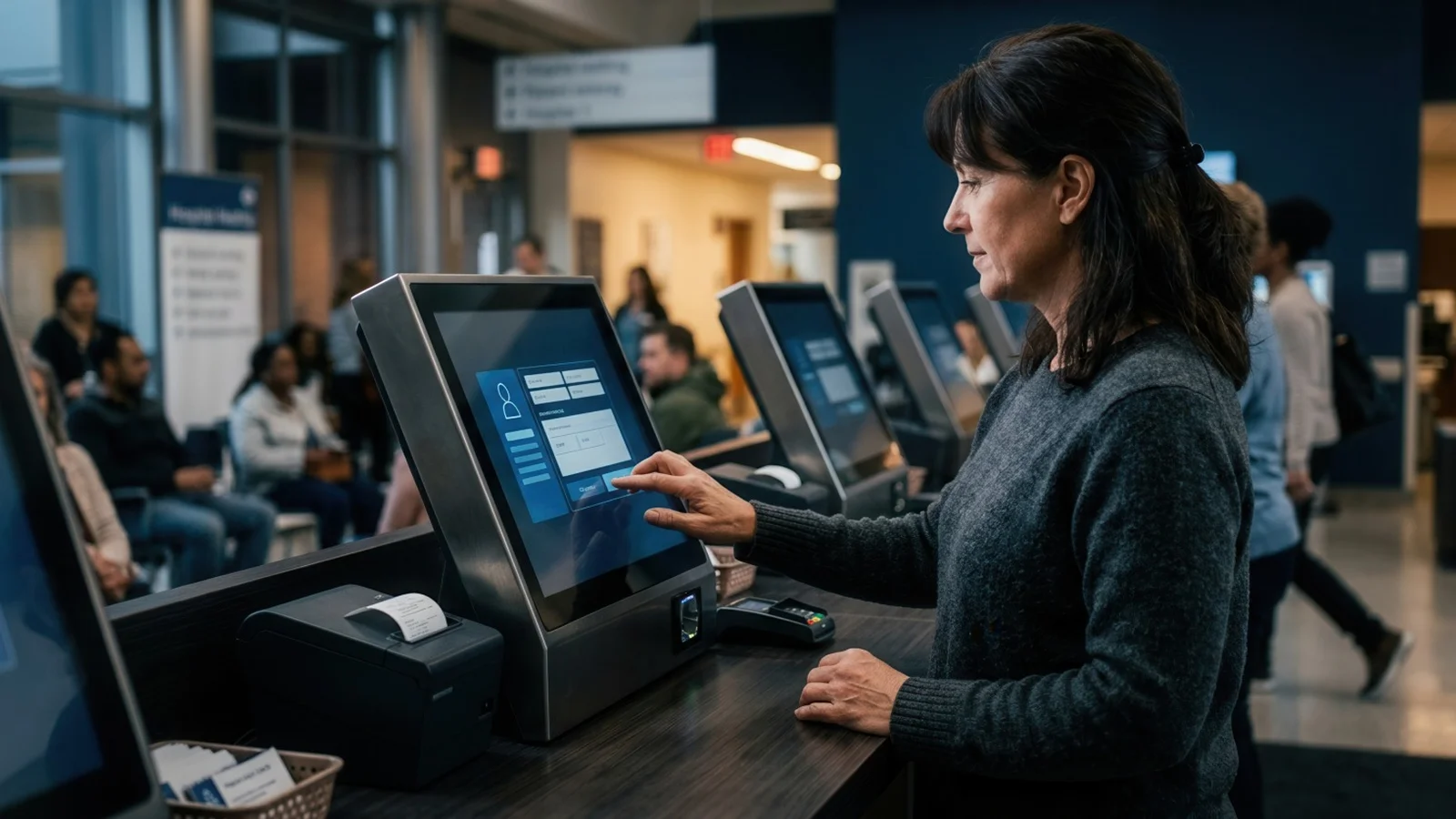
Continuing our weekly review of the research behind kiosk and vending technology, healthcare kiosks and public health vending machines continue to expand into new applications. Four recently published academic studies suggest the technologies are becoming more intelligent, more accessible and more responsive to community needs.
The research spans artificial intelligence, accessibility, harm reduction and public health, but together the papers point to a common trend: self-service technologies are increasingly being viewed as tools to improve healthcare delivery rather than simply automate transactions.
AI and accessibility push kiosks beyond self-service
Published in the January 2025 issue of the Journal of Advances in Information Technology, "An AI-Powered Public Health Kiosk for Context-Aware Over-the-Counter Medication Guidance: An Experimental Pilot Study" explored how AI could transform public health kiosks into personalized healthcare assistants. Researchers from several universities developed a kiosk capable of recommending over-the-counter medications based on a user's symptoms, allergies, age and medication history while screening for potential drug interactions. The prototype also incorporated multilingual support, voice commands, Braille compatibility and large-font displays to improve accessibility. Researchers concluded the system demonstrated the potential to deliver safe, personalized medication guidance in public settings, while noting that additional usability testing and larger-scale deployments are needed before widespread adoption.
Accessibility was the focus of "Evaluating the Impact of a Kiosk Education App Intervention on Students With Intellectual and Developmental Disabilities," published in the February 2025 issue of the Journal of Special Education Technology. Researchers in South Korea tested a simulated fast-food kiosk application designed to teach students with intellectual and developmental disabilities how to complete self-service transactions. The application significantly improved participants' kiosk task completion, and special education teachers rated the app as both practical and feasible. However, researchers also concluded that students did not consistently achieve mastery, suggesting future educational tools should incorporate additional instructional supports, personalization and practice opportunities to better prepare users for real-world kiosk interactions.
Public health vending expands its role
One of the most impactful uses of vending technology in recent years has been providing overdose-prevention medication and other health supplies. Two studies examined how vending machines are becoming an increasingly important public health resource.
"Discreet but Accessible: A Qualitative Study With People Who Use Drugs and Service Staff About the Optimal Design of a Harm Reduction Vending Machine in Rural Kentucky," published in the Harm Reduction Journal in 2025, gathered input from people in Appalachia who use drugs and public health workers through a series of focus groups. Participants consistently favored machines that balanced discretion with accessibility, recommending locations that were easy to reach without drawing unwanted attention. They also urged operators to stock hygiene products and other everyday necessities alongside naloxone and safer-use supplies. Researchers concluded that successful deployments should be designed in collaboration with local communities and tailored to local priorities, rather than relying on a one-size-fits-all model.
Meanwhile, "Evaluating Public Health Vending Machine Rollout and Utilization in Criminal-Legal Settings," published in the 2025 edition of the Journal of Substance Use and Addiction Treatment, evaluated five public health vending machines installed at Rhode Island correctional facilities and probation offices. During the study period, the machines dispensed 3,720 items, with hygiene kits, nicotine replacement therapy products and ponchos proving more popular than naloxone. Researchers concluded that while overdose prevention remains an important objective, utilization data show users frequently seek broader health and wellness resources. They recommended routinely monitoring inventory and usage patterns so operators can better match machine contents to community needs while demonstrating accountability to stakeholders and funding organizations.
A roadmap for the industry
Although each paper examined a different application, together they point toward the next generation of self-service healthcare. AI is enabling kiosks to deliver personalized guidance rather than static information. Accessibility research emphasizes the importance of designing interfaces for users with diverse abilities. Public health vending machines are evolving into comprehensive wellness hubs that provide basic necessities alongside harm reduction supplies.
For kiosk manufacturers, healthcare providers and vending operators, the message is consistent: future success will depend less on the hardware itself and more on thoughtful design, user-centered experiences and the ability to adapt self-service technologies to the unique needs of the communities they serve.
About Richard Slawsky
In addition to writing, Slawsky serves as an adjunct professor of Communication at the University of Louisville and other local colleges. He holds both a Bachelor’s and a Master’s degree in Communication from the University of Louisville and is a member of Mensa and the National Communication Association.
Related Media
Featured Vendor

Stern Pinball, Inc. is a global lifestyle brand based on the iconic and outrageously fun modern American game of pinball
Subscribe
Get the latest news and resources from Vending Times.
Recent Posts