Vending
Vending as social infrastructure: Expanding access to essential goods
The notion of vending machines delivering public services isn't new. Using those machines to deliver overdose-reversal medications has been expanding across the country.
April 3, 2026 by Richard Slawsky — Editor, Connect Media
 ChatGPT
 Grok
Grok Perplexity
 Claude
The notion of vending machines delivering public services isn't new. Using those machines to deliver overdose-reversal medications has been expanding across the country.
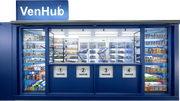
Building on that, a new category of vending is gaining traction across the U.S.: machines designed to serve low-income and underserved populations. These deployments, often operated by nonprofits, public health agencies, and community organizations, are positioning vending not just as a retail channel but as a low-barrier essential goods distribution mechanism.
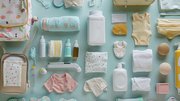
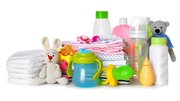
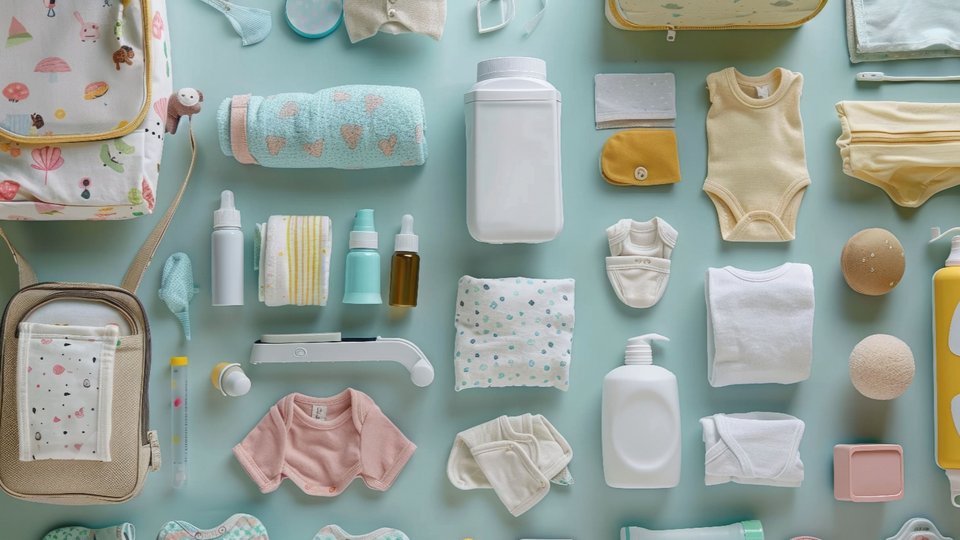
In Philadelphia, for example, the nonprofit Maternity Care Coalition is launching a program that uses vending-style kiosks to distribute free baby essentials and hygiene products to families in underserved communities. The "Community Care Kiosks" will provide items such as diapers, wipes, infant formula and women's hygiene products, according to a WPVI News report, helping offset costs that can place a significant financial burden on low-income households.
The nonprofit said the kiosks are intended not only to supply necessities but also to connect families with additional support services. The initiative is funded by the pharmaceutical company AstraZeneca.
From hygiene kits and baby supplies to basic health products and household essentials, vending machines are quietly filling gaps left by traditional service models. And increasingly, the data suggests they are doing so with measurable impact.
Removing barriers to access
At the core of this trend is the concept of "low-barrier" access. Unlike clinics, food banks or social service offices, vending machines do not require appointments, identification or face-to-face interaction. For many users, this removes both logistical and psychological obstacles.
In Pennsylvania, Penn State's Health To Go initiative uses interactive, touchscreen-enabled vending machines that dispense free health and hygiene items to the public. Along with providing items such as hygiene kits, wound care supplies, menstrual products, and basic health tools, the machines also connect users to local services, including food assistance, housing support, and mental health resources.
The program was developed in partnership with the University of Pittsburgh Medical Center.
Deployment in area communities has resulted in the distribution of thousands of essential items. Back-end data tracking allows program administrators to monitor demand patterns and refine inventory in real time.
Research consistently shows these systems are particularly effective for individuals who lack reliable transportation, work irregular hours or prefer anonymity when accessing sensitive items.
"It meets the patient where they are so they don't have to overcome, if you will, some of the burdens of traveling to a store or pharmacy," Dr. Anthony Guarracino with UPMC told Fox43 News. "It also provides access to other community resources such as food resources for housing, mental health and things like that."
The 24/7 availability of vending machines further enhances their value. Studies emphasize round-the-clock access is a critical factor in program success, especially for populations whose schedules fall outside standard operating hours.
Mario Barnes, owner of Iuka, Miss.-based construction contractor EM Contingency Group LLC, provides vending services at some of the company's locations, so he's seen how they function in a real-world setting.
"In a lot of smaller communities, stores close early and there's little to no access to essentials after hours," Barnes said in an email interview.
"Where I live, there's not a supercenter within 25 miles, and most places are closed by 9 p.m.," he said. "I've got five kids, so I've lived through those moments where you realize at 10 or 11 at night that you're out of something you actually need, diapers, wipes, basic hygiene items, and there's no easy way to go get it. That's where something like a well-placed vending machine offering essentials could make a real difference."
Moving from single-purpose to multi-category distribution
In many cases, health supplies are being offered alongside the overdose reversal medication Naloxone. Machines now often include a mix of:
- Hygiene kits and personal care items.
- Reproductive health products.
- Wound care supplies.
- Laundry detergent and basic household goods.
And by most measures, the machines are meeting a need. In one initiative in Johnson County, Iowa, The Johns Hopkins Bloomberg School of Public Health reports that vending machines distributed hundreds of items within their first two months in service, including 470 packs of Plan B, 325 gun locks, 104 sharps containers, 272 hygiene kits, 273 wound care kits and 473 condoms, along with 392 Naloxone kits.
The Naloxone kits are funded with money from opioid lawsuit settlements, while other products are funded through other grants and funding sources.
The use of vending machines to deliver essential supplies isn't confined to the U.S., either. In Australia, a government-led effort to address "period poverty" has grown from a pilot of 50 machines to a planned network of 1,500 units that deliver free menstrual products. A 2024 survey of more than 150,000 people in that country found that 64% of women struggled to afford menstrual products. For those with a disability or chronic condition, that figure rose to 78%.
The machines are being supplied by marketing and digital out-of-home company Affinity Outdoor.
"Women spend thousands of dollars over their lifetime on these basic necessities," Minister for Women Natalie Hutchens said in a press release announcing the rollout. "This nation-leading program provides cost-of-living relief for women while providing them the basic dignity they deserve."
Long-term funding is key
From a deployment standpoint, vending machines offer a relatively low-cost alternative to building and staffing physical facilities. In the Iowa deployment, the machines cost about $5,000 each.
And in many cases, that relatively modest investment can pay big dividends. David Fesman, CEO of Cincinnati-based medical equipment and home accessibility company Medmart, has seen the impact of offering essentials through vending in his own community.
"Students were missing school because they could not access a $0.75 hygiene product," Fesman said in an email interview. "No dramatic change in infrastructure cured it. No new program with intake forms did the trick. Putting a dispenser in a hallway did."
The same logic applies across every product category these machines carry, Fesman added, including diapers, formula and baby wipes.
"The barrier was never that people did not wish for these things," Fesman said. "The barrier was access without gatekeeping at the hour that they needed it without having to explain themselves to anybody. One machine in a WIC office lobby or a public library at 9 p.m. eliminates all those steps at a shot."
Still, there is one weakness in delivering essential supplies via vending: the need for sustainable funding.
"Programs that have been launched on grant funding with no good refill model tend to stall out within 18 months," Fesman said. "The machines work. Keeping them well-stocked is where most programs hold or fall apart."
About Richard Slawsky
In addition to writing, Slawsky serves as an adjunct professor of Communication at the University of Louisville and other local colleges. He holds both a Bachelor’s and a Master’s degree in Communication from the University of Louisville and is a member of Mensa and the National Communication Association.
Related Media
Subscribe
Get the latest news and resources from Vending Times.