Vending
Naloxone vending machines performing life-saving function
One of the fastest-growing vending applications today is in the public health space, with announcements of the deployment of naloxone-dispensing machines appearing in the press nearly every day.
January 23, 2026 by Richard Slawsky
 ChatGPT
 Grok
Grok Perplexity
 Claude
One of the fastest-growing vending applications today is in the public health space, with announcements of the deployment of naloxone-dispensing machines appearing in the press nearly every day. Beyond pharmacies, clinics, and outreach centers, public health agencies and nonprofit partners are increasingly deploying vending machines that provide free or grant-funded access to naloxone and, in many cases, other harm-reduction supplies such as fentanyl and xylazine test strips as well as personal hygiene supplies.
Although there is no central database of the number of naloxone vending machines currently in service, the number is likely in the hundreds, far more than the 80 that were estimated to be deployed nationwide in 2022. With new machines placed into service nearly every day, that figure is sure to continue growing.
Overdoses continue to be an issue
After decades of rising deaths, the total number of drug overdose fatalities peaked around the early 2020s, largely driven by synthetic opioids such as fentanyl. The Centers for Disease Control estimates there were an estimated 105,007 drug overdose deaths in 2023, or about 31 deaths per 100,000 U.S. residents.
Of those, nearly 80,000 deaths were attributable to opioids, a 520% increase in the number of deaths in 1999. Overall, nearly 727,000 people died from overdoses between 1999 and 2022
Although the number of deaths from opioid overdoses has declined in recent years, it is still unacceptably high, with an estimated 73,000 deaths in the 12-month period ending August 2025. Annual overdose death totals remain well above pre-pandemic levels and continue to be a leading cause of death, especially among Americans aged 18–44.
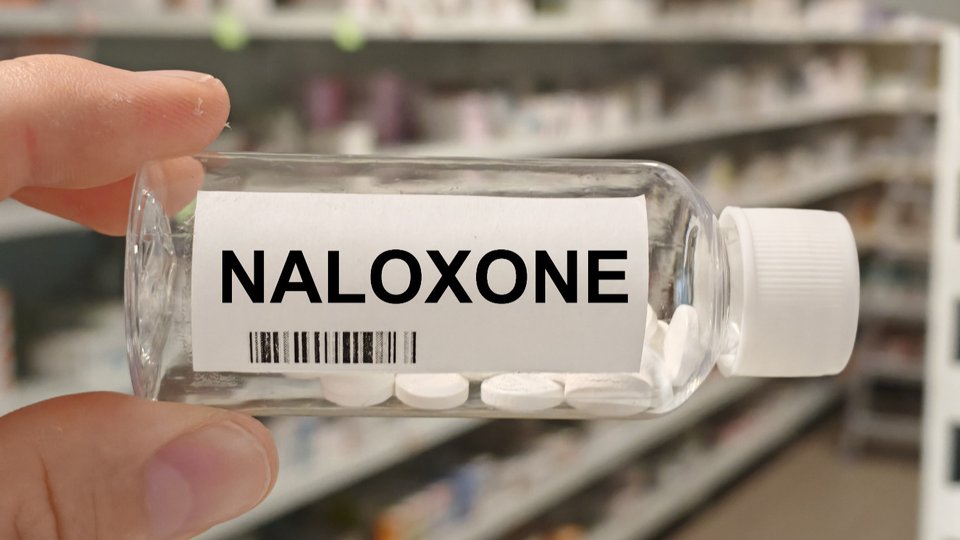
One way public health officials are combating opioid deaths is through the use of naloxone, a medication that rapidly reverses the effects of an opioid overdose. Naloxone, often known by the brand name Narcan, works by binding to opioid receptors in the brain and displacing opioids such as heroin, fentanyl, oxycodone or morphine.
Administering naloxone can quickly restore normal breathing in a person whose respiration has slowed or stopped due to an overdose, similar to the way an EpiPen is used for allergic reactions. The medication is commonly administered as a nasal spray or by injection. It typically begins working within 2–3 minutes, and multiple doses can be given if necessary.
Naloxone is not addictive, does not produce a "high," and has no abuse potential. It has no effect if opioids are not present, meaning it's safe to use even when the cause of unconsciousness is uncertain.
Use gaining widespread acceptance
More and more, cities are turning to naloxone vending machines to aid in combating opioid deaths. The Frederick County Health Department in Frederick, Maryland, recently announced plans up its latest machine at the city's Department of Housing and Human Services location. The machine will provide naloxone, fentanyl test strips, xylazine test strips, personal hygiene kits, wound care kits and additional resources, all for free.
The FCHD originally installed four machines throughout the county in the spring of 2024 as part of a pilot program, eventually expanding that to 12 machines. Users don't need to present ID, fill out any forms and do not have to speak to anyone to get naloxone.
"In January 2025, we reported that 2,144 doses were distributed to the community through the naloxone boxes program from the start of the pilot in March 2024 through December 2024," Rissah Watkins, director of planning, assessment, and communication with the Frederick County Health Department, said in an email interview. "Since the first boxes were placed, more than 5,100 doses of naloxone have been provided to the public."
In Pennsylvania, the Allegheny County Health Department recently unveiled an outdoor naloxone vending machine in downtown Pittsburgh outside the Allegheny County Human Services Building. The machine, one of 11 newspaper box-style stands and four wall-mounted cabinets installed around the county thanks to CDC grant funding, is accessible 24 hours a day, seven days a week.
Lawton, Okla., recently installed its first naloxone vending machine at the Owens Multipurpose Center in that city. Individuals do not need an ID, insurance, or prescription to obtain Naloxone. The machine also features information about crisis support services, including a helpline number for individuals seeking treatment, counseling, or other services. Use is anonymous, with just a few brief questions to gather general demographic information for grant reporting purposes.
The project is funded through the Oklahoma Opioid Abatement Grant, which supports communities across the state in reducing the impact of the opioid crisis.
"These machines were recently installed and are still very new to our community," Caitlin Gatlin, communications and marketing manager with the City of Lawton, said in an email interview. "Our focus remains on increasing access to life-saving resources and connecting individuals to support services when possible."
Opinions run both pro and con
Proponents of naloxone vending machines tout the numerous benefits they offer for those affected by opioid addiction.
A dispenser in a transit station, outside a public building or near facilities for the homeless can provide access without the need to interact with clinic staff. Additionally, they help users avoid the stigma of being recognized or judged.
Vending machines also extend the capabilities of first responders without adding staffing hours, and they can be placed in areas where the need is greatest. Although users can remain anonymous, health services staff can collect data about their use to aid in allocating services.
Of course, not everyone is enthusiastic about the deployment of naloxone vending machines. Some critics say they enable drug use by reducing the risk of an opioid-related death, or that their placement might attract addicts who want to be near the machines just in case they overdose.
In 2023, in Nelson County, Ky., for example, Judge Executive Tim Hutchins voiced his opposition to the machines in a post on social media, according to WDRB.com.
"I want to begin the process of changing the devastating opioid culture in Nelson County and a free Narcan service is not a good start," he wrote. "I would support Narcan availability as long as there is also counseling, responsibility and accountability," he added. "Our community is willing to help, but addicts must be willing to help themselves, and dealers must be punished."
Despite Hutchins' opposition, several naloxone machines have been placed around the county. Nationwide, all 50 U.S. states and the District of Columbia have adopted naloxone access laws that permit availability without a prescription.
Ultimately, these machines are likely to become a standard part of public health infrastructure, particularly in regions where overdose deaths have strained families, emergency responders, and healthcare systems for years.
About Richard Slawsky
In addition to writing, Slawsky serves as an adjunct professor of Communication at the University of Louisville and other local colleges. He holds both a Bachelor’s and a Master’s degree in Communication from the University of Louisville and is a member of Mensa and the National Communication Association.
Related Media
Subscribe
Get the latest news and resources from Vending Times.