Vending
A look back at vending in 2025, what's ahead in 2026
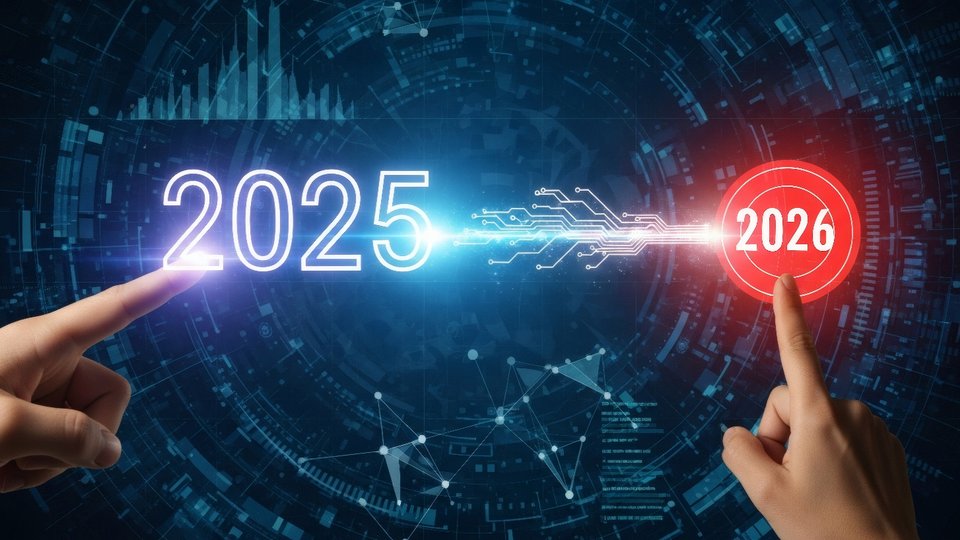
Taken together, the vending stories of 2025, and the outlook for 2026, suggest an industry that is steadily redefining its role.
January 9, 2026 by Richard Slawsky — Editor, Connect Media
 ChatGPT
 Grok
Grok Perplexity
 Claude
Anyone who's ever worked in journalism knows that year-end/year-ahead stories are great ways to fill space while most of the country is taking a well-deserved holiday break. Still, they are a fun way to summarize what's been happening over the past year while taking a stab at predicting what the new year will hold.
Although there weren't too many stories that stood head and shoulders over others in 2025, there were several that served as examples of some of the trends reshaping the vending industry.
Efforts to deliver products more efficiently were evident in areas such as healthcare, social services, and others. In many cases, vending was a way to address labor shortages. In others, it was a way to address social needs in underserved areas or outside traditional business hours.
So, in no particular order, here were some of the stories that offered a glimpse of how the industry evolved over the past year:
Amazon Pharmacy to launch prescription pickup kiosks in Los Angeles clinics
Amazon Pharmacy began installing prescription pickup kiosks inside select One Medical clinics across the Los Angeles area in December, expanding its efforts to make medication access faster and more convenient for patients. After a doctor sends an e-prescription to Amazon Pharmacy, patients can choose kiosk pickup in the Amazon app, pay in-app, receive a QR code and scan it at the kiosk to retrieve their medication. The machines will not dispense controlled substances or refrigerated medicines.
Nonprofit Bridge installs public health vending machine in Boston
One of the significant trends in vending over the past year has been the increasing use of vending machines to deliver public health and social services. Bridge Over Troubled Waters, a Boston-area nonprofit that assists homeless teens and young adults, has installed a public health vending machine at its downtown Boston welcome center, according to a Boston 25 News report. Items available include Narcan for reversing overdoses, fentanyl test strips, pregnancy tests and other health and wellness products like toothpaste and hand warmers. The machine, one of 5 in the Boston area, was funded by the Boston Public Health Commission through the city's opioid response settlement fund.
Vending machine in the Bronx offers fresh food for food-insecure families
It's not just health-related products being distributed by vending machines; it's food as well. A New York City vending machine now dispenses affordable fresh produce, eggs, and proteins to families in need, reflecting efforts to make nutritious options more available in underserved areas. The machine, from NGO Change for Good, offers food grown by young agricultural workers in local hydroponic gardens. To date, the machine has served more than 1,100 families.
Pecan pie vending machine still going strong after 17 years
Any list of this type should include an entry that's fun and unusual, and this is the one. The pecan pie vending machine at Berdoll Pecan Candy and Gift Company in Texas has remained popular for nearly two decades, showcasing enduring customer interest. Its longevity illustrates how unique local products can succeed with automated retail models, and underscores the continued relevance of traditional vending alongside emerging trends.
Swipe fees may cost consumers $20 billion this holiday season
It's clear that vending is transitioning from a cash-based to a card- and mobile payment-based model, and that's raising significant cost issues for operators. Swipe fees, which banks charge retailers for processing credit card transactions, could cost consumers $20 billion or more in higher prices during the 2025 holiday season. Swipe fees have risen 70% since the pandemic and reached a record $187.2 billion in 2024, costing the average family nearly $1,200, according to Merchants Payments Coalition.
And a look ahead
Based on what's been happening in the vending world over the past 12 months, it's a good bet that many of the trends we've seen will continue through the new year and beyond.
Below are five predictions for where the vending machine and automated retail market is headed in 2026:
Cashless becomes the default
With consumer expectations firmly tied to card and mobile wallet payments, most operators in 2026 will treat cashless transactions as standard. Cantaloupe's 2025 Micropayment Trends report reveals a significant trend toward cashless payments across vending, with a strong preference for "tap" payments. In 2024, the report says, 71% of vending machine transactions were cashless, and 77% of those were contactless.
"For vending machines, where purchases are often driven by speed and convenience, the expectation is simple: tap to pay and go," the report states. "When that experience is interrupted by the need for cash or a swipe, customers are far more likely to abandon the purchase entirely. And once they do, they may not come back."
Although issues such as swipe fees and connectivity will become increasingly concerning as a result of the trend, the move opens the door to marketing opportunities and loyalty programs that were previously difficult to implement in a cash-only setting.
Smart stores, "unattended retail ecosystems" outpace traditional vending growth
Growth is expected to continue in 2026 in the area of hybrid unattended retail, such as micro markets and Smart Stores. Cantaloupe reports that consumers spent 53% more at micro markets than at vending machines in 2024 and spent significantly more per transaction.
What that means for automated retail isn't clear, but one possible outcome is that more operators will deploy mixed fleets in the future, including traditional vending, micro markets and lockers.
Still, the format faces obvious challenges: theft and shrinkage. Investment banking firm William Blair points out that the issue of theft has "limited the rollout of micro markets to secure workplace settings, where employee trust and surveillance are easier to manage."
Fresh food and "better-for-you" assortments expand
Automated retail will continue to move beyond packaged snacks into fresh and better-for-you food, supported by Internet-of-Things devices that monitor issues such as temperature and inventory levels. That shift will enhance operational control and, consequently, improve profitability. Devices such as smart fridges are increasingly being located in high-traffic environments, including offices, universities, and hospitals, where fresh options can outperform packaged items.
"We are clearly moving beyond traditional snacks and beverages," said Josh Rosenberg, founder of business consulting and growth services firm Forward Thinkers, in an email interview. "Autonomous retail is opening the door to much broader product categories, including hot food in a meaningful way, coffee kiosks, parcel and convenience lockers, retail electronics, and everyday sundries."
Connectivity opens the door to automation and analytics
Betting the farm on one of the many research reports that come across the wire each week may not be wise, but most predict the global smart vending machine market (defined by internet connectivity, telemetry, and digital payments) will grow at a 12-16% clip over the next several years.
A Mordor Intelligence study, for example, predicts the number of smart machines in service will surpass 14.3 million by 2030, representing a 12.1% compound annual growth rate from 8.1 million units in 2025. This will likely result in more proactive machine service and tighter inventory replenishment rather than static schedules.
AI and machine learning technology are expected to be major drivers of the move toward smart vending, according to Mordor, enabling machines to offer personalized consumer experiences, such as product recommendations based on user preferences and previous interactions.
Automated retail becomes a stronger channel for targeted programs
Continuing the trend highlighted in 2025, more organizations, including campus health services, social services, and nonprofits, will utilize vending and automated retail as distribution and access channels on college campuses, in retail stores, and through partnerships with outside providers of public health resources.
Machines stocked with naloxone, fentanyl test strips, and related supplies are being installed in multiple regions around the country as part of a strategy to reduce barriers to life-saving supplies. Such programs indicate a trend toward public health use of vending machines for naloxone access, suggesting continued expansion.
The bottom line
Taken together, the stories of 2025 and the outlook for 2026 suggest an industry that is steadily redefining its role, moving beyond simple product dispensing toward broader access, convenience, and data-driven operations.
As cashless payments, connectivity, smarter equipment, and new use cases become the norm, the industry's challenge in 2026 will be balancing innovation with cost, reliability, and trust, while continuing to demonstrate that unattended retail can be both commercially viable and socially relevant.
Do you have an idea for something you think we should cover this year? Drop us a line at editor@vendingtimes.com and let us know!
About Richard Slawsky
In addition to writing, Slawsky serves as an adjunct professor of Communication at the University of Louisville and other local colleges. He holds both a Bachelor’s and a Master’s degree in Communication from the University of Louisville and is a member of Mensa and the National Communication Association.
Related Media
Featured Vendor

Stern Pinball, Inc. is a global lifestyle brand based on the iconic and outrageously fun modern American game of pinball
Subscribe
Get the latest news and resources from Vending Times.